


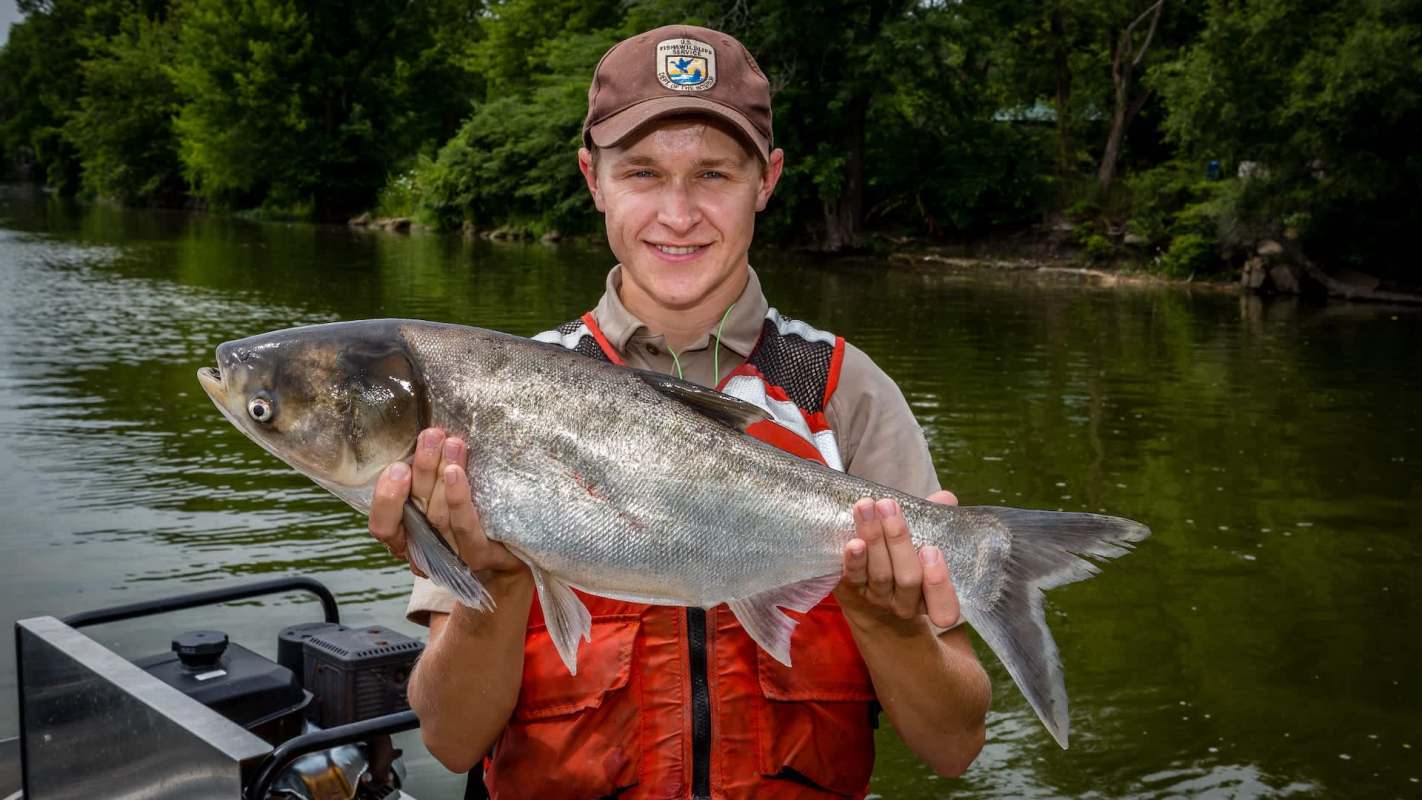
Invasive and destructive carp lurking in the Illinois River can grow large enough to weigh more than 100 pounds, but officials say a major milestone has been reached in the effort to stop them from moving closer to Lake Michigan.
According to a report from Popular Science, the United States Fish & Wildlife Service said crews have removed 50 million pounds of the fish from the river over the past 15 years.
The total comes from a long-running program to suppress carp in the area, where state and federal agencies are trying to reduce adult populations before the fish can reproduce and move farther north.
Fifty million pounds is roughly equal to the weight of 5,000 elephants, Popular Science noted.
In a Facebook post, the USFWS said: "The more invasive carp we remove, the more we reduce their harmful impacts and the risk of them reaching Lake Michigan."
Defenses include an Electric Dispersal Barrier System near Chicago — essentially an electric barrier designed to deter carp's movement about 37 miles from Lake Michigan. Officials and commercial fishers are also working in other parts of the river to keep carp numbers down.
TCD Picks » Quince Spotlight
💡These best-sellers from Quince deliver affordable, sustainable luxury for all




Four invasive carp species — bighead, silver, black, and grass carp — were brought to North America in the 1970s for aquaculture and escaped within a decade. Since then, they have spread through major waterways, including the Mississippi, Missouri, and Illinois rivers.
They can create major problems for both wildlife and people. Some species consume plankton, which forms the base of the aquatic food web, while others feed on rooted plants, snails, and mollusks.
That can leave less food and habitat for native species, hurting recreational fishing, commercial harvests, and local economies that depend on healthy waterways. Silver carp are also known for leaping from the water, creating a safety hazard for boaters.
Keeping these fish out of the Great Lakes could help protect some of the region's most valuable fisheries and the broader regional economy.
In its post, the United States Fish & Wildlife Service added: "Illinois and more than two dozen partners are safeguarding some of our most prized native fisheries, and the Great Lakes regional economy."
Peter Alsip, an ecologist with the NOAA Great Lakes Environmental Research Lab, told Popular Science that invasive carp "consume so much food and can exist in such great numbers that they can really reduce the amount of [resources] for resident species of fish."

Get TCD's free newsletters for easy tips, smart advice, and a chance to earn $5,000 toward home upgrades. To see more stories like this one, change your Google preferences here.







