


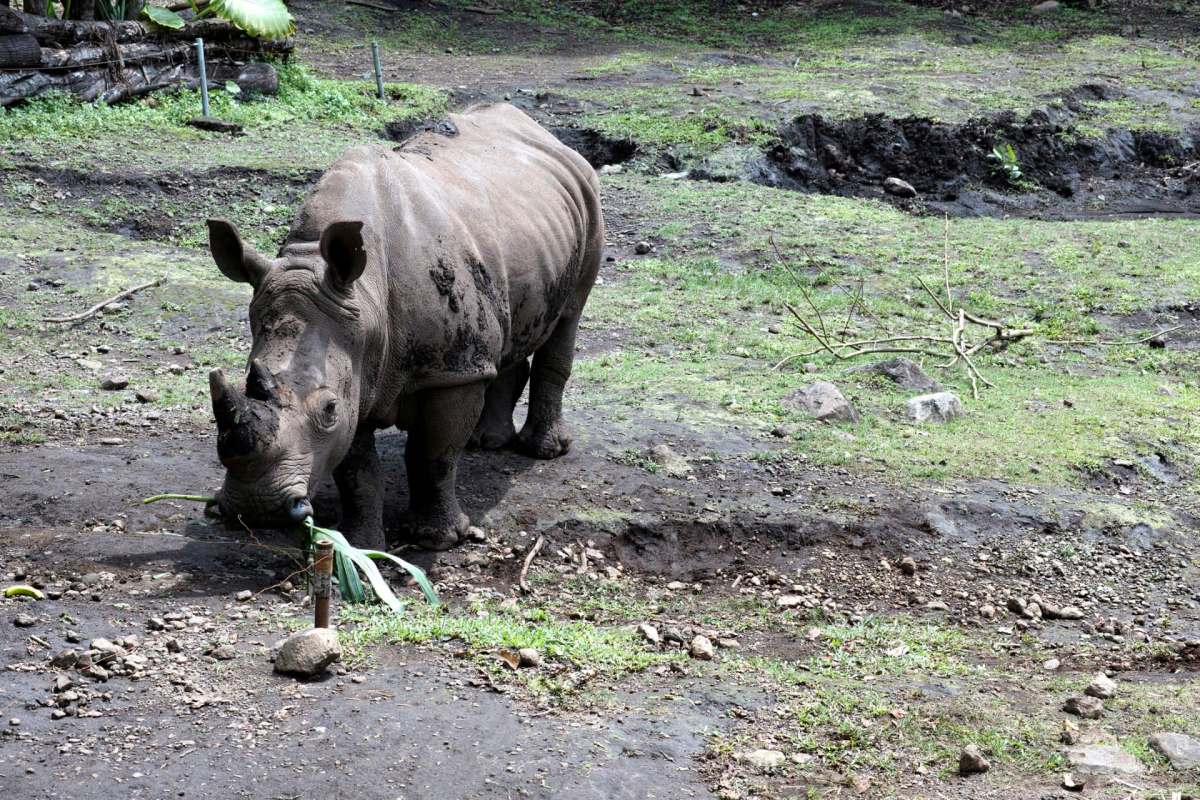
Two pregnant Sumatran rhinos are offering hope for a species with only a few dozen animals left in the wild. However, Indonesia's breeding program faces a significant challenge: All its males are related, limiting options for genetic diversity.
Here's what to know
The expectant mothers live at the Sumatran Rhino Sanctuary in Way Kambas National Park. Indonesia's Ministry of Forestry and the nonprofit Yayasan Badak Indonesia announced their pregnancies, according to The Animal Rescue Site.
Ratu is expecting her fourth calf, while her daughter Delilah is carrying her second.
Delilah's calf's father, Harapan, is her paternal uncle and the full brother of Andalas. Andalas, born in 2001 at the Cincinnati Zoo, fathered Ratu's calf.
With just 11 Sumatran rhinos in Indonesia's captive-breeding program, choosing breeding pairs is no simple task.
Keeping the species from extinction takes precedence over genetic diversity since so few breeding animals are available. According to International Rhino Foundation Executive Director Nina Fascione, staff assess whether a pairing is suitable by considering physical factors such as body size as well as genetic relatedness.
TCD Picks » Quince Spotlight
💡These best-sellers from Quince deliver affordable, sustainable luxury for all




More background
The International Union for Conservation of Nature's Asian Rhino Specialist Group estimates that just 34 to 47 Sumatran rhinos remain in the wild in Indonesia. These animals live in isolated groups, with North Sumatra's Leuser Ecosystem holding what appears to be the largest viable population, according to The Animal Rescue Site.
Poaching, deforestation, and fragmented habitat threaten their survival. For these solitary animals, isolation creates another obstacle: finding a mate.
The sanctuary helps address this problem by bringing rhinos into secure forest enclosures where keepers can manage introductions.
Pregnancy lasts 15 to 16 months, followed by as much as two years of maternal dependence for calves.
The sanctuary has recorded five calf births since the captive-breeding effort began in 1984; the last occurred in 2023.
What's being done?
Veterinarians and keepers provide reproductive and medical care in large, forested enclosures designed to resemble the rhinos' rainforest habitat.
Jansen Manansang of Yayasan Badak Indonesia said the medical team would intensively monitor Ratu and Delilah during gestation to help ensure safe births, according to The Animal Rescue Site.
Both pregnancies were about eight months along when the sanctuary announced them.
Ratu had two miscarriages before delivering Andatu, her first calf, in 2012. Another sanctuary mother, Rosa, suffered eight miscarriages before Sedah Mirah's birth in 2022.
Beyond caring for the expectant mothers, conservation teams are considering possible future captures or transfers to improve the breeding population's genetic diversity.
Keeping rhinos alive and reproducing preserves opportunities to build a more resilient population. That is the priority for staff supported by organizations including the International Rhino Foundation.
If Ratu delivers a healthy calf that survives, she will be the first Sumatran rhino known to have produced four calves, according to The Animal Rescue Site, exceeding the three-calf record previously set by a Cincinnati Zoo rhino.
Where can I learn more?
These stories cover other wildlife conservation wins and efforts worldwide.
• In South Africa, a rhino orphaned by poachers now has a calf of her own.
• In Indonesia, rescuers raced to save orangutans as El Niño drives fires across Borneo.
• In Indonesia, a sun bear confiscated as a cub returned to the wild after rehabilitation.

Get TCD's free newsletters for easy tips, smart advice, and a chance to earn $5,000 toward home upgrades. To see more stories like this one, change your Google preferences here.







