


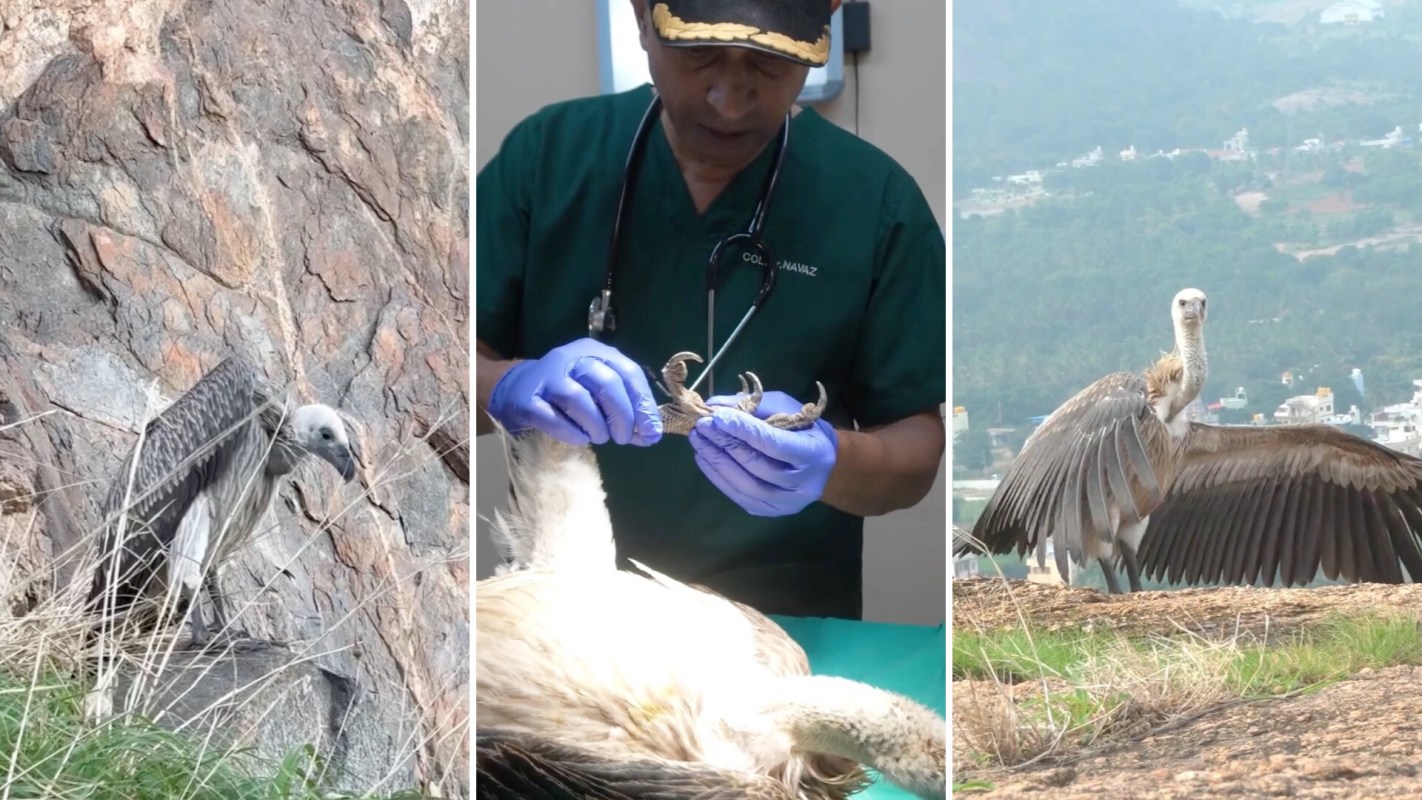
After several weeks of rehabilitation, a young Indian vulture has returned to the air over Karnataka after recovering from a leg fracture suffered while learning to fly.
For one of South Asia's most imperiled birds, the release is a modest but important gain.
Here's what to know
The bird was released at Sri Ramadevarabetta Wildlife Sanctuary in Ramanagara, The Indian Express reported. Only three Indian vultures are known to live in the sanctuary.
About six months old, the rescued bird belongs to a critically endangered species that has been trying to recover for decades.
That makes its survival especially significant at Sri Ramadevarabetta, where only one breeding pair of Indian vultures remains. With so few birds at the site, each young vulture is important to the species' future there.
The response began when forest officials found the bird lying motionless on rocky ground after a rough landing.
TCD Picks » Quince Spotlight
💡These best-sellers from Quince deliver affordable, sustainable luxury for all




It was then taken for treatment through coordination between the Karnataka Forest Department and the People for Animals wildlife hospital in Kengeri, Bengaluru.
"We have a quick reaction and rescue team ready always, so we rushed there and brought it to the hospital in Kengeri," Col Dr Navaz Shariff, chief wildlife veterinarian and general manager at People for Animals wildlife hospital, told Indian Express. "X-rays revealed a sizable hairline fracture at the head of the femur bone."
Because the fractured bone had stayed in position, veterinarians decided to let it heal on its own. They concluded that surgery could have left the leg shorter.
More background
The Indian vulture's decline has been one of the most dramatic wildlife collapses in the region.
As the publication detailed, one of the main reasons was diclofenac, a veterinary painkiller used on cattle. Vultures that fed on treated carcasses suffered fatal kidney failure, and the species has recovered only slowly even after the drug was banned for veterinary use.
The pace of recovery is also constrained by the species' low breeding rate: Indian vultures lay only one egg a year. In such a small population, losing even a single juvenile can slow conservation progress.
Vultures serve as nature's cleanup crew, helping remove carcasses from the landscape. Protecting them supports healthier ecosystems and can also benefit nearby communities by helping natural systems function as they should.
The case shows how quickly local conservation networks can respond when forest officials, veterinarians, and wildlife rehabilitators work together.
What's being done?
At the hospital, staff kept the young vulture in a small kennel to limit its movement and prevent the injury from worsening.
Rehabilitators then continuously watched the bird during rotating eight-hour shifts, using cameras to monitor its feeding, movement, and overall behavior. Four weeks later, follow-up X-rays indicated that the fracture was healing on its own.
As the bird improved, it went from walking with a limp to trying out flight in larger aviary enclosures before the team decided it was ready to be released.
Getting it back to the wild was physically demanding as well. Staff carried the vulture up a steep hill inside the sanctuary before releasing it into its habitat.
As Col Shariff put it: "He walked around, basked in the sun for ten minutes, and then took off beautifully in flight."

Get TCD's free newsletters for easy tips, smart advice, and a chance to earn $5,000 toward home upgrades. To see more stories like this one, change your Google preferences here.







