


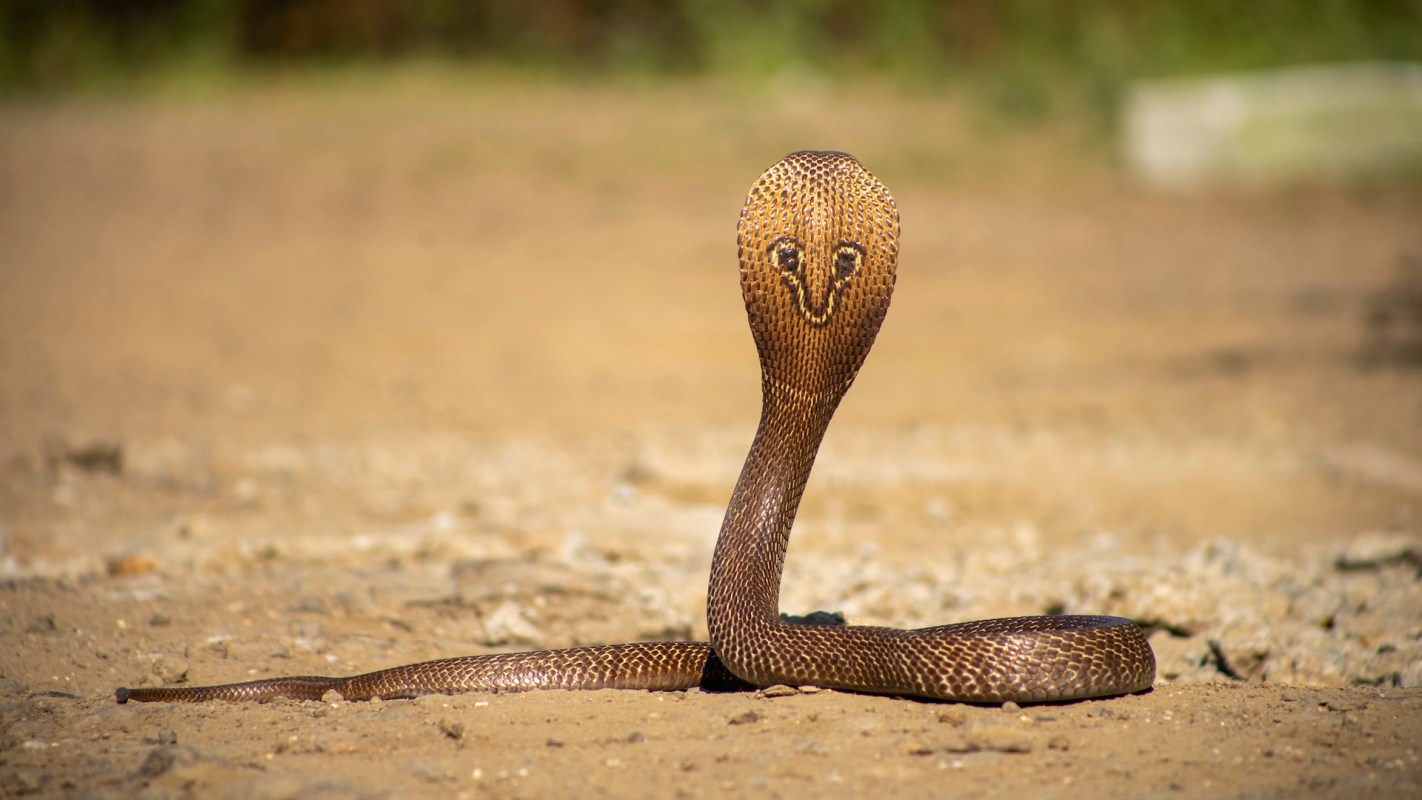
An Indian cobra was lodged in the engine bay of a cab in Nagpur, India, but the driver saw it before driving the car, preventing what could have become a dangerous incident.
In the city's IT Park area near Visvesvaraya National Institute of Technology, the sighting soon drew onlookers and set off a rescue response.
Here's what to know
According to Nagpur Today, the snake was inside the engine compartment of an Ola cab parked opposite the campus. The driver turned the vehicle off after noticing the reptile and alerted people nearby rather than trying to remove it himself.
Local snake rescuer Prashant Kawade arrived at the scene alongside fellow rescuers Pawan Gupta and Lalit Prajapati. Rescuers said the cobra appeared to have been stuck there for some time and kept trying to get out, making the operation especially delicate because of the tight space and the snake's venomous nature.
Nagpur Today reported that the rescuers eventually removed the snake safely and identified it as an Indian cobra. No one was hurt, and rescuers took the cobra away unharmed before releasing it in a suitable natural habitat under wildlife guidelines.
More background
Wildlife encounters are not always about animals attacking people. In many cases, animals end up in human spaces because roads, buildings, traffic, and other forms of development increasingly overlap with the places where they live and move. A BBC Future report examined why wild animals attack humans and explained that human activity often plays a major role in these tense encounters.
TCD Picks » Quince Spotlight
💡These best-sellers from Quince deliver affordable, sustainable luxury for all




The cobra was in immediate danger from the vehicle itself, while the driver and bystanders also faced a risk if the snake felt trapped or cornered. Rescuers told Nagpur Today that Indian cobras usually avoid people but may become defensive when they feel threatened.
What can be done?
Do not try to handle a snake yourself. If a wild animal is found in or around a vehicle, experts advise keeping a safe distance, avoiding sudden movements, and calling trained local rescuers or wildlife officials.
Drivers in areas where wildlife sightings are possible can also take extra precautions, particularly if a vehicle has been parked outdoors for an extended period. A quick visual check around the car may help spot unusual movement before anyone gets too close.
Safer outcomes depend on communities having access to trained rescue networks that can respond quickly while protecting both people and animals.
As cities continue to expand, coexistence requires planning. When human development pushes further into wildlife habitat, emergency awareness and professional rescue systems become even more important.
Because the driver did not try to intervene and the rescuers worked carefully, the venomous snake was removed without injury.
Where can I learn more?
The Nagpur rescue is one of several cases of cobras turning up where people least expect them in India. Incidents in Gujarat, Noida, Kota, and Odisha show how fast an ordinary home or neighborhood can turn into a delicate rescue scene.
• In Gujarat, an Indian cobra was rescued from a home and returned to the wild.
• In Noida, a wiring fault ended when a black cobra emerged from a ceiling vent.
• In Kota, cobras turned up in two homes, including one near ladoos.
• In Odisha, a 12-foot king cobra appeared near a bank before rescuers intervened.
Cases like these are a reminder that fast reporting and trained rescue teams can make all the difference. They also show how often urban and residential areas overlap with the routes snakes still use.

Get TCD's free newsletters for easy tips, smart advice, and a chance to earn $5,000 toward home upgrades. To see more stories like this one, change your Google preferences here.







