


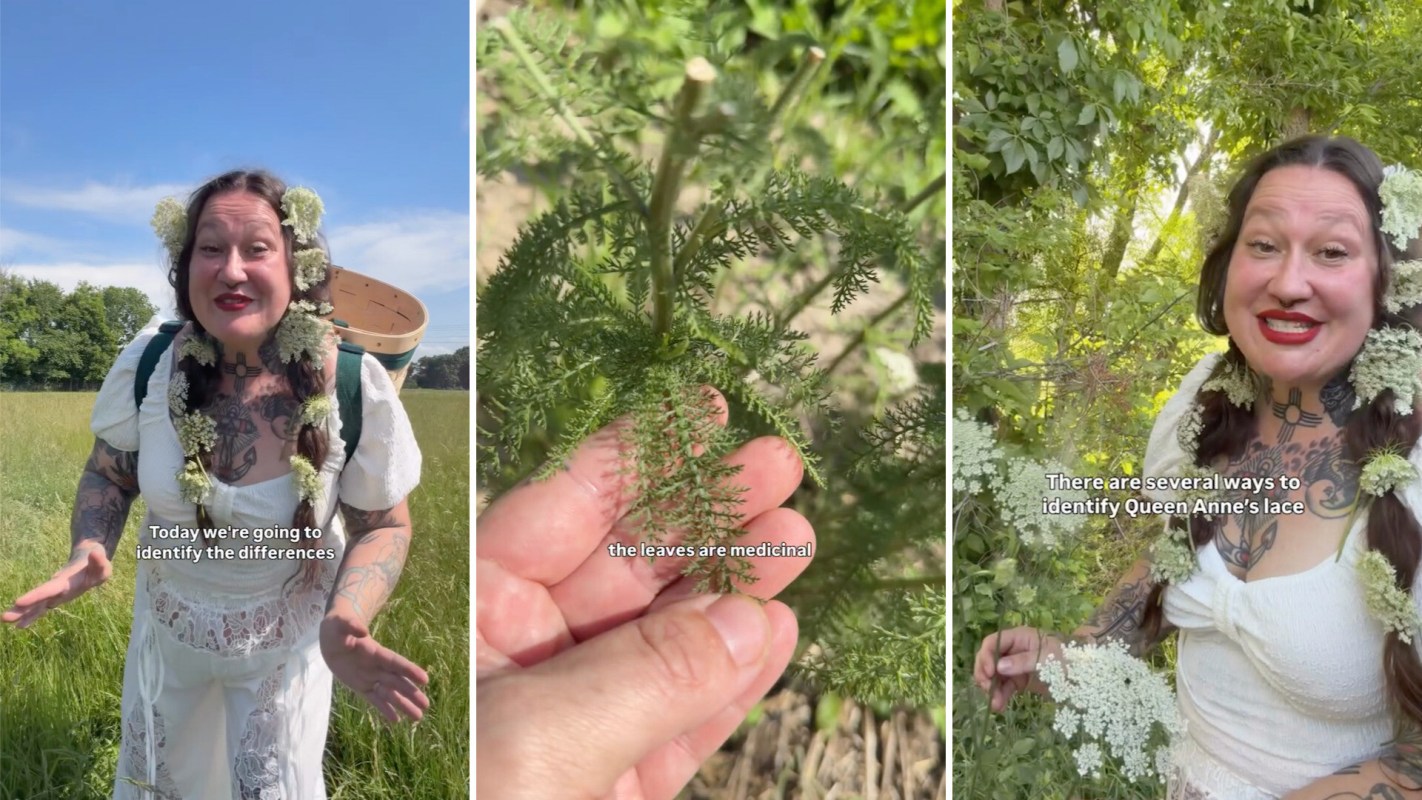
White wildflowers can look deceptively similar on a summer walk, but one Missouri forager says a few small details can make all the difference between a familiar field plant and deadly poison hemlock.
What's happening?
In a June 15 Instagram post, foraging educator Tonya Snyder (@thewildcarrotfarmstead) addressed a question followers often ask: how to distinguish poison hemlock, Queen Anne's Lace, elderflower, and yarrow.
In the video, as Snyder explained, one clue for yarrow is its foliage, which she described as "soft, feathery, full, and fern-like." Its blossoms, she added, are "tight, compressed, and close together."
For elderflower, she highlighted the plant's scent, size, and form: it grows on a bush, carries much larger white blooms, and smells "sweet and fragrant," especially near creeks and other waterways.
She said Queen Anne's Lace is the plant people most often mistake for poison hemlock. To identify it, she pointed to a carrot-like smell, a ring of dark green leaves beneath the flower head, and stems with visible hairs — or, as she put it, "hairy legs."
She contrasted that with poison hemlock, which she described as taller and denser, especially near water. Its blossoms are smaller, and its stems can show both a powdery coating and some purple coloring.
TCD Picks » Quince Spotlight
💡These best-sellers from Quince deliver affordable, sustainable luxury for all




In the caption, she wrote, "I share, in my stories, our foraging trips and this kind of content, day-to-day, but I always end up with lots of additional questions — specifically surrounding the identification of these four white-blossomed plants."
Why does it matter?
White umbrella-shaped flowers can blur together quickly, especially when several are growing in the same place at the same time.
She also noted that Queen Anne's Lace does not always have the small purple flower sometimes seen in the center, so depending on just one feature can lead to mistakes.
Because she described poison hemlock as widespread and invasive in her area, particularly along waterways, knowing how to recognize it could help property owners and hobby foragers alike.
Poison hemlock can be deadly if ingested. It can cause skin irritation when touched, and can be very dangerous if the plant's sap gets into a cut or you touch your eyes, nose, or mouth. So knowing the difference between these plants can save you from a horrible accident. While you may not start eating random plants in the wild, your dog might, so it's good to be on the lookout.
What can I do?
If you are trying to identify a white-blossomed plant, the post suggests checking several traits at once: smell, stem, height, leaves, and where the plant is growing.
Rather than judging by flower color alone, compare the whole plant: yarrow stays shorter and has dense, fern-like foliage; elderflower resembles a shrub or small tree; Queen Anne's Lace may smell like carrots and have hairy stems; and poison hemlock often grows in large clusters, with smaller blooms and stems that show both a powdery coating and purple coloring.
If poison hemlock turns up on your property, the creator noted that "There are efforts to eradicate this plant and steps to take and state conservations to call that help solve this problem if you find it on your land."

Get TCD's free newsletters for easy tips, smart advice, and a chance to earn $5,000 toward home upgrades. To see more stories like this one, change your Google preferences here.







