


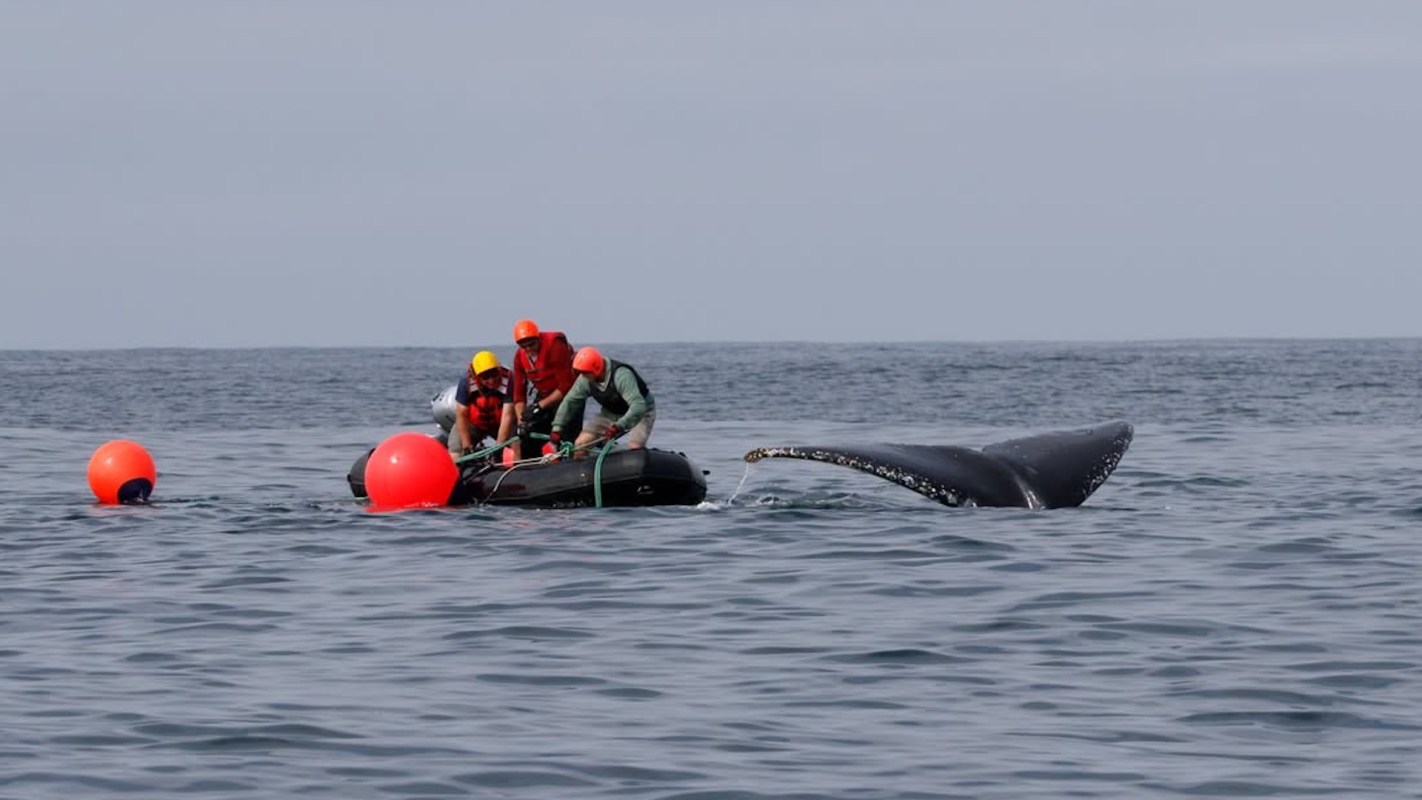
Rescuers off Oregon spent four days trying to help a young humpback whale tangled in more than 3,000 feet of fishing gear, but the injuries from the entanglement may still be fatal, OPB reported.
What happened?
The whale was found ensnared about 20 miles offshore from Newport on July 23 and was released from the gear on July 26 by an Oregon response team working with specialists from Washington and Newport fisherman Poggy Lapham.
According to OPB, NOAA Fisheries said the disentanglement did not prevent lasting damage. The whale's jaw was left permanently open, which likely means it will not be able to feed.
Oregon State University research assistant Craig Hayslip first noticed the whale from a U.S. Coast Guard helicopter during a coastal survey for whales and fishing gear. It appeared to be held in place by heavy gear attached to the seafloor, and responders later traced a line running through the whale's mouth and down about 400 feet.
"The whale's jaw was 'wide open beyond anything you would expect to see,'" said Jim Rice, who manages the Oregon Marine Mammal Stranding Network for Oregon State University. "We could tell by the angle it was not natural."
After the animal was cut free, crews recovered more than 3,000 feet of line, five sablefish pots, and Dungeness crab traps tied to Oregon and Washington. NOAA said the condition of the equipment suggested the gear may have been derelict or lost.
TCD Picks » Quince Spotlight
💡These best-sellers from Quince deliver affordable, sustainable luxury for all




Why is this concerning?
NOAA says large-whale entanglements along the West Coast have risen, and OPB reported that more than 30 humpbacks were confirmed entangled in 2025.
NOAA spokesman Michael Milstein said many humpbacks that feed off Oregon during the summer belong to the mainland Mexico population, which breeds off Mexico and is still listed as threatened under the Endangered Species Act. He said the Oregon-California-Washington coastwide population is estimated at about 7,000 humpbacks.
When whales are injured or killed by fishing gear, the consequences can affect wildlife and beyond. Healthy whale populations support ocean food webs, tourism, and the coastal environment that fishing communities rely on.
It can be difficult to determine where lost gear originated, especially because some gear types are not required to carry identifying tags.
What's being done?
OPB reported that responders from Oregon State University's Marine Mammal Institute and Oregon Coast Aquarium had trained with Cascadia Research Collective. A grant from the Oregon Wildlife Foundation also helped pay for safety equipment and response tools.
Lapham and the crew of the F/V Michele Ann were central to the rescue, helping lift the gear so responders in a smaller boat could cut the whale free. Once the whale was released, the fishing crew continued winching up the lines and traps and separating the tangled equipment for investigation.
NOAA Fisheries said it is contacting the owners of the recovered gear. The agency also said it formed a West Coast Take Reduction Team in 2025 that includes commercial fishermen, tribal representatives, scientists, fishery managers, and conservation groups.
According to NOAA Fisheries, the group is developing recommendations aimed at reducing humpback entanglements in sablefish pot gear and will examine this case alongside a July 7 Oregon humpback death linked to sablefish gear.
Lapham said the incident should push the industry to ask, "How can we better incentivize gear retrieval and tracking of lost gear to reduce this risk?"
"This is truly a heartbreaker because of the whale's injuries, but we will learn so much from this case that can help us prevent future entanglements," said Lauren Saez, who helped coordinate the response for NOAA Fisheries. "We disentangled the whale safely, got all the gear back, and had great collaboration with the fishing industry."

Get TCD's free newsletters for easy tips, smart advice, and a chance to earn $5,000 toward home upgrades. To see more stories like this one, change your Google preferences here.







