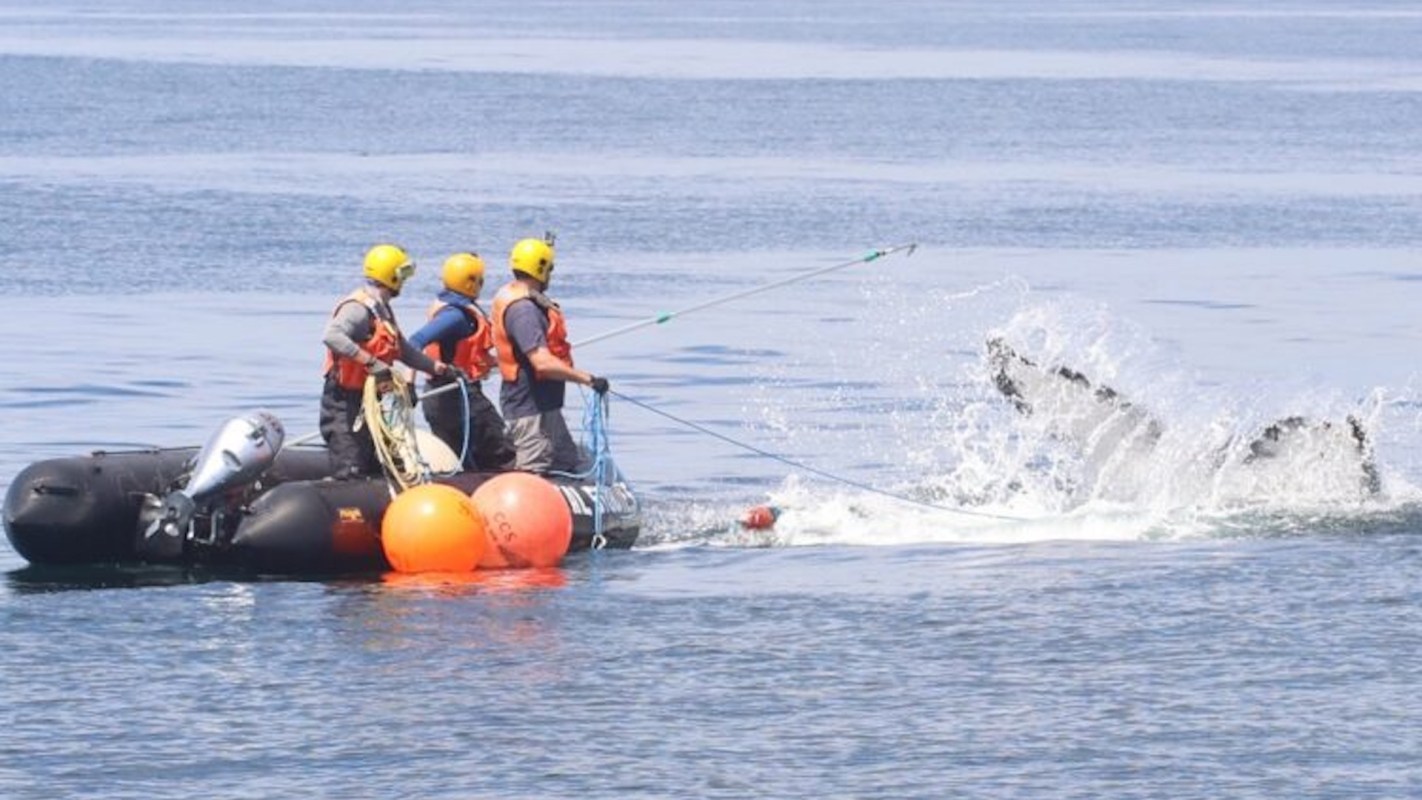
In Ipswich Bay off Rockport, Massachusetts, responders freed a humpback whale from a rope that was running through its mouth and trailing behind it.
The successful rescue is a reminder that even large, powerful animals can be vulnerable in coastal waters — and that fast action from trained responders can make a difference.
What happened?
After recreational boaters noticed the entangled whale on August 4, a local marine animal response team stepped in to remove the gear while avoiding additional harm.
The gear came off in stages. CAI reported that responders first freed the rope from the whale's mouth with a grappling hook and removed an attached buoy, then used large floats on the remaining line to help pull the rest away.
After the last of the rope came free, the humpback quickly left Ipswich Bay. The whale is expected to fully recover.
Scott Landry, director of the Marine Animal Entanglement Response Program, said NOAA Fisheries received the fishing gear taken from the whale so officials can determine where it came from.
TCD Picks » Quince Spotlight
💡These best-sellers from Quince deliver affordable, sustainable luxury for all




Why does it matter?
Entanglements can be devastating for whales. Rope and other fishing gear can interfere with swimming, feeding, and diving, and serious cases can lead to lasting injury or death if animals are not found quickly.
Although humpback whales in the region are no longer on the U.S. endangered species list, CAI reported that Massachusetts still classifies them as threatened, meaning they remain protected in state waters.
Whales are a major part of the marine ecosystem, and they also support coastal economies tied to tourism, recreation, and fishing communities that depend on healthy ocean environments.
Protecting marine animals preserves the natural systems that coastal communities rely on and value.
What's being done?
Specialized disentanglement teams are trained to assess dangerous situations and remove gear in a way that protects both animals and the public.
NOAA Fisheries is reviewing the source of the fishing gear, which could help officials better understand how the entanglement happened and whether additional prevention steps are needed.
CAI reported that disentanglement efforts are supported in part by grants from the National Marine Fisheries Service, the Massachusetts Division of Marine Fisheries, the Massachusetts Environmental Trust, and private foundations and donors. All disentanglement activity is conducted under a federal permit authorized by NOAA.
Anyone who spots an entangled whale, sea turtle, or other marine animal should contact the MAER team at 800-900-3622 or the U.S. Coast Guard on VHF 16.
In a region where people and marine life share busy waters, quick reporting and professional rescue teams help protect both animals and coastal communities.

Get TCD's free newsletters for easy tips, smart advice, and a chance to earn $5,000 toward home upgrades. To see more stories like this one, change your Google preferences here.