


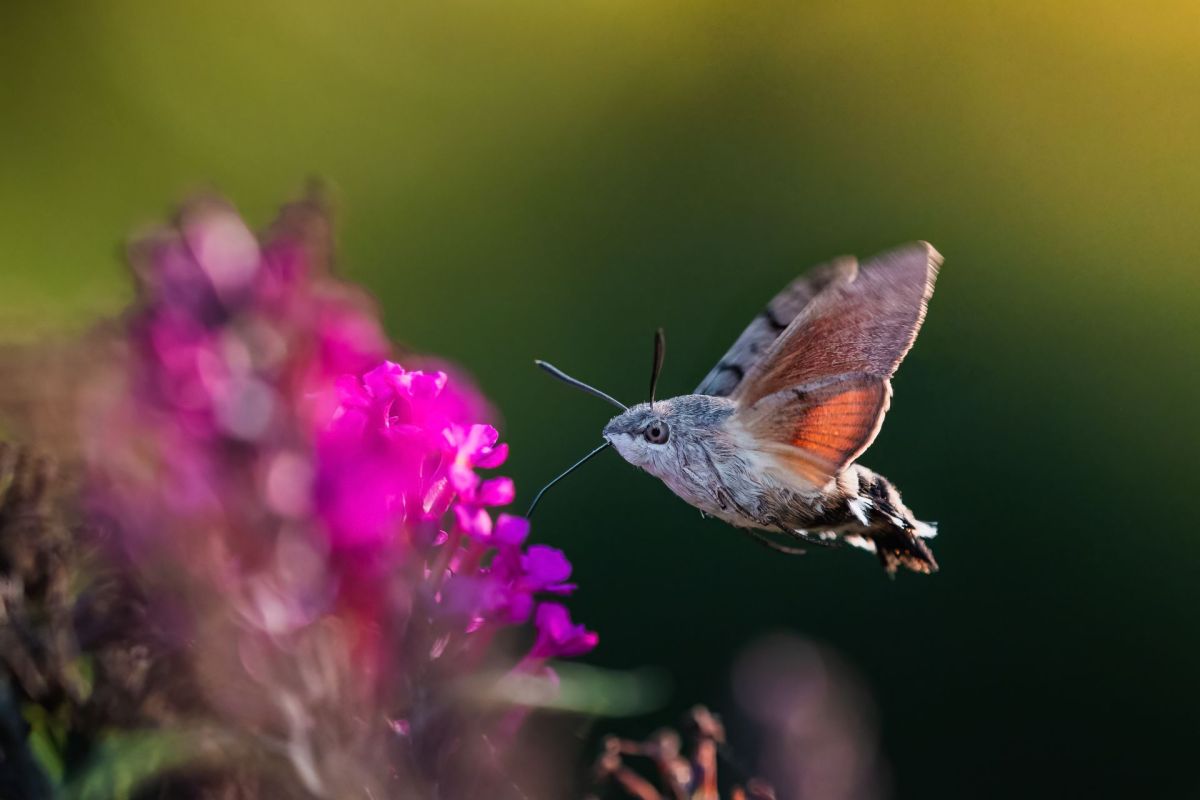
Hummingbird hawk-moths are drawing fresh attention in British gardens this summer, with sightings being reported around the U.K.
These flying insects hover over flower blossoms in a way that can make them look briefly birdlike. However, experts are warning that the early sightings do not mean the population is necessarily thriving.
What's happening?
Software project manager Luke Burstow said he first noticed a hummingbird hawk-moth while eating dinner outdoors. He told the Guardian he saw a fast-moving shape and described it as a "grey lump with orange wings."
He and his wife told the outlet they saw the moth in late June as it fed on buddleia flowers. "I was like: 'Wow!'" Burstow said. "I didn't even know they existed."
According to the Guardian, the insect is a migrant species that reaches the U.K. from mainland Europe and North Africa.
Richard Austin, a recording schemes officer at Butterfly Conservation, explained to the outlet that "we've had a big increase in sightings and inquiries about the hummingbird hawk-moth sent to us this year. We expect it is going to be a great summer for them."
TCD Picks » Quince Spotlight
💡These best-sellers from Quince deliver affordable, sustainable luxury for all




After a recent jump in reports and inquiries, specialists said, as reported by the Guardian, 2026 may turn out to be a bumper year for the species.
Why does it matter?
Scientists noted, as reported by the Guardian, that recent hot weather and strong southerly winds likely helped bring more of these moths north, and drying food plants in Mediterranean breeding areas may also be influencing their movement.
More broadly, the influx may reflect global shifts in weather linked, at least in part, to human activity. As global temperatures rise, insects and other animals are increasingly changing where they travel, feed, and survive, and warmer conditions may be making the U.K. more hospitable to a species once seen mainly as a seasonal migrant.
If milder winters allow more adults to survive and reproduce, the effects could gradually reshape local ecosystems and allow for more of the moths to live in the region over the long term, the Guardian reported.
Ray Barnett, a council member at the British Entomological and Natural History Society, told the outlet the moth is "almost becoming a resident species rather than a purely migratory species."
Experts are tracking the apparent boom through public reports and inquiries, which means casual observers can help document what is happening. In Burstow's case, he managed to photograph the moth after rushing inside for his camera.
Taking a clear photo and noting the date and location can make a sighting more useful for recorders and conservation groups tracking patterns.
Gardeners can also help by maintaining wildlife-friendly spaces with flowering plants and by allowing common wildflowers to grow where appropriate.

Get TCD's free newsletters for easy tips, smart advice, and a chance to earn $5,000 toward home upgrades. To see more stories like this one, change your Google preferences here.







