


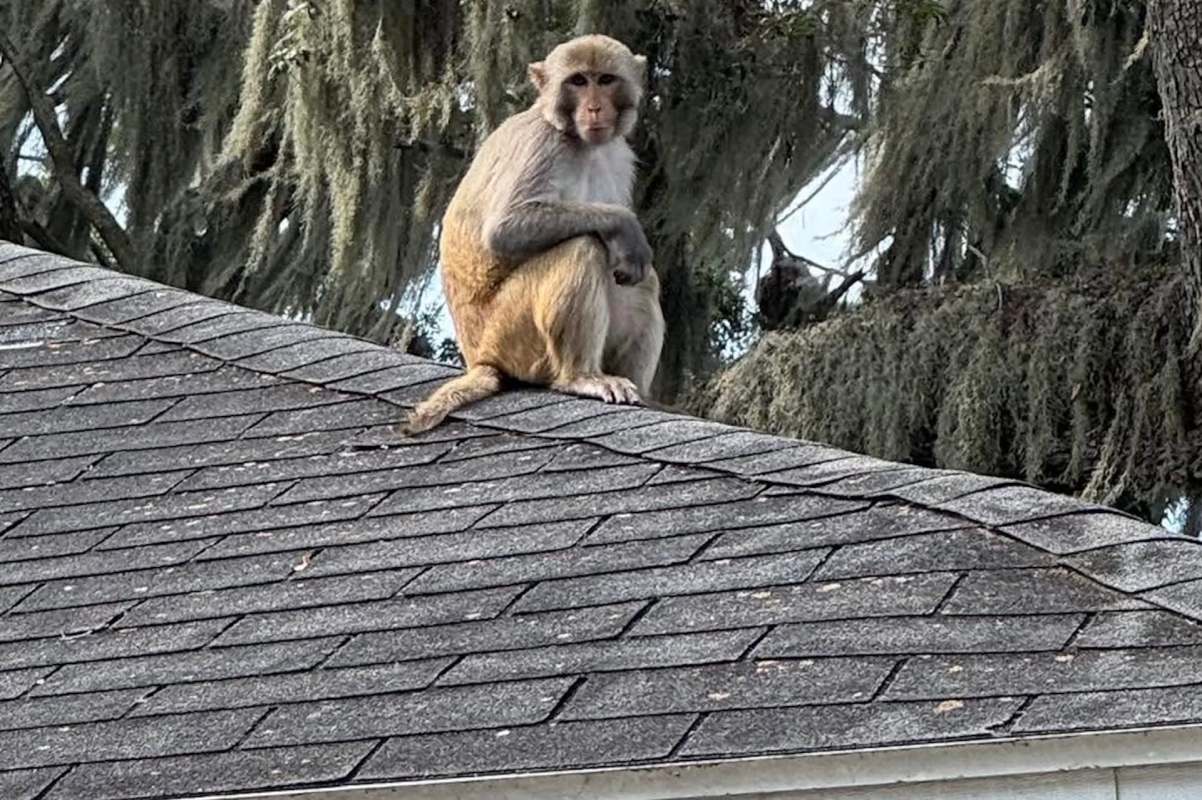
A monkey sighting at one of Central Florida's best-known historic properties drew attention after the inn's staff responded with a joke that quickly caught on.
People who saw the animal — likely a rhesus macaque — said it was first noticed near Gilbert Park and later turned up at Mount Dora's Lakeside Inn.
What happened?
The Lakeside Inn said employees contacted wildlife authorities as soon as the monkey was spotted on the property.
"Before anyone asks, no, he's not joining our hospitality team," the inn stated on Instagram.
When wildlife specialists arrived, the monkey was already gone. The inn told viewers, "At this time, he is no longer on the property."
The creature's appearance is another example of non-native monkeys showing up around Central Florida.
TCD Picks » Quince Spotlight
💡These best-sellers from Quince deliver affordable, sustainable luxury for all




University of Florida researchers have documented five monkey species in Florida, and three — rhesus macaques, squirrel monkeys, and vervet monkeys — have breeding populations, Fox 35 Orlando reported.
Why does it matter?
The problem began with human introduction.
Florida's earliest documented monkey release dates to the 1930s, per Fox 35. UF says riverboat captain Col. Tooey released about six rhesus macaques near the Silver River area, now Silver Springs State Park, to attract tourists.
Because rhesus macaques are strong swimmers, they spread beyond the site and established breeding populations. Animals from Silver River have moved into parts of Lake, Orange, and Volusia counties since the 1970s, leading to more run-ins with residents and visitors, Fox 35 said.
Florida has no native monkey species, and once established populations take hold, they can become invasive and harm native wildlife and habitat, per the station.
The Florida Fish and Wildlife Conservation Commission prohibits people from feeding wild monkeys since human food and repeated contact can make wildlife bold and more likely to approach people, according to Fox 35.
Silver Springs rhesus macaques have tested positive for the Herpes B virus, Fox 35 reported. It typically does not sicken the monkeys but can spread through bites and scratches; the danger to people remains unclear.
What are people saying?
Lakeside Inn's social media updates mixed humor with caution.
"We can't say for certain where this particular traveler came from, but for a brief moment, he seemed to appreciate the beauty and historic charm of Lakeside Inn as much as we do," the inn wrote.
"If you happen to spot him elsewhere, please admire him from a distance and contact local wildlife authorities rather than approaching or feeding him. Safe travels, little explorer."
Officials urge the public to report sightings through IveGot1.org. The FWC's Wildlife Alert Hotline is 888-404-FWCC (3922).

Get TCD's free newsletters for easy tips, smart advice, and a chance to earn $5,000 toward home upgrades. To see more stories like this one, change your Google preferences here.







