


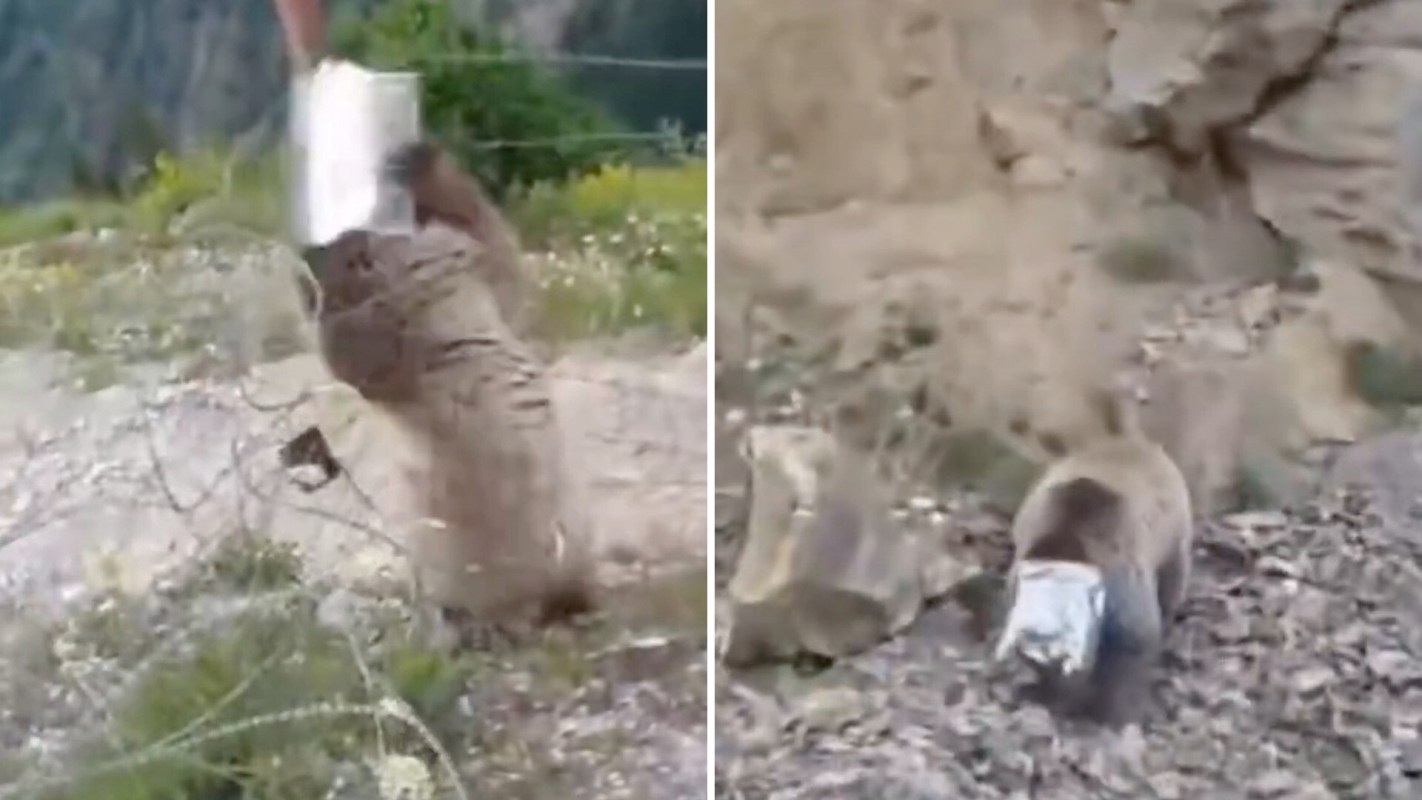
A Himalayan brown bear in India's Kashmir region survived a four-day ordeal after a tin container became lodged over its head, leaving it unable to eat or drink.
In a rescue that drew widespread praise, Indian Army soldiers worked with wildlife officials to track down the distressed animal and free it.
Here's what to know
Residents reported seeing the bear in Khapuri village in the Bandipora district. According to Asianet News, the Indian Army and the nation's Wildlife Department began a joint search before the situation became more dangerous for either the bear or nearby residents.
Indian Army personnel in Gurez rescued a Himalayan bear found with a tin container stuck over its mouth. pic.twitter.com/Xmb8oXfZhY
— DD NEWS SRINAGAR (@ddnewsSrinagar) August 12, 2026
Rescuers were racing against time. The bear had already lasted four days in that state, and a blocked mouth made both food and water nearly impossible to take in.
Only after searching difficult mountain terrain did soldiers reach the animal and carefully free its head from the container. The bear was then transferred to wildlife officials and taken to a veterinary center for evaluation and monitoring before being returned to its natural habitat.
More background
Incidents like this highlight a quieter but persistent danger for animals living near villages, roads, and remote settlements. Discarded containers, packaging, and other waste can become deadly traps for unsuspecting wildlife.
TCD Picks » Quince Spotlight
💡These best-sellers from Quince deliver affordable, sustainable luxury for all




Curious animals often investigate human-made objects while searching for food, only to become injured, trapped, or too weak to survive. In mountain regions such as Gurez Valley, those risks can be even harder to address because rough landscape makes rescues more complicated.
Reaching an injured or frightened wild animal may require long searches, careful coordination, and trained responders who can act without causing additional stress or harm. Rescuing a frightened brown bear requires even more caution and planning, as they can be quite dangerous to people.
The incident also shows how closely human and animal lives can intersect. When wildlife loses access to food or becomes desperate, it can wander farther into populated areas, increasing risks for all.

Get TCD's free newsletters for easy tips, smart advice, and a chance to earn $5,000 toward home upgrades. To see more stories like this one, change your Google preferences here.







