


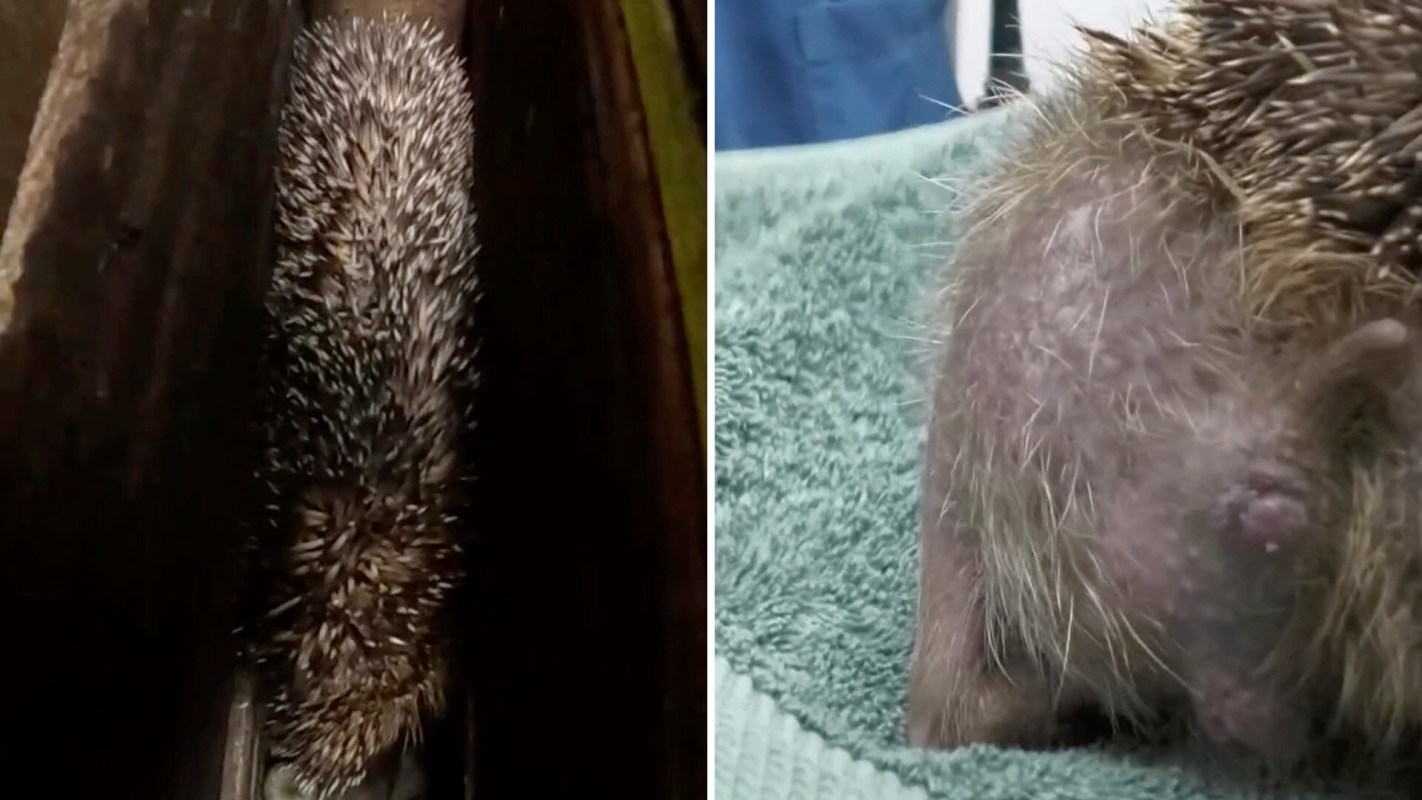
A hedgehog that spent three days pinned in a gap too narrow for even a hand to fit through looked like she had little chance of making it out alive.
Instead, a difficult rescue followed by veterinary care gave the tiny animal a second chance.
What happened?
Wildlife Aid used an Instagram post to describe how the hedgehog had spent three days stuck in a narrow space next to a fence and a concrete slab.
Two Wildlife Aid rescuers, Louis and Gabe, were called to the scene, where they managed to pull the animal out.
Unfortunately, freeing the hedgehog did not end the emergency.
After they got her out, rescuers found that "her back had prolapsed," leaving her unable to move and in pain.
TCD Picks » Quince Spotlight
💡These best-sellers from Quince deliver affordable, sustainable luxury for all




Because she had been trapped for days and was in a fragile state, it was unclear whether she would survive.
Wildlife Aid said she later recovered and was released into another garden with a new family.
Why does it matter?
Small wild animals can face life-threatening dangers in ordinary human-built spaces.
A gap beside a fence or slab may seem insignificant to people, but for a hedgehog it can become a deadly trap.
When an animal is immobilized for days, the risks can escalate quickly.
Beyond the immediate pain and injury, prolonged entrapment can lead to dehydration, exhaustion, and a sharply reduced chance of survival without help.
Hedgehogs are part of the natural web in gardens and green spaces, and when wildlife can no longer move safely through neighborhoods, those habitats become harder to use.
Trained responders and rehabilitation teams are especially important in situations involving injury, stress, and confined spaces.
A fast but careful response can make the difference between a fatal outcome and a full release.
What can I do?
Narrow gaps, unsecured coverings, deep holes, and hard-to-see spaces around fencing, walls, and slabs can all create risks for small wildlife.
Checking for places where an animal could become wedged or trapped is a practical step.
Blocking off hazards while still allowing safe wildlife movement where appropriate can help prevent similar emergencies.
If you do find an injured or trapped wild animal, the safest move is usually to contact a local wildlife rescue or licensed rehabilitator rather than trying to treat serious injuries yourself.
Keeping the area calm and minimizing additional stress can also help until professionals arrive.
As Wildlife Aid put it, "We feared there was no hope."
Instead, "Thanks to the incredible work of our vet team, she was released into a new garden with a new family."

Get TCD's free newsletters for easy tips, smart advice, and a chance to earn $5,000 toward home upgrades. To see more stories like this one, change your Google preferences here.







