


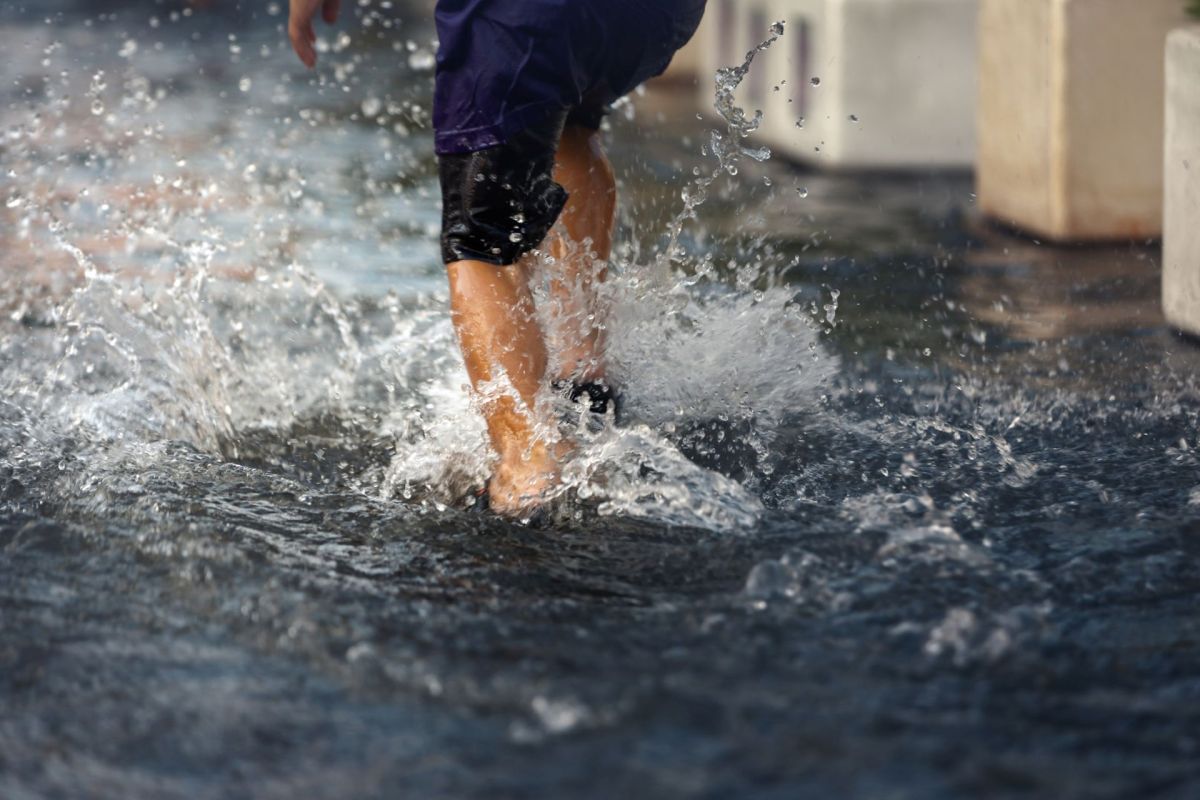
Half marathon, full submergence.
What should have been a straightforward half marathon in Paramus, New Jersey, became a slog through floodwater, after the course got completely flooded due to heavy rains.
Here's what to know
In a Sept. 14 Instagram post, NBC New York meteorologist Matt Brickman (@matt_brickman) described the scene along the Race Faster Half Marathon course.
As the footage showed, flooding overtook portions of the course badly enough that participants had to run through deeply pooled standing water, including at the Saddle River.
Despite flash flood warnings in the area, Brickman noted that race organizers didn't cancel the race. Instead, they moved the race start two hours back.
The Paramus area got between 4-5 inches of rain, and video from various runners and spectators showed the water pooling throughout the course. That led to sections with waist-deep water.
TCD Picks » Quince Spotlight
💡These best-sellers from Quince deliver affordable, sustainable luxury for all




Amazingly, 250 runners finished the race anyway.
"Definitely going to be a story to tell for the runners who finished this race," Brickman concluded.
More background
Flash flooding is especially dangerous because it develops quickly and can overwhelm streets, parks, and race routes before people have much time to react. What may begin as a routine community event can turn into a safety hazard within minutes.
For runners, waist-deep water is not just uncomfortable. It can obscure potholes, curbs, storm drains, and debris, making falls or injuries more likely while also raising concerns about exposure to floodwater that might contain contaminants.
"There's a difference between grit (running when it's uncomfortably hot, cold, raining, etc) and actual danger (running in lightning, flooding, tornado, etc)," a commenter assessed on Instagram.
What can be done?
Flash-flood conditions are a serious safety issue, even during organized events. Weather alerts, route changes, and instructions from organizers or local officials can be critical. Moving water or water of unclear depth can hide all sorts of hazards.
Brickman noted that race organizers had not gotten back to him yet on their rationale for not canceling the race.
"When moving water is calf level or higher, it's dangerous," a commenter opined on Instagram. "The decision to still host the race was incredibly irresponsible on the part of the organizers."
Other commenters wondered if local government officials should have stepped in.
"Shame on the race directors, but the city or town emergency crews and patrollers on route should have closed it down," a commenter chimed in. "The amount of liability they took on by allowing it to happen is wild."
Where can I learn more?
Flooding in New Jersey and across the Northeast has shown how quickly intense rain can overwhelm everyday places, from neighborhood backyards to roads, public events, and entire communities.
• In New Jersey, a backyard turning into a flash flood showed how fast streets disappeared.
• Across NYC and New England, a 1,000-year rain event turned deadly as flash floods spread.
• In Yakutia, villages submerged by floodwaters forced emergency crews to rescue residents and animals.
• In Brazil, record-breaking flooding and landslides followed torrential rain and left communities needing aid.
• After major storms, effects in the weeks following stretched into local health care systems.

Get TCD's free newsletters for easy tips, smart advice, and a chance to earn $5,000 toward home upgrades. To see more stories like this one, change your Google preferences here.







