


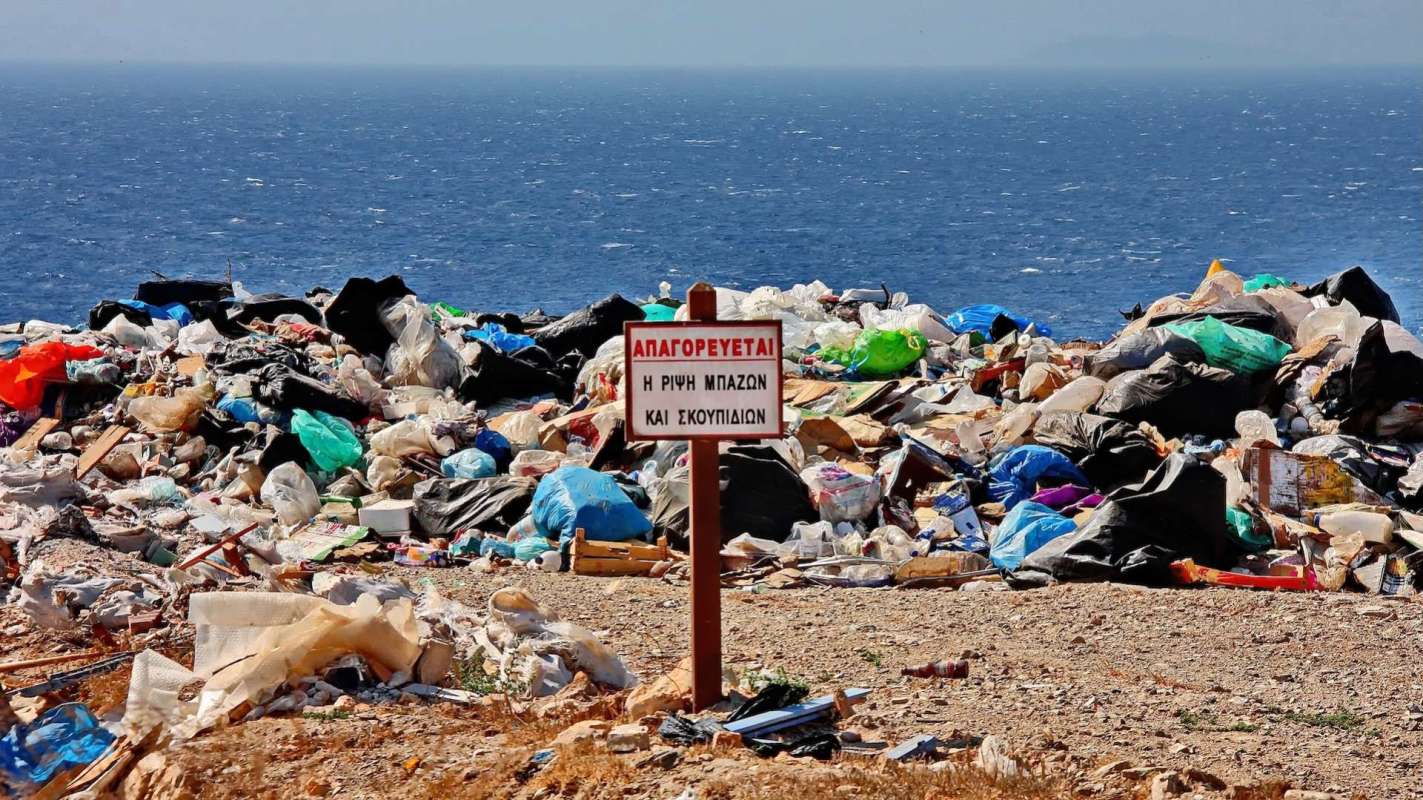
A 20-person crew aboard the 236-foot (72-meter) Typhoon is working to clear waste from some of Greece's hardest-to-reach shores. The massive scale of the cleaned waste is both inspiring and eye-opening.
Here's what to know
The Typhoon Project has carried out more than 10,000 cleanups over seven years, removing 1,257 U.S. tons (1,140 metric tons) of waste, according to Euronews. For perspective, that volume would fill roughly 22 Olympic-sized swimming pools and weighs over two million pounds.
The crew boasts collecting between 1,102 and 2,205 pounds (500 and 1,000 kilograms) of waste each day.
By February 2023, the program had finished its first round of cleanups on the islands and along much of mainland Greece's coast. The Public Benefit Foundation 'Athanassios C. Laskaridis' launched the effort in July 2019.
The crew sorts waste and transports it to appropriate recycling facilities. The crew uses five inflatable boats to reach the isolated shores and bring the collected waste back aboard the ship.
"One part of the project is collecting the waste, but the second is collecting the data. We carry out detailed recording of all the waste. We know exactly what quantity there is, how many kilos, how many items from each beach. At the moment we have the largest database on marine pollution in the Mediterranean, and we are developing it every day," project manager Thanasis Besios told Euronews.
TCD Picks » Quince Spotlight
💡These best-sellers from Quince deliver affordable, sustainable luxury for all




More background
Sea currents account for much of the waste on the isolated beaches. Greece's coastline is longer than that of any other Mediterranean nation, making access to its shores a major challenge.
An advertisement in Spanish for the 1990s World Cup appeared on a beer can during one of the crew's missions. The can washed up on Patroklos, an islet in the Saronic Gulf about 65 nautical miles outside Athens.
The project's research also extends beneath the surface. Through a partnership with the University of Patras' laboratory specializing in marine geology and physical oceanography, the team studies seabed waste in two gulfs, the Saronic and Thermaic.
A separate partnership with the University of the Aegean's Marine Remote Sensing Research Group uses technology to locate and map plastics.
What's being done?
The foundation has also expanded its cleanup efforts beyond the coastline. After identifying inland sources of shoreline waste, it launched Cyclone in 2024, according to Peggy Xirotagarou, the foundation's executive director.
The program conducts large-scale cleanups at lakes, rivers, and archaeological sites, addressing pollution in a country where illegal landfills still remain active, Euronews reported.
Xirotagarou said Cyclone has three large teams working in different regions of Greece. Together, they collect more than 2,205 pounds (1,000 kilograms) of waste each day, targeting areas affected by coastal pollution.
On the islands Typhoon visits, the foundation also runs classroom education programs and takes children to beaches. Those activities aim to build awareness and discourage disposable plastic use — a goal readers can support through choosing plastic-free everyday products.
"In every place we visit, we have a holistic approach. Our work is not limited to clean-ups. There are educational programmes that we have designed and run. So in every place we go we also bring the schools in. We go into the classrooms and take the children to the beaches to raise their awareness. Because that is the ultimate goal. For them to become responsible citizens and for this reckless use of single-use plastics to stop," she told Euronews.
Where can I learn more?
Beyond Greece, communities and cleanup crews are also working to remove waste and keep it from reaching the ocean.
• In Guatemala, Interceptor 006 stopped 210,000 kilos of trash before it reached the Gulf of Honduras.
• In Panama, wind and rain carry plastic from streets into rivers and ultimately the ocean.
• In Panama, a massive river plastic haul dwarfs the person standing beside it.
• In Argentina, María Monges built a river cleanup force after seeing her flooded neighborhood.
• In Texas, 170 volunteers cleared 43,000 pounds of trash from a lot, saving $100,000.

Get TCD's free newsletters for easy tips, smart advice, and a chance to earn $5,000 toward home upgrades. To see more stories like this one, change your Google preferences here.







