


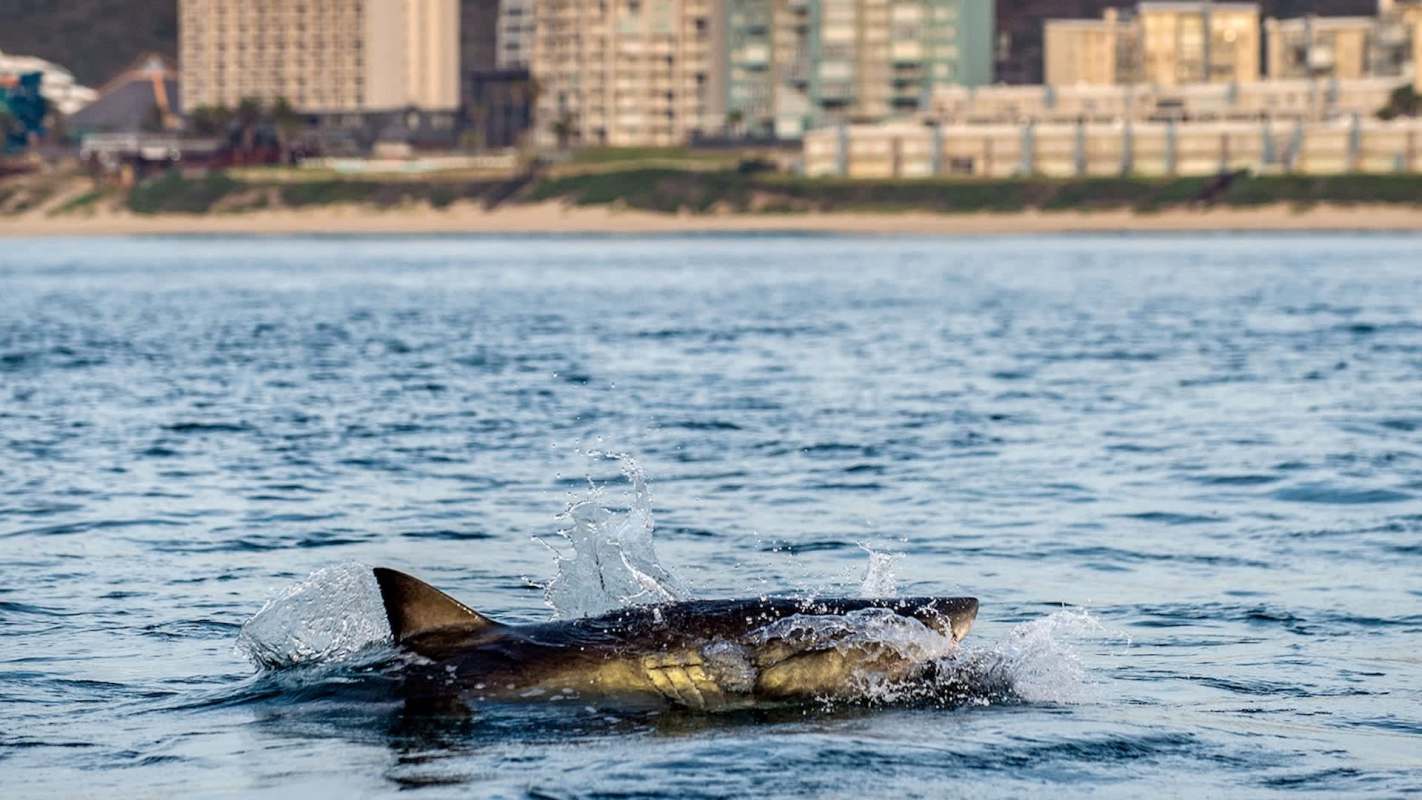
Near Pine Point Beach in Scarborough, Maine, drone footage revealed up to seven great white sharks feeding in waters close to the shoreline.
The Aug. 4 and Aug. 5 sightings come amid ocean shifts that may be increasing how often marine animals and beachgoers end up in the same space.
What's happening?
According to Bangor Daily News, two sharks were seen off Scarborough on Aug. 4, and on Aug. 5 Scarborough Police said a drone later observed five to seven great white sharks near Pine Point Beach. Police said baitfish and seals were probably drawing them in.
Visitors were urged to stay close to shore, avoid swimming alone, follow directions from lifeguards, and get out of the water if a shark is seen. Authorities also said there have been no reported aggressive encounters involving swimmers or boaters.
Although great whites do reach Maine, the state lies at the far northern edge of their range, so sightings there are relatively uncommon. Reports usually span May through December, with the busiest stretch running from July to September.
In 2020, Maine experienced its first recorded fatal shark attack when Julie Dimperio Holowach, 63, of New York City, was killed while swimming in Mackerel Cove off Bailey Island in Harpswell.
TCD Picks » Quince Spotlight
💡These best-sellers from Quince deliver affordable, sustainable luxury for all




Why does it matter?
Several large predators feeding near shore can quickly turn a routine swim into a situation that requires more caution from families, surfers, paddleboarders, and anyone else entering the water.
Researchers say warmer water in the Gulf of Maine, along with New England's recovering seal population, could lead to more sightings like these.
That does not mean sharks are targeting humans.
A warmer ocean and shifting food patterns can make those overlaps more common, especially along busy coastlines.
What can I do?
Choose areas watched by lifeguards, don't go into the water by yourself, and exit immediately if a shark is reported or spotted nearby. Remaining closer to shore can also lower risk.
The drone sighting also shows how monitoring tools can help communities respond more quickly. Drones, lifeguard alerts, and public warnings give people more time to react while allowing marine wildlife to remain undisturbed.
As ocean conditions continue to change, that kind of early warning may become even more important for coastal towns.
The Scarborough sightings reflect how a changing ocean can bring both wonder and risk to the same shoreline.

Get TCD's free newsletters for easy tips, smart advice, and a chance to earn $5,000 toward home upgrades. To see more stories like this one, change your Google preferences here.







