


In Texas, one injured owl has become an unlikely help to birds that still need to learn to fly.
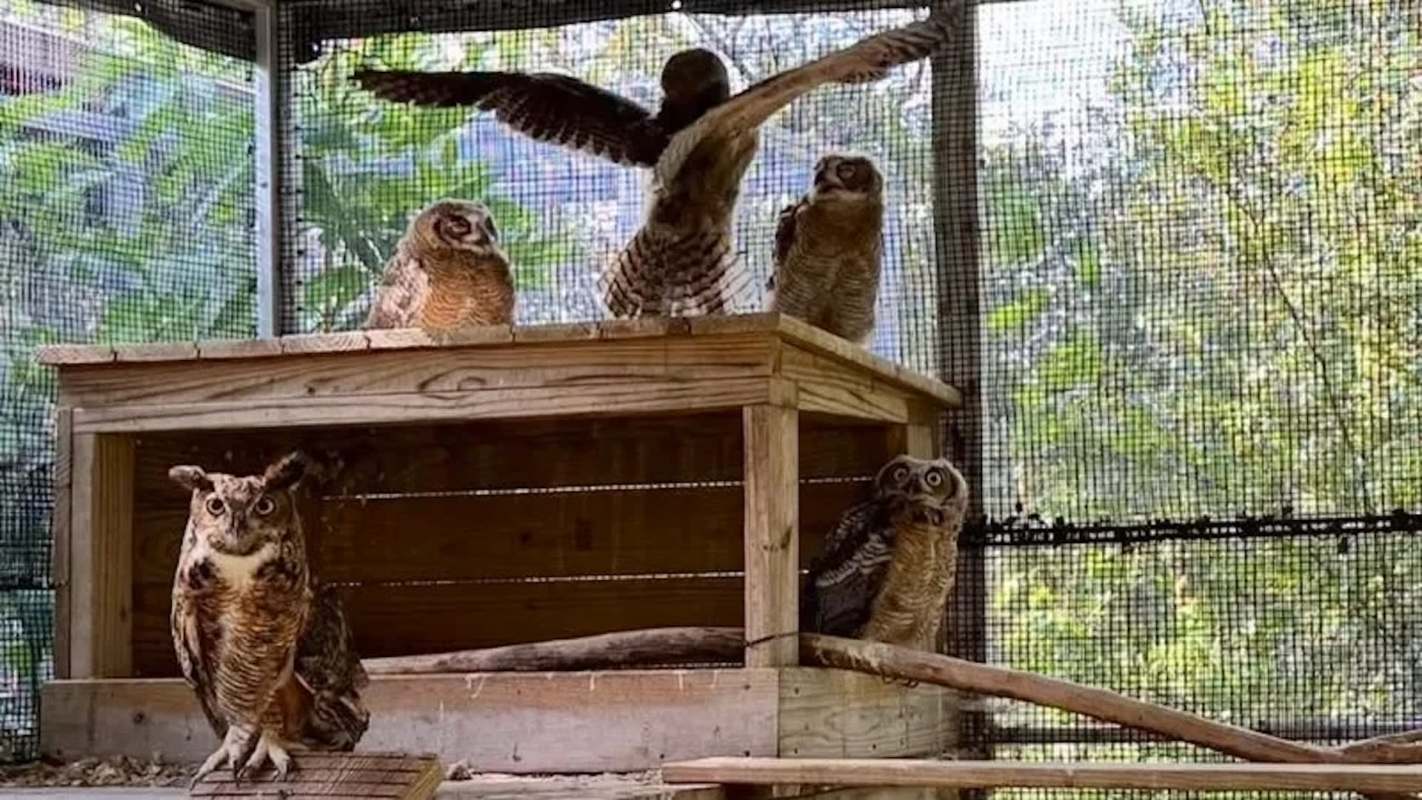
Eddison, a great horned owl at Austin Wildlife Rescue, can't take to the air herself, yet she's helped dozens of orphaned owlets mature and make it back to the wild.
What's happening?
According to CBS Austin, Eddison has acted as a surrogate mother for enough orphaned owls that more than 38 have made it back into the wild.
Each season, she typically takes in about 12 to 15 young great horned owls. She brought that experience with her when she arrived at the rescue in 2021 after a Bell County wildlife rehabilitator retired. Before relocating to Austin, she'd spent close to 10 years doing the same work at that facility.
A wing injury from early in her life left Eddison unable to fly. To help her keep caring for young owls, the rescue outfitted her enclosure with ramps. Each night, she walks the ramps to bring the owlets their food of frozen rodents, rather than delivering it from the air.
Eddison's current foster group has five young great horned owls, including an owlet recovered from the Lady Bird Johnson Wildflower Center. They're being raised together and are expected to be released as a group.
TCD Picks » Quince Spotlight
💡These best-sellers from Quince deliver affordable, sustainable luxury for all




Why does it matter?
Helping an orphaned owl involves more than keeping it fed and safe until it gets bigger. Young birds also need to learn normal owl behavior, and that isn't something people can easily provide.
Austin Wildlife Rescue executive director Jules Marin told CBS Austin that rehabilitators can supply shelter, food, and medical treatment, but they can't teach baby owls how to engage with other owls, show natural behaviors, or remain cautious around humans. Those abilities can be important once the birds are back on their own.
The owls' survival also affects the ecosystems they return to. Great horned owls are important predators, and helping orphaned birds reenter the wild supports healthier natural systems.
A single non-releasable animal, when given proper care and a role suited to her abilities, can help many others get a second chance.
What's being done?
Instead of treating Eddison's injury as the end of her usefulness, Austin Wildlife Rescue has arranged her enclosure so she can still do foster work.
The rescue also raises the young birds together, creating a surrogate family closer to a natural setting. Developing alongside one another gives the owlets more chances to practice species-specific behavior before release.
Licensed rehabilitators can determine whether intervention is needed when someone encounters an apparently orphaned animal, rather than having people try to raise it at home. In cases like this one, they can place young animals with appropriate surrogate care.
Austin Wildlife Rescue says Eddison is about 14 and has years of foster work left in her.

Get TCD's free newsletters for easy tips, smart advice, and a chance to earn $5,000 toward home upgrades. To see more stories like this one, change your Google preferences here.







