


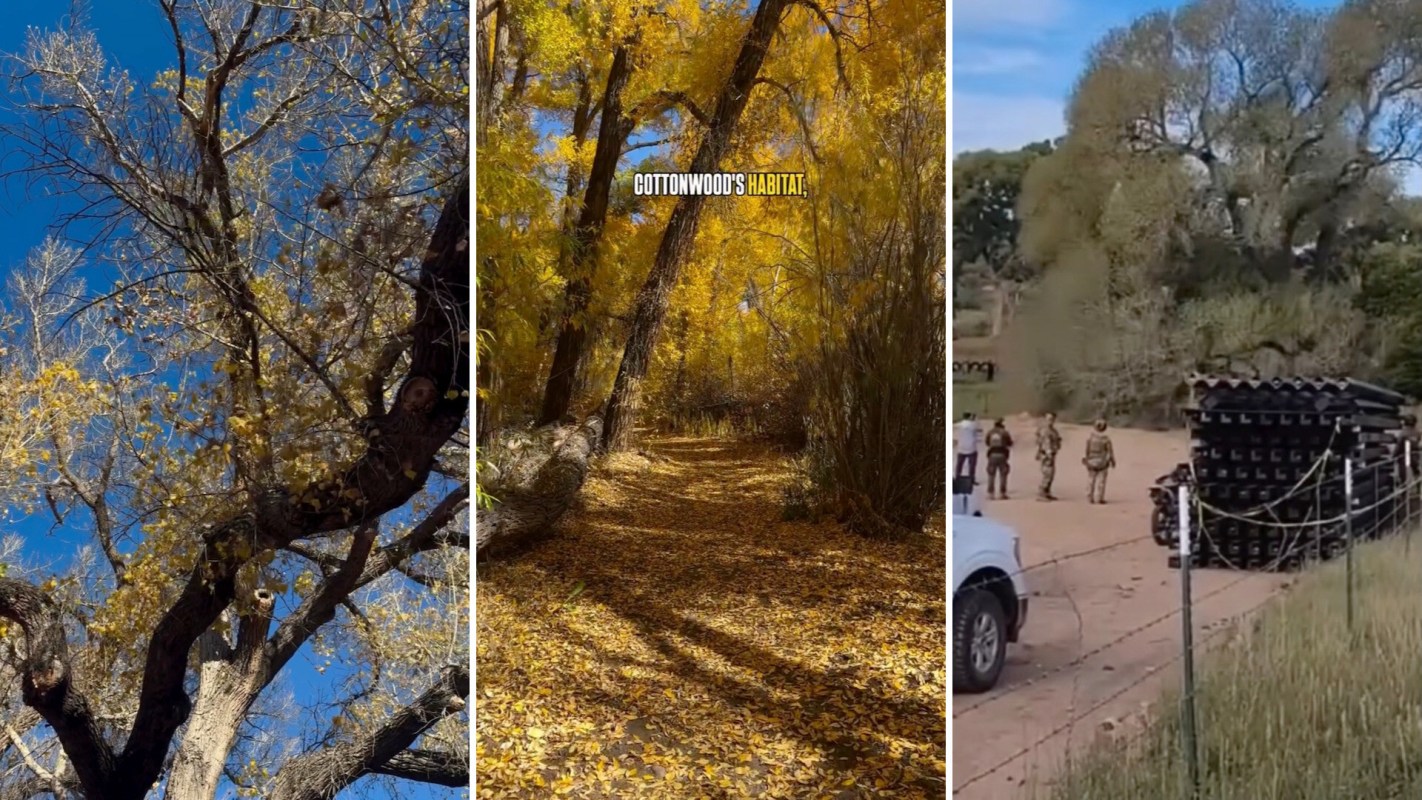
Activists spent weeks sleeping in a 200-year-old cottonwood near Lochiel, Arizona, in a valiant effort to save the last of four ancient trees that stood in the path of a new border wall.
The protest turned a desert landmark into a rallying point for people seeking to protect one of Arizona's rarest habitats.
However, on Oct. 5, crews removed the activists and cut it down anyway, ending the life of an iconic tree that was born before Arizona became an official state.
Here's what to know
According to an Instagram post shared by the creator behind @ashley.goes.hiking, the Grandmother Tree near Lochiel was the last of four ancient cottonwoods slated for removal for a double border wall.
The creator said three of the cottonwoods were cut down on July 27 and that supporters began taking turns in the remaining tree on July 29 to try to stop its removal.
The caption describes the final hours: "Today, they forcefully removed those protecting the tree and violently cut it down." The creator also detailed the effects of the destruction: "This is an attack on our fragile desert ecosystems."
TCD Picks » Quince Spotlight
💡These best-sellers from Quince deliver affordable, sustainable luxury for all




Less than 1% of Arizona consists of cottonwood riparian habitat.
More background
Although wetter cottonwood riparian habitats cover only a small share of the state, about four-fifths of Arizona's wildlife is believed to depend on them.
Losing an old cottonwood is not simply losing a scenic tree. It also means losing habitat in a desert where plants that provide shade, moisture, and shelter are scarce and slow to return.
The caption also says cottonwoods still provide habitat as they die, sheltering more than 40 species, including owls and bats.
Arizona's Fremont cottonwoods can live for roughly 150 to 200 years, and according to the caption, the Grandmother Tree was believed to be around 200. A tree that old cannot realistically be replaced within anyone's lifetime.
What's being done?
In the end, the sit-in efforts did not save the Grandmother Tree.
However, by publishing footage and naming the location, the trees, and the dates, the creator created a public account of what border wall construction can mean on the ground for nearby ecosystems and communities.
"Please pay attention to what this government is doing," they concluded.
For the creator who documented the cutdown, the loss was also personal. "In a desert like ours, we know what a tree like this means," they said.

Get TCD's free newsletters for easy tips, smart advice, and a chance to earn $5,000 toward home upgrades. To see more stories like this one, change your Google preferences here.







