


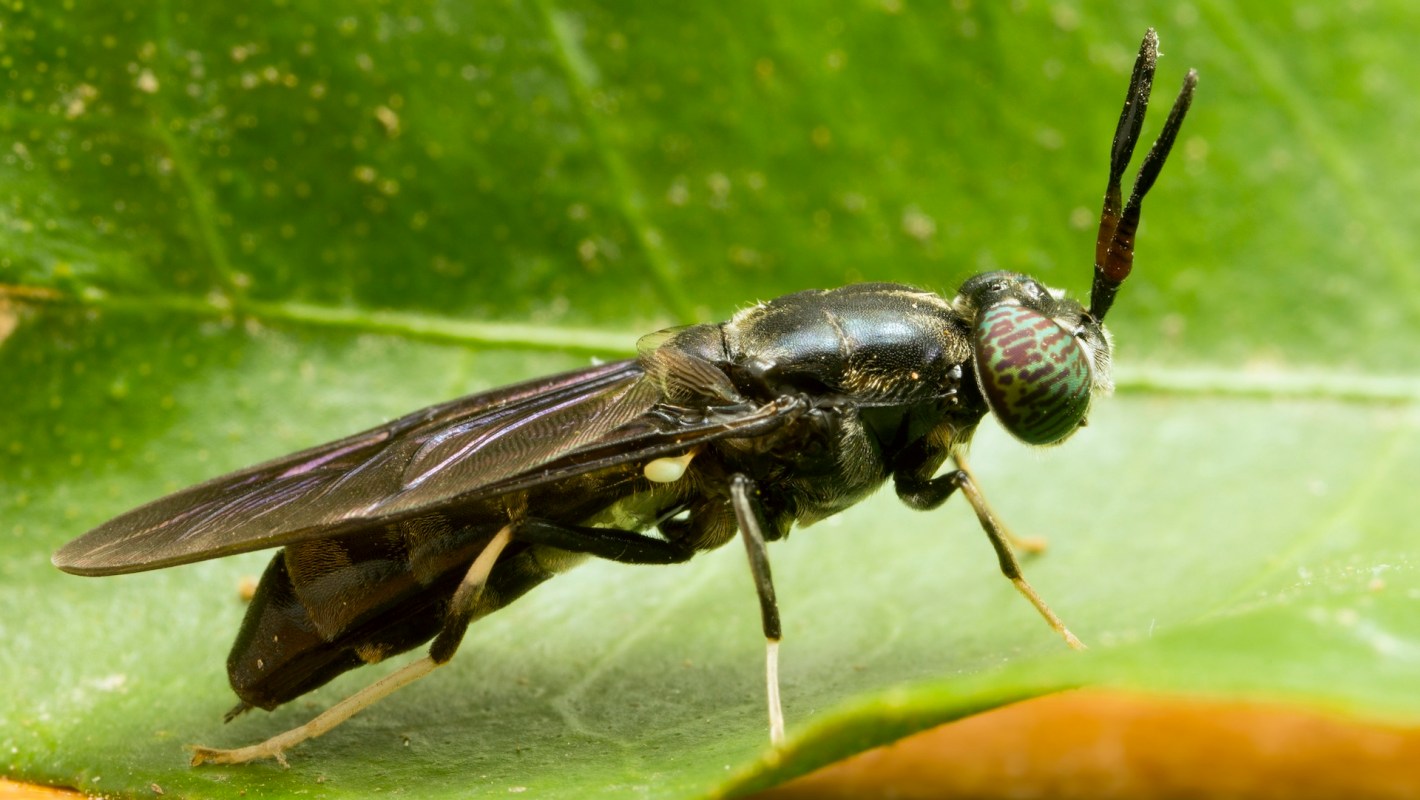
Although migrating geese are known for leaving unwanted presents in public areas, those dastardly droppings could actually become a source of valuable material with the right processing, according to new research from Concordia University.
A university news release detailed the relationship between the little landmines, black soldier fly larvae, and an aquatic plant called duckweed as established in a study published in the Journal of Environmental Management in March.
After confirming that larger flocks of geese produced more droppings, as expected, Concordia researchers tested what happened when they raised black soldier flies on a diet of goose poop. They also tested the Gainesville diet — a standard mixture of grains and alfalfa — and a 50/50 combination of the two.
While researchers found that the black soldier fly could develop to adulthood on any of these diets, the mixed diet was the most effective. The insects grew faster, became larger adults, reduced waste more efficiently, and had a higher overall survival rate.
So why is this important? Because goose poop alone isn't useful and can even damage the environment, but feeding it to flies can help it become a valuable resource.
"We wanted to see if the black soldier fly, a non-native species that is already industrially harvested widely, could be used to transform goose waste into valuable goods like protein and fertilizer," study co-author and assistant professor Rassim Khelifa said in the news release. "The answer is yes; it can."
TCD Picks » Quince Spotlight
💡These best-sellers from Quince deliver affordable, sustainable luxury for all




Black soldier fly larvae can be used to manufacture livestock feed, cycling nutrients back into the food chain. Though the goose excrement can be damaging, the excrement of the fly larvae — called frass — makes an excellent fertilizer. Researchers tested it on duckweed — an aquatic plant used for animal feed, wastewater treatment, and bioenergy — to evaluate its performance.
Not only was frass an effective fertilizer, but it also outperformed unprocessed goose poop in helping duckweed to grow. The plants were healthier and showed signs of getting more nutrients, such as developing shallower root systems. Ultimately, the duckweed produced 32% higher yield this way.
It may sound a little gross, but the research may move the agricultural industry one step closer to using an important untapped source.

Get TCD's free newsletters for easy tips, smart advice, and a chance to earn $5,000 toward home upgrades. To see more stories like this one, change your Google preferences here.







