


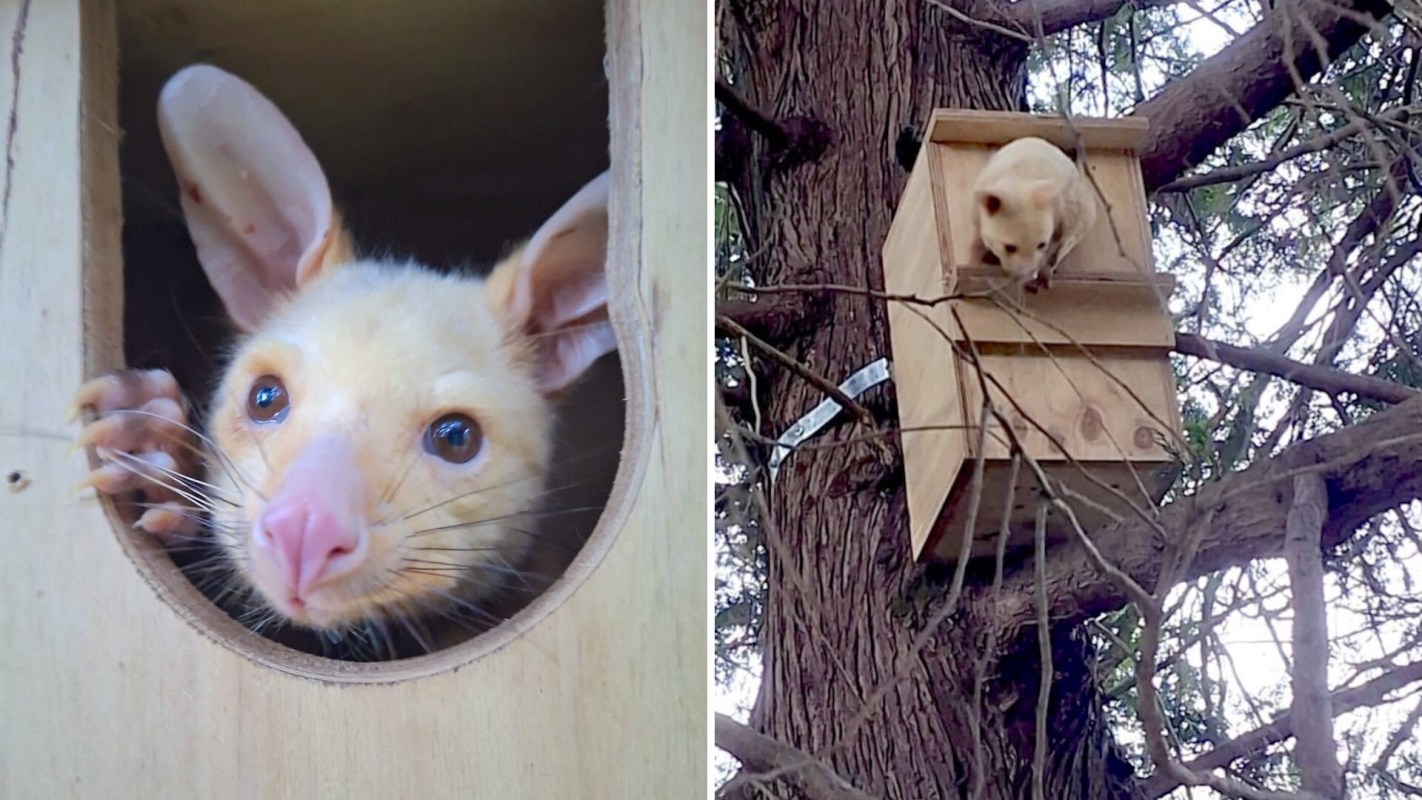
In Australia, a rare golden brushtail possum was spotted limping, but, thanks to a good Samaritan, the animal has been successfully treated and returned to his home area.
The rescue is a small but striking reminder that quick action from everyday people can make a major difference for local wildlife.
Here's what to know
According to an Instagram update from WIRES Wildlife Rescue (@wireswildliferescue), a member of the public found the injured possum, wrapped him in a soft towel, and took him to a local veterinarian for examination and imaging.
Thankfully, veterinary X-rays found no fractures or other obvious injuries. WIRES said the possum appeared to have soft tissue damage, so they monitored him overnight before placing him in short-term care.
After that, WIRES volunteer James looked after the possum for several days as he recovered. When the possum was ready, WIRES took him back to where he was found and released him into a possum box that WIRES said had been installed to keep him safe.
More background
Golden brushtail possums are a rare variation of the common brushtail possum. WIRES says their warm coloring is linked to a genetic mutation associated with lower melanin levels.
TCD Picks » Quince Spotlight
💡These best-sellers from Quince deliver affordable, sustainable luxury for all




The same bright fur that makes these possums so noticeable to people can create problems in the wild. WIRES explained that with less melanin, they can be easier for predators to spot and have a harder time staying hidden.
How can everyday people help wildlife?
In this case, the possum benefited from help at each stage: a vet ruled out more serious injury and provided appropriate treatment, a trained rescuer gave him time to recover, and the animal was released back into his home environment with the added shelter of the possum box.
However, none of these interventions would have happened if not for the good Samaritan who spotted the animal limping and decided to act.
If someone comes across injured wildlife, the safest approach is usually to seek veterinary or wildlife-rescue guidance and to avoid trying to provide long-term care without training.
"A huge thank you to the member of the public for helping this beautiful possum, and to James for caring for him until he was ready to go back home," WIRES wrote.
Where can I learn more?
Stories like this one offer a closer look at what helps injured and vulnerable animals recover and stay safe. These articles follow possums and other wildlife as rescuers, veterinarians, and new tools help them return to the wild.
• In Australia, glider poles above roads are helping possums cross traffic more safely.
• At a wildlife center, recovering Virginia opossums practice climbing and foraging before release.
• In Australia, detection dogs helped find earless dragons once feared extinct in native grasslands.
• In South Africa, a rescue dog used his remarkable sense of smell to find owls.
• At a wildlife hospital, a fox survived after a plastic bag blocked its stomach.

Get TCD's free newsletters for easy tips, smart advice, and a chance to earn $5,000 toward home upgrades. To see more stories like this one, change your Google preferences here.







