


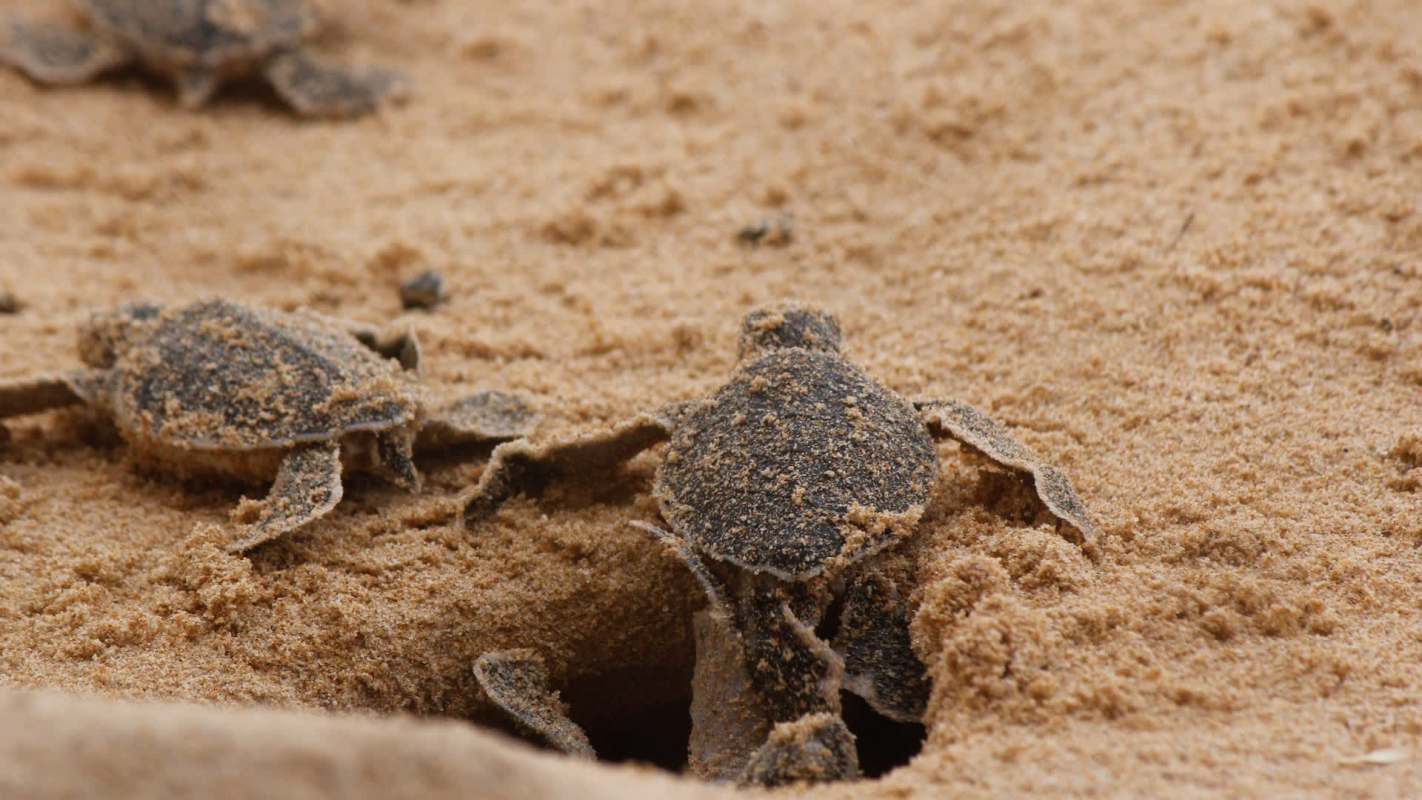
With weeks still remaining in nesting season, the southwest Florida barrier islands of Sanibel and Captiva are nearing a loggerhead sea turtle record, and thousands of hatchlings have already crossed the sand and entered the Gulf.
What's happening?
Today's strong nest counts on Sanibel and Captiva reflect a species pattern that spans generations: female loggerhead sea turtles lay their eggs on the same beaches where they hatched.
As WGCU reported, the current single-season loggerhead nesting record is 1,177 nests, and Sanibel and Captiva could top it if roughly 100 more nests are laid before the season ends.
By mid-July, the earliest nests of the season were already hatching, and 4,640 hatchlings had made it from the beach to the Gulf.
The update comes even as loggerheads continue to face serious threats near shore. One female turtle, named for the 1980s rock star Pat Benatar, was recently found dead without her hind end after a boat strike.
Why does it matter?
Sea turtle nesting can indicate whether coastal habitats are healthy enough to support animals that rely on dark beaches, stable shorelines, and relatively safe nearshore waters.
TCD Picks » Quince Spotlight
💡These best-sellers from Quince deliver affordable, sustainable luxury for all




Beaches that can support nesting turtles are often the same beaches communities rely on for recreation, tourism, and storm protection. Efforts such as protecting dunes, limiting disruptive lighting, and reducing dangerous boat interactions can help preserve the resilience and character of coastal areas valued by both residents and visitors.
Sea turtles face steep odds from the moment they emerge. Predators, artificial lights, beach obstacles, and marine traffic can all cut into their chances of survival.
Thousands successfully reaching the Gulf improve the odds for a species that depends on each generation making it back to shore decades later.
What's being done?
The Sanibel-Captiva Conservation Foundation's long-term record-keeping helps conservationists track trends, identify threats, and evaluate whether protection efforts are working.
On the ground, sea turtle protection often comes down to practical steps such as monitoring beaches, marking nests, educating residents and tourists, and encouraging boaters to slow down in areas where turtles may surface. While those measures cannot remove every danger, they can improve the chances for both adult turtles and hatchlings.
Keeping beaches dark at night, filling in holes before leaving, removing chairs and gear, giving nesting turtles space, and watching for posted nesting areas can all help. Boaters can further reduce harm by staying alert in coastal waters, especially during turtle season.
Sanibel and Captiva's near-record season reflects a rising nest count, a hatchling crawl underway, and a community seeing that long-term care can lead to real results.

Get TCD's free newsletters for easy tips, smart advice, and a chance to earn $5,000 toward home upgrades. To see more stories like this one, change your Google preferences here.







