


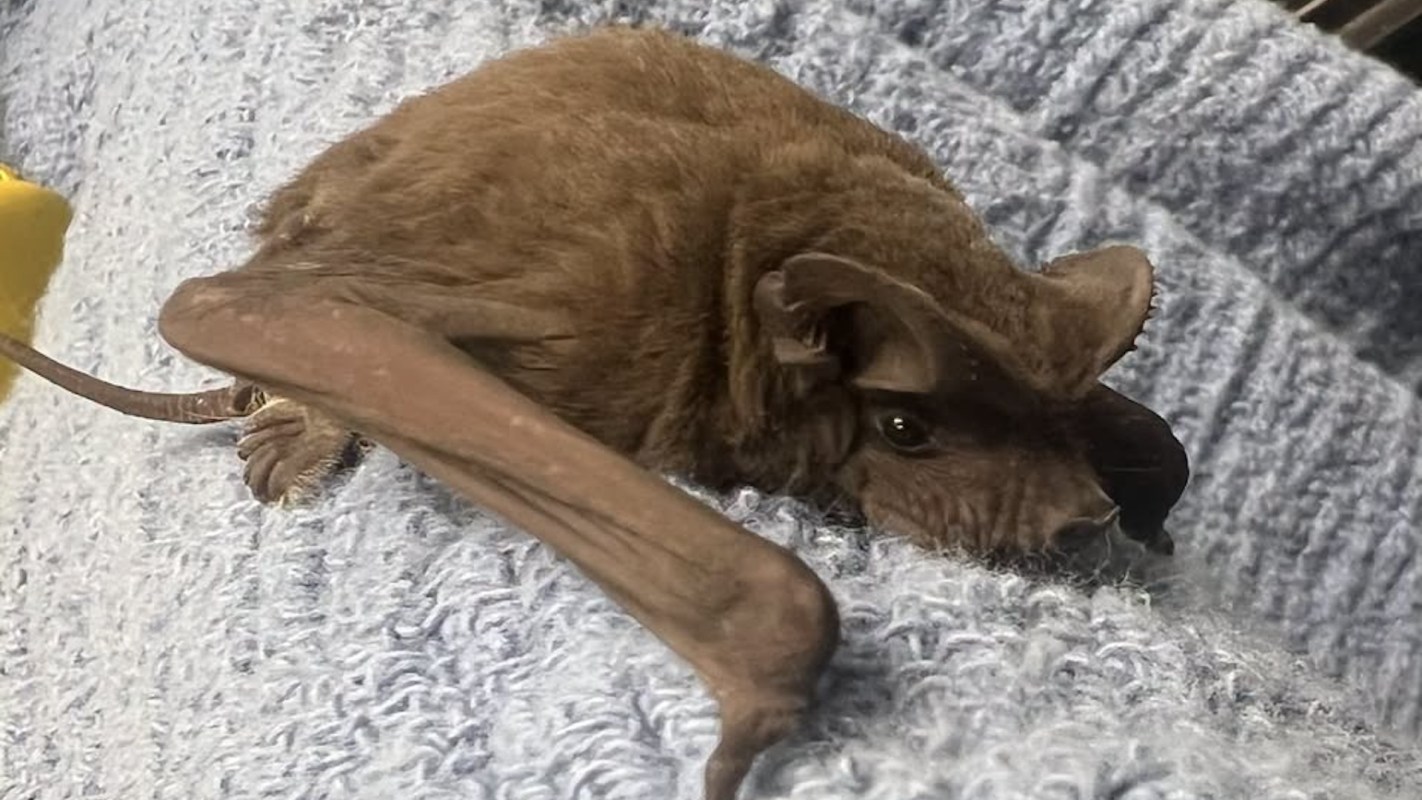
A tiny bat pup rescued in Jupiter Farms is doing more than recovering from a difficult start. The animal may also be helping expand what scientists know about one of North America's rarest mammals.
For Palm Beach County, the discovery marks a major milestone: The youngster is a Florida bonneted bat, an endangered species found nowhere else on Earth.
What happened?
After being found in Jupiter Farms, the young Florida bonneted bat was brought to Busch Wildlife Sanctuary.
The sanctuary's veterinary staff is now caring for the pup, estimated to be about 4 to 5 weeks old, with the hope of eventually releasing it, according to The Palm Beach Post.
The species is federally listed as endangered, and fewer than 1,000 may remain in the wild. Cases of Florida bonneted bats being successfully reared in captivity have been extremely rare.
Explaining how the species got its name, Heather Johnston, chief of veterinary medicine and conservation at Busch Wildlife Sanctuary, said: "The bat's very large ears circle the top of his head, giving him a bonneted appearance."
TCD Picks » Quince Spotlight
💡These best-sellers from Quince deliver affordable, sustainable luxury for all




According to Johnston, the find could represent the northernmost documented reproducing population of the species in Palm Beach County.
Why does it matter?
Researchers still have limited information about Florida bonneted bats. Every documented case can help scientists better understand how the species lives, reproduces, and responds to threats.
Bats play an important role in healthy ecosystems, including helping control insect populations. Protecting a rare native species can also strengthen local habitats that communities depend on, while preserving part of Florida's natural heritage.
Florida bonneted bats live in relatively small groups instead of huge colonies, and they reproduce slowly. Those traits can make it difficult for the species to recover from losses.
What's being done?
At Busch Wildlife Sanctuary, the veterinary team is providing specialized treatment aimed at getting the pup healthy enough for release. That is a difficult process for a species with very few successful captive-rearing cases.
About 12 years ago, Zoo Miami reared and weaned a Florida bonneted bat, and that outcome is still viewed as a major success for the species. With so few opportunities to study these animals up close, each rescue can add data.
Johnston said the bat's vulnerability comes from a mix of biological limits and outside pressures, including storms and chemical exposure.
"That's why they are endangered, and their range is so small, limited to southernmost Florida," Johnston said. "And they're especially susceptible to things like hurricanes, pesticide toxicity; they're an endangered, at-risk species on multiple fronts."

Get TCD's free newsletters for easy tips, smart advice, and a chance to earn $5,000 toward home upgrades. To see more stories like this one, change your Google preferences here.







