


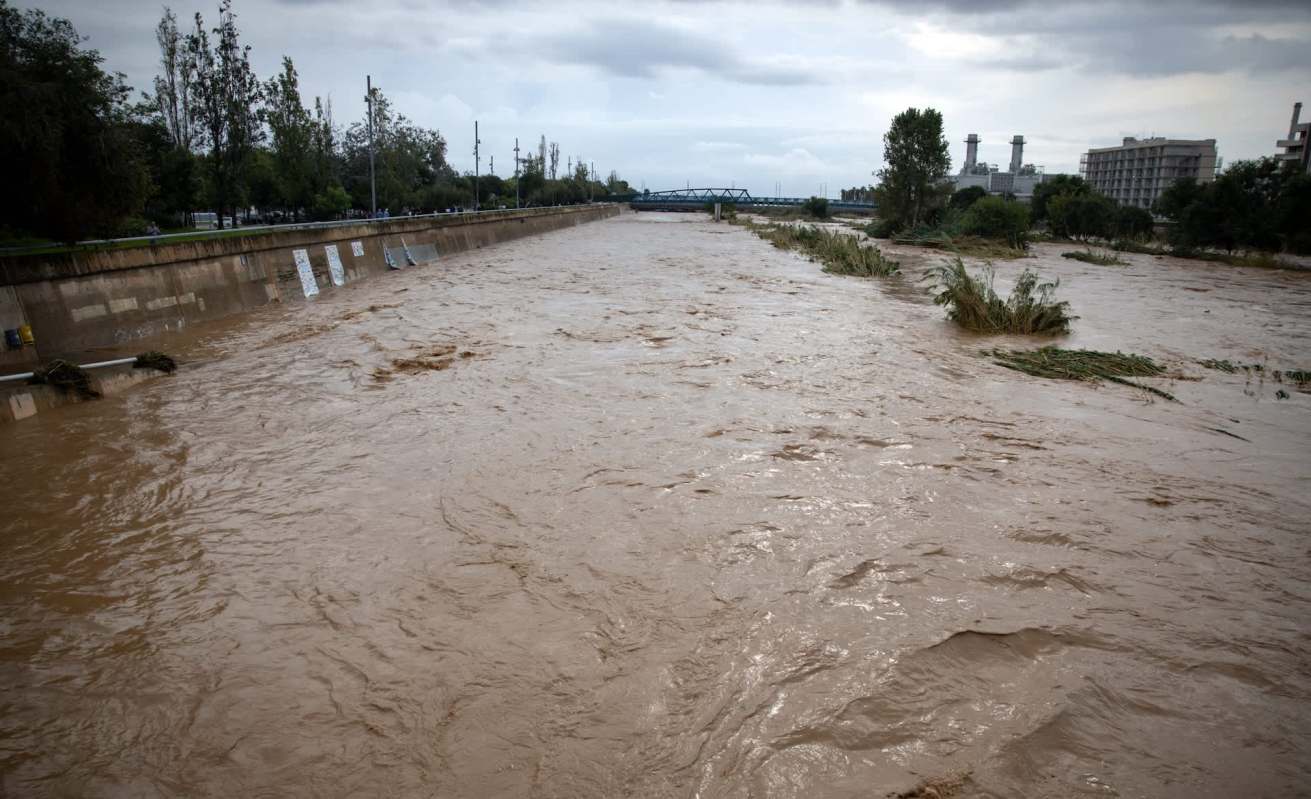
Torrential rain turned deadly in Catalonia on Sunday, when two people died, one person was reported missing, and the Besòs river rose above the danger threshold.
Catalan Civil Protection warned residents to avoid nonessential travel as the storm continued.
Here's what to know
Euronews reported that the service sent an Es-Alert to mobile phones in five counties — Gironès, Baix Empordà, la Selva, Maresme, and Vallès Oriental — that instructed residents to avoid all nonessential journeys while the torrential rain persisted.
Salvador Illa, the Catalan regional president, said in a social media post that day that two people had died, while firefighters said another person was missing after being swept away by floodwater in Pineda de Mar, north of Barcelona.
The storm made it Barcelona's rainiest day in at least two decades, per Euronews. Meteocat recorded 7.5 inches in the Raval; 6.7 inches in the University Zone on Diagonal Avenue, the highest total there in 18 years; and 6 inches near the Badalona Museum, the highest in 21 years.
On social media, Meteocat cautioned that the event was far from over, stating, "We still have hours to go," and adding that rainfall totals would be exceptional both for their volume and for how much of Catalonia they covered.
TCD Picks » Quince Spotlight
💡These best-sellers from Quince deliver affordable, sustainable luxury for all




More background
An Es-Alert issued just before 5 p.m. Saturday told residents in 20 Catalan counties to stop activities and travel at 8 p.m. Heavy rain from a convective mesoscale system over the Mediterranean had been falling since midday, putting the Catalan coast under emergency alert, according to Euronews.
The Catalan Water Agency said the last stretch of the Besòs had risen above the danger level. Water moving through Santa Coloma de Gramenet prompted a hydrological risk warning and signaled an imminent flood risk.
By 3 a.m., Catalonia's fire service had fielded 682 calls, most tied to flooding, Euronews noted. Barcelona's Bombers reported 910 calls and 145 operations linked to the storm by 7:20 a.m., while crews in Granollers were working to free people stranded in cars at a flooded roundabout.
In Biscay, water rose to around knee level in parts of Bilbao's Old Town, some residents couldn't get into their homes, and a number of businesses used wooden boards in an effort to keep water out.
Extreme storms are dangerous for the people in their path. Heavy rainfall can overwhelm drainage systems and rivers, putting homes, roads, and emergency crews at risk and straining the hospitals and services that communities rely on to respond, per Euronews.
What's being done?
As the rain band moved north, the latest Es-Alert told residents in the five affected Catalan counties to follow travel restrictions and avoid all nonessential journeys.
Officials warned that the severe weather might last until 2 p.m. Sunday, Euronews reported.
The Catalan Water Agency issued a hydrological risk warning after the Besòs surged, while firefighters responded to hundreds of flood-related calls and worked to rescue people.
Farther west, Euskalmet maintained an orange alert in Biscay through midnight Sunday and then shifted to a yellow advisory that lasted until 6 a.m. as rainfall was expected to ease.
In his message, Illa urged residents "not to let their guard down" during "a complicated night" because the episode "has not yet come to an end," according to Euronews.
Where can I learn more?
These stories offer more perspective on extreme rain and other disasters in Spain and beyond.
• Elsewhere in Spain, a year's worth of rain fell in eight hours, killing at least 205 people.
• In Brazil, record-breaking flooding and landslides turned rainstorms fatal.
• After major storms, effects in the weeks that follow can drive death rates higher.

Get TCD's free newsletters for easy tips, smart advice, and a chance to earn $5,000 toward home upgrades. To see more stories like this one, change your Google preferences here.







