


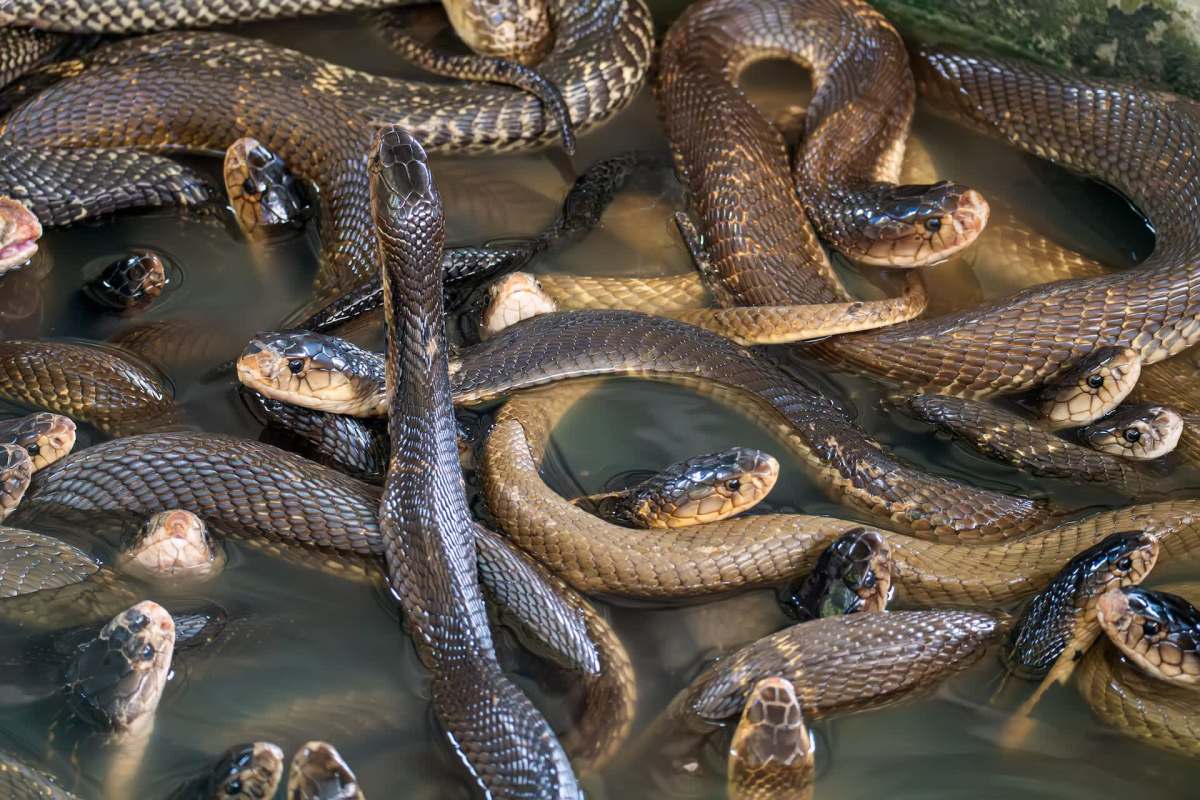
After floodwaters tore through a snake-breeding farm in southern China, residents faced a bizarre and dangerous new threat: thousands of escaped snakes slithering through muddy water, streets, and even homes.
Volunteer snake catchers rounded up as many as 3,000 of them over the next two days, according to The Sun.
What happened?
In Dengwei village in Hengzhou, villagers began spotting snakes in standing floodwater and discovering them curled up in corners of homes after severe flooding damaged a local breeding facility and let large numbers escape.
By July 9, Mr. Zhu, identified by The Sun as part of a civilian snake-catching team, said eight hunters had caught roughly 2,000 to 3,000 snakes. Local officials said the animals got out on July 6 after the Liulan Reservoir gave way during extreme weather linked to Typhoon Maysak.
Although the farm reportedly kept cobras, king rat snakes, and water snakes, Wu Zhi, identified by The Sun as a local village committee head, said most of the escapees were not venomous. The snakes that were caught were said to be mainly Chinese rat snakes.
After the flooding, The Sun said Hengzhou People's Hospital treated several people for snakebites.
TCD Picks » Quince Spotlight
💡These best-sellers from Quince deliver affordable, sustainable luxury for all




Why does it matter?
The flooding destroyed roads and damaged homes, but it also swept captive animals into residential areas, creating a public health threat.
The scale of the wider disaster was also immense. The Sun reported that roughly 130,000 people had to leave their homes, around 375,000 were affected, and the death toll in southern China had reached at least 39. Residents were already dealing with rising water, power outages, rescue operations, and the added threat of snake encounters.
The snakes were being bred at a man-made facility near a community, and once flood-control infrastructure failed, people and animals were forced into sudden contact.
As extreme weather puts greater pressure on infrastructure, the human consequences of those failures can spread in unexpected and dangerous ways.
What's being done?
Response efforts moved on two fronts. Civilian snake catchers spent two days pursuing the escaped reptiles, while emergency crews were deployed across the region to assist residents and deal with flood damage.
At Hengzhou People's Hospital, health authorities set up expedited snakebite treatment and increased antivenom supplies, The Sun reported. The outlet also said medical specialists were brought in to help with care and advise on treating snakebites.
The broader emergency response has been substantial. Upwards of 8,000 rescue personnel, supported by 5,700 boats and drones, were sent out to reach stranded residents, deliver supplies, and help restore essential services.
For residents caught in the flooding, the danger was immediate and personal.
"I was working here when the flood came very quickly," local resident Mr. Liang said. "I didn't have time to evacuate."

Get TCD's free newsletters for easy tips, smart advice, and a chance to earn $5,000 toward home upgrades. To see more stories like this one, change your Google preferences here.







