


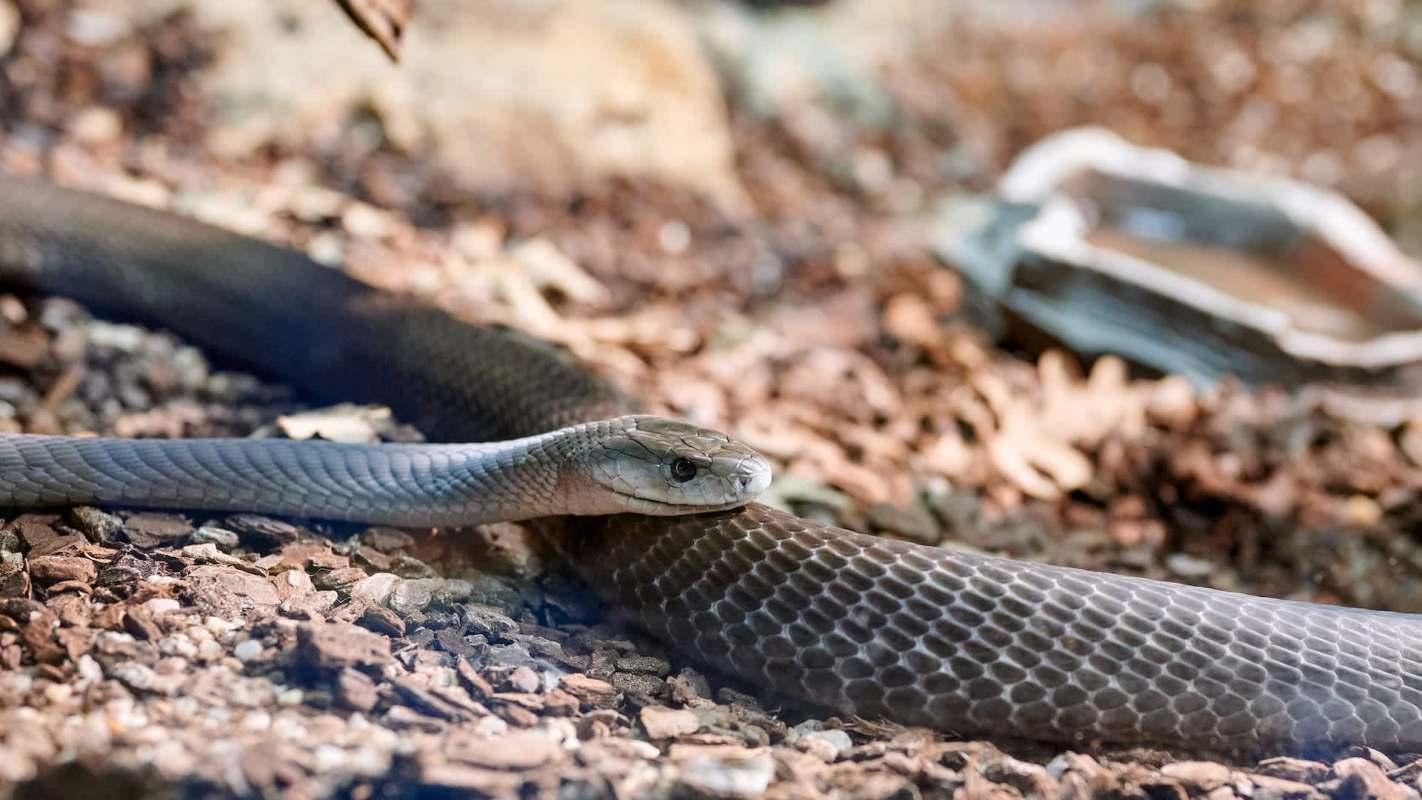
Roughly 100 fishermen make their lives on Musambwa Island in Lake Victoria, a five-acre Ugandan outcrop also occupied by hundreds — and possibly thousands — of highly venomous forest cobras.
Even after decades of daily proximity between people and snakes, no fatal bite has been recorded on the island.
Here's what to know
Among Africa's most dangerous venomous snakes, forest cobras would seem like unlikely neighbors. But, according to Discover Wildlife, the Baganda fishing community on Musambwa said their coexistence rests on mutual respect.
Local belief treats the snakes as sacred, so harming them is forbidden. The island's name, Musambwa, is associated with spirits or gods in Luganda belief, and that same belief system also prohibits things like cutting trees and eating bird eggs.
Abundant prey may also help explain the arrangement. The island contains the world's largest grey-headed gull colony, along with cormorants, herons, egrets, and kingfishers, giving the cobras easy access to eggs, nestlings, and birds.
More background
Forest cobras can exceed 10 feet (3 meters), but those on Musambwa reportedly average about 5.6 feet (1.7 meters). Because their venom is highly neurotoxic, the absence of fatal bites stands out even more.
TCD Picks » Quince Spotlight
💡These best-sellers from Quince deliver affordable, sustainable luxury for all




For such a small place, Musambwa supports an enormous number of breeding birds. That dense wildlife population feeds the snakes and highlights how closely linked species can be within a single habitat.
Most of the fishermen living there are in their 20s and 30s, and they return to families on the mainland every few weeks. Their work depends on Lake Victoria, while their safety appears to depend in part on customs that reduce conflict with dangerous wildlife.
There has reportedly been only one human bite on the island, and it was believed to have been accidental and a dry bite, meaning no venom was injected. That suggests the snakes become defensive when necessary but are not actively aggressive toward the people around them.
What's being done?
Many of the strongest protections come from the community itself. Spiritual rules discourage harming the snakes and also shield the island's trees and birdlife, helping maintain the balance that seems to make this coexistence possible.
Formal protections exist too. Musambwa belongs to the Sango Bay-Musambwa Islands-Kagora Wetland System, a 212-square-mile (550-square-kilometer) area that Discover Wildlife reported is protected under the Ramsar Convention as a Wetland of International Importance. That status strengthens environmental safeguards and helps limit ecological damage.
Tourism is allowed, but it is closely managed because the island's habitat is fragile. Disturbing nesting birds or stressing the snakes could disrupt the dynamic that has endured for decades.
In 2020, the island's fishing community leader, referred to as the Chairman, told visiting American ethnobiologists "that a couple had sex on the island once, causing a devastating storm that destroyed boats and dwellings."
Where can I learn more?
Musambwa is a rare case where custom, habitat, and animal behavior seem to keep dangerous encounters to a minimum. Elsewhere, that balance is harder to hold, and these articles look at what happens when people and wildlife are pushed into closer conflict.
• In Karnataka, India, habitat pressure has worsened the problem of dangerous human-wildlife encounters.
• In urban areas, the potential for conflict is growing as wild animal sightings rise.
• In South Africa, acts of aggression against wildlife can reshape baboon behavior and social stress.
Each case underscores how quickly coexistence can unravel when habitat pressure rises or human behavior changes. That makes Musambwa's long-running balance between people and dangerous wildlife stand out even more.

Get TCD's free newsletters for easy tips, smart advice, and a chance to earn $5,000 toward home upgrades. To see more stories like this one, change your Google preferences here.







