


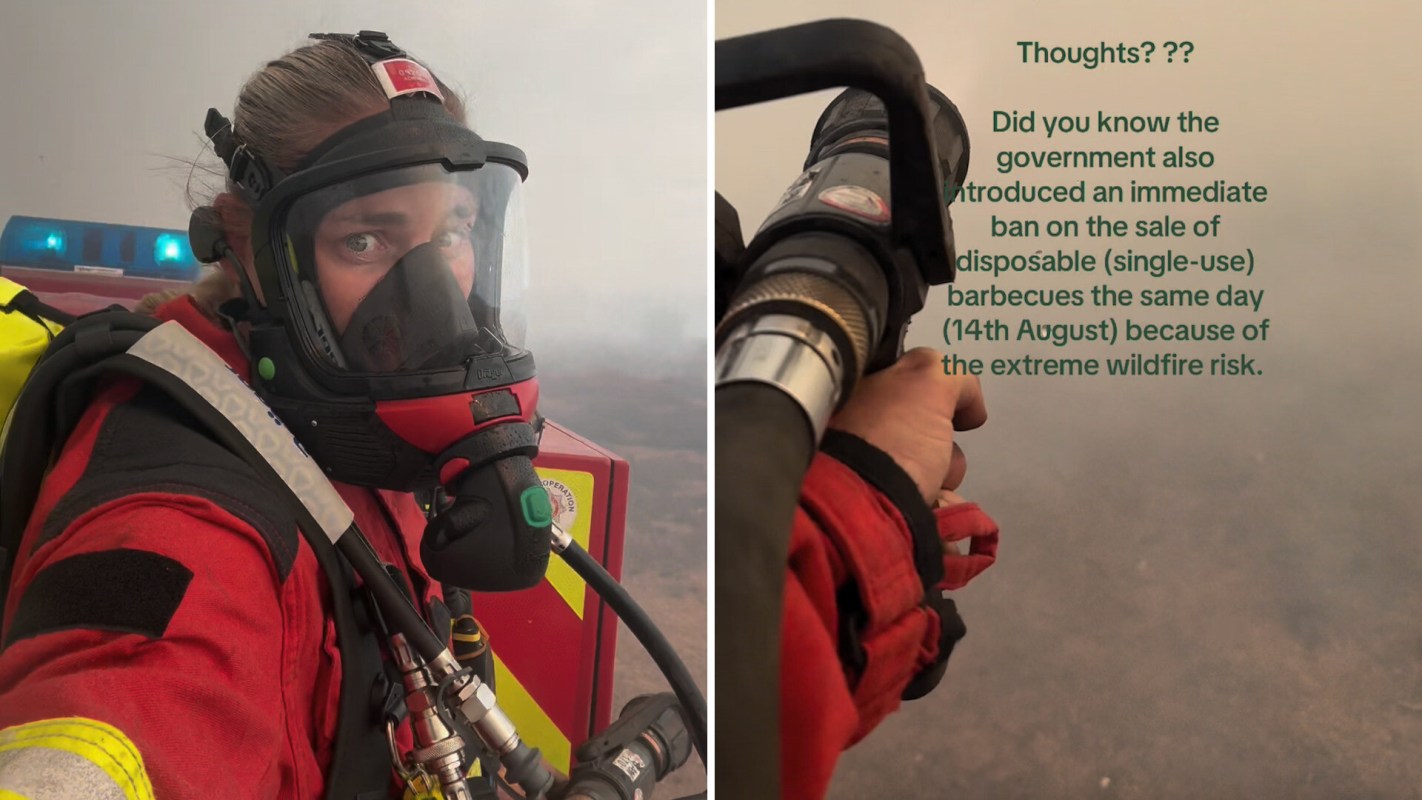
A video from England's New Forest offers a rare view from the fire line itself, showing that some of the safest and most effective work often happens at the edges of a blaze rather than in its most dramatic center.
Here's what to know
The footage from firefighter Shiv (@shivv_e) on TikTok was recorded during an active wildfire, and it gave viewers a look at what working the flanks actually involves.
"This is my view as we work the flanks, slowing the spread and keeping the fire under control," Shiv wrote in the caption. "Firefighters usually work from areas where the fire is less dangerous, rather than charging directly into huge flames."
Those efforts are aimed at the sides of the blaze, where crews have a better opportunity to check its movement and keep it within a more manageable area than they would by heading straight into the tallest flames.
@shivv_e This is my view as we work the flanks, slowing the spread and keeping the fire under control. Firefighters usually work from areas where the fire is less dangerous, rather than charging directly into huge flames. #governmentalert #wildfires #bbq #staysafe #newforest ♬ Sand Drawing - Judah Earl
The part of a wildfire that looks most intense is not always the place where firefighters can work safely or accomplish the most.
"Over 10 houses near me burnt down because of the fires," one commenter shared. "So many lives destroyed and memories lost."
TCD Picks » Quince Spotlight
💡These best-sellers from Quince deliver affordable, sustainable luxury for all




More background
Wildfires can change quickly. By working from less dangerous areas, firefighters can try to slow the fire's forward movement, protect escape routes, and reduce the risk of becoming trapped if the wind shifts or fire behavior intensifies.
When crews can hold the edges of a blaze, they may be better positioned to keep the fire away from homes, roads, and wildlife habitat. Even when the largest flames are still visible, work along the perimeter can prevent an even worse outcome.
What can be done?
Prevention still matters. Human activity can ignite fast-moving fires, so following local fire restrictions and avoiding risky behavior in dry conditions can all help reduce the danger.
People living in fire-prone areas can also take simple steps to prepare, including monitoring official alerts, making evacuation plans, and clearing dry vegetation around their homes where possible. Those measures do not stop large fires on their own, but they can help people stay safer when conditions worsen.

Get TCD's free newsletters for easy tips, smart advice, and a chance to earn $5,000 toward home upgrades. To see more stories like this one, change your Google preferences here.







