


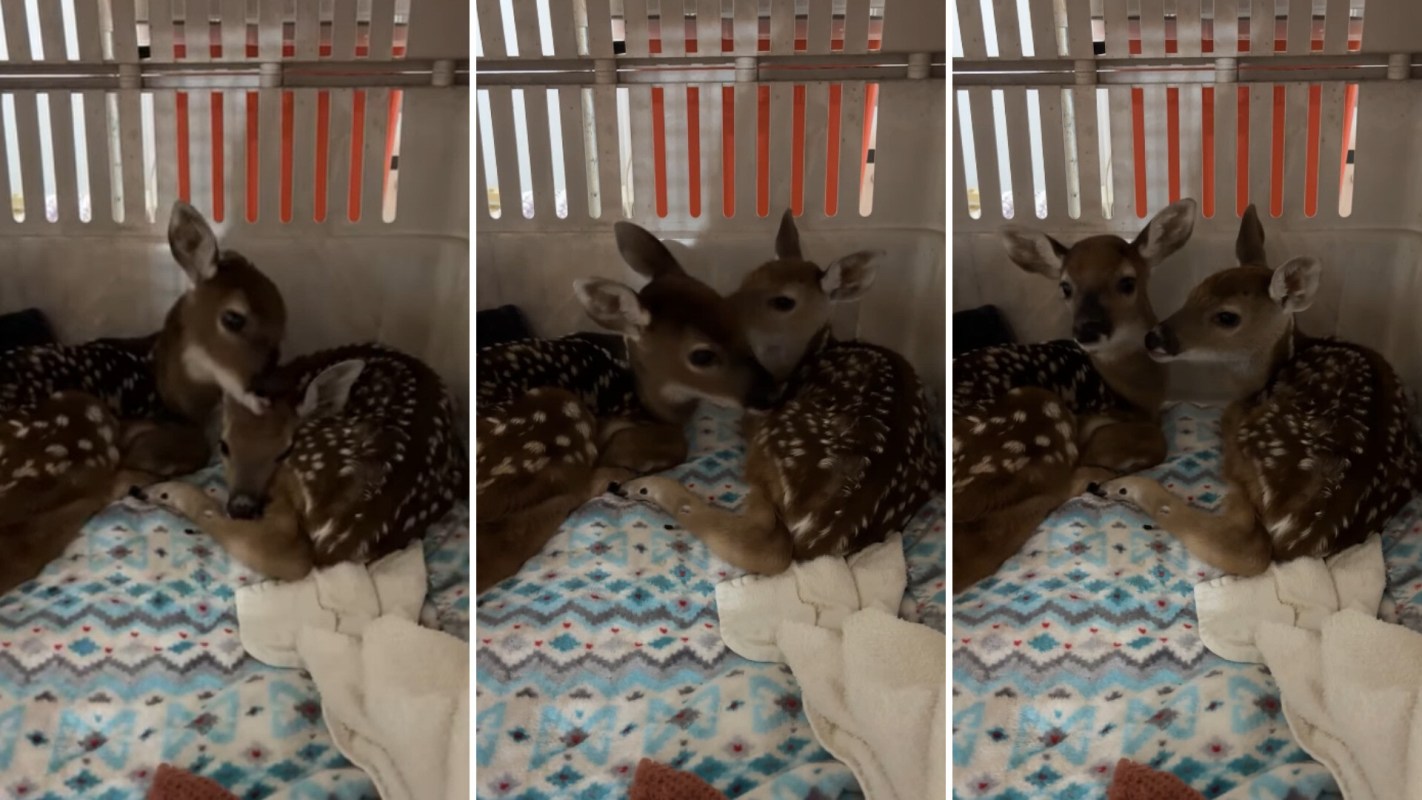
A Florida firefighter is being praised for a small but meaningful act of compassion after rescuing a baby deer from a wildfire zone near Tampa.
The ash-covered fawn, later named Phoenix, is now recovering after first responders and wildlife volunteers stepped in to help.
What happened?
During a roughly 500-acre wildfire in Pasco County, Florida, firefighter Cameron Hall came across a baby deer that was caught in brush and ferns and unable to free itself, according to WSVN.
"When I got out, I noticed there was a little baby deer stuck in this tanglement of ferns and brush," Hall said. "It was definitely scared, definitely hurt. I mean, its feet were all bloody, its stomach was covered in ash."
Before bringing the animal to Owl's Nest Sanctuary for Wildlife, Hall got the fawn out of the brush and gave it a little TLC. "We gave it some water. We did some oxygen for it to try to get it to relax, try to talk to it, everything like that," he said.
After arriving at the sanctuary, the fawn was named Phoenix by volunteers. A few days later, two twin fawns were also rescued from the same fire zone. One of the twins did not survive, but the other lived and was given the name Tala — Cherokee for "survivor," according to WSVN.
TCD Picks » Quince Spotlight
💡These best-sellers from Quince deliver affordable, sustainable luxury for all




Why does it matter?
Wildfires can devastate ecosystems in ways that reach far beyond the visible flames, especially for newborn animals that cannot escape on their own. Porter, director of Owl's Nest Sanctuary for Wildlife, told WSVN that the fawns were likely born that day and then left behind by their mothers as the wildfire burned.
"The problem is, with the fawns, they get left during the day, they literally – they roll into a ball and wait for Mom, so that's what probably what [Phoenix] was doing," Porter said.
Wildfires can strain both communities and wildlife, and emergency responders may find themselves protecting animals as well as homes and infrastructure. WSVN reported that Phoenix and Tala suffered minor burns and are expected to recover fully.
What's being done?
Hall's rescue was only the beginning of the effort. At Owl's Nest Sanctuary for Wildlife, the fawns are now being fed, monitored, and rehabilitated until they are ready to live independently.
Porter said the surviving twin is still settling in. "She came in Monday, so she's figuring it out with us," Porter said. According to WSVN, within a few months, both fawns are expected to be grown and living on their own again.
For people moved by rescues like this one, supporting licensed wildlife rehabilitation centers and local conservation efforts can make a real difference when disasters strike. Those looking to help in their own communities can check out the TCD Guide's page on taking local action or its page on donating money to climate causes.
Recovery does not end once the flames are extinguished. It continues through the efforts of firefighters, sanctuary staff, and neighbors willing to help wildlife survive. "To learn the outcome, that he is gonna make it and make a full recovery, that's awesome," said Hall.
Porter added, "We've been successful so far. It's a long process, but it's worth it. I mean, how could you say no to something this cute?"

Get TCD's free newsletters for easy tips, smart advice, and a chance to earn $5,000 toward home upgrades. To see more stories like this one, change your Google preferences here.







