


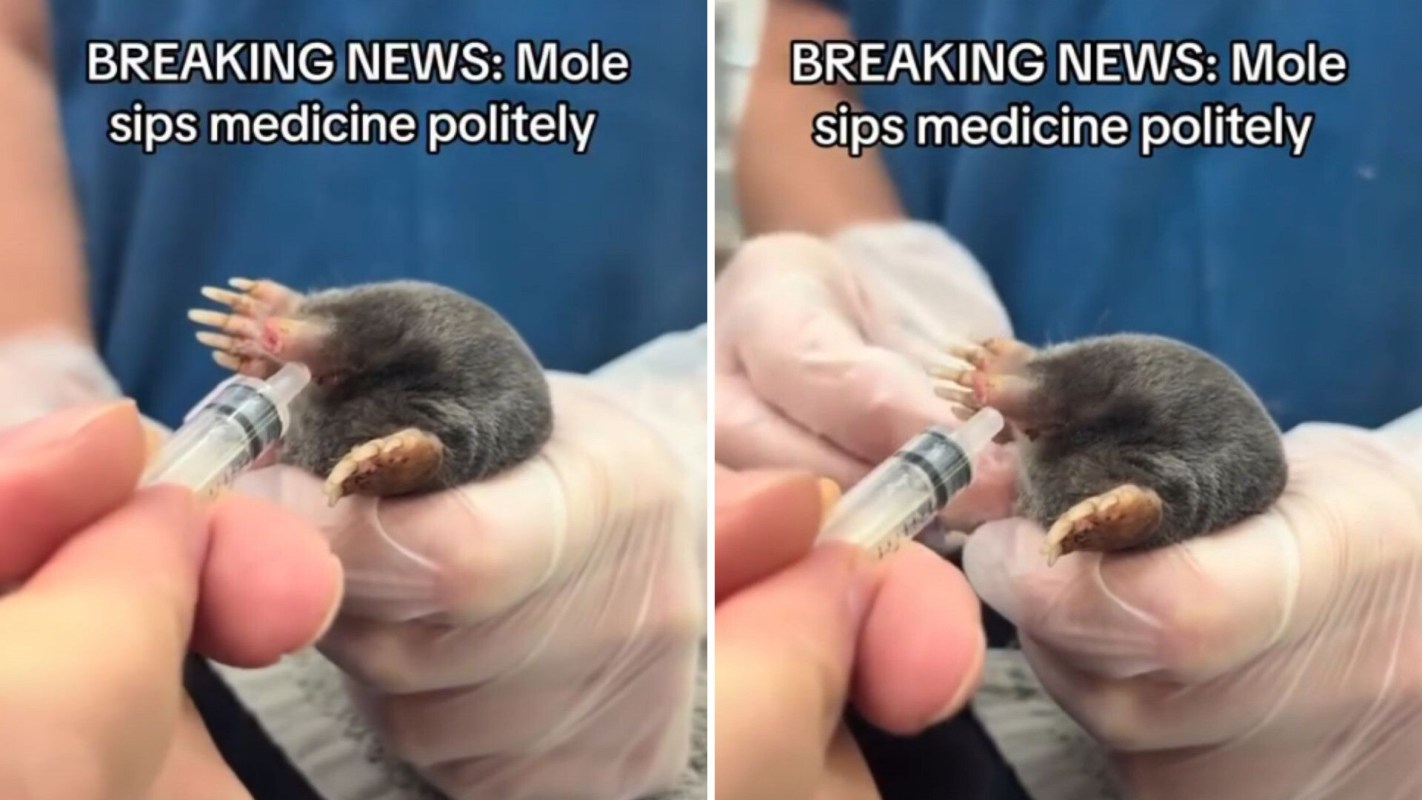
Rescuers feared the worst when a European mole was brought in after an encounter with a cat. The animal had been discovered collapsed, but after emergency treatment, it recovered well enough to return to the wild the following day.
What happened?
According to the Wildlife Aid Foundation in a post on Instagram, a European mole was taken in after a "dangerous encounter with a cat." The rescue said the animal had been found collapsed, prompting an urgent examination by its veterinary team.
Although staff initially worried about the mole's condition, the checkup showed the damage was limited. It had only minor injuries and was released the next day.
The video shows the tiny mole adorably sipping medicine out of a syringe.
The post also highlighted an often-misunderstood fact about the species. The foundation said European moles are not fully blind: their eyesight is poor, and their tiny eyes, hidden by fur, are mainly adapted to detect light and darkness, which fits an animal that spends much of its life underground.
Why does it matter?
Native wildlife is constantly sharing space with pets, roads, lawns, and other human-made hazards. For small mammals such as moles, a single encounter can quickly turn deadly.
TCD Picks » Quince Spotlight
💡These best-sellers from Quince deliver affordable, sustainable luxury for all




Healthy ecosystems support healthier communities. Moles are part of the web of life beneath our feet, and their tunneling can help aerate soil and improve drainage. When native species survive and continue to play their roles, gardens, parks, and green spaces all stand to benefit.
Someone noticed the mole was in distress, got it to trained professionals, and helped give it a second chance.
What's being done?
In this case, the most important step was immediate care from an experienced wildlife rescue team. Organizations such as the Wildlife Aid Foundation provide emergency treatment, rehabilitation, and, when possible, a swift release back into the natural habitat.
The foundation also directed readers to more information about the European mole.
If you come across an injured or collapsed wild animal, keep pets away, avoid excessive handling, and contact a licensed wildlife rehabilitator or veterinarian as soon as possible. For cat owners, supervised outdoor time or other measures that reduce hunting can also help lower the risk to small wildlife.
The foundation described the turnaround in its own words: "He was released the very next day back into the wild!" It added that the team was "surprised to find out that this little fighter had walked away with only minor injuries!"

Get TCD's free newsletters for easy tips, smart advice, and a chance to earn $5,000 toward home upgrades. To see more stories like this one, change your Google preferences here.







