


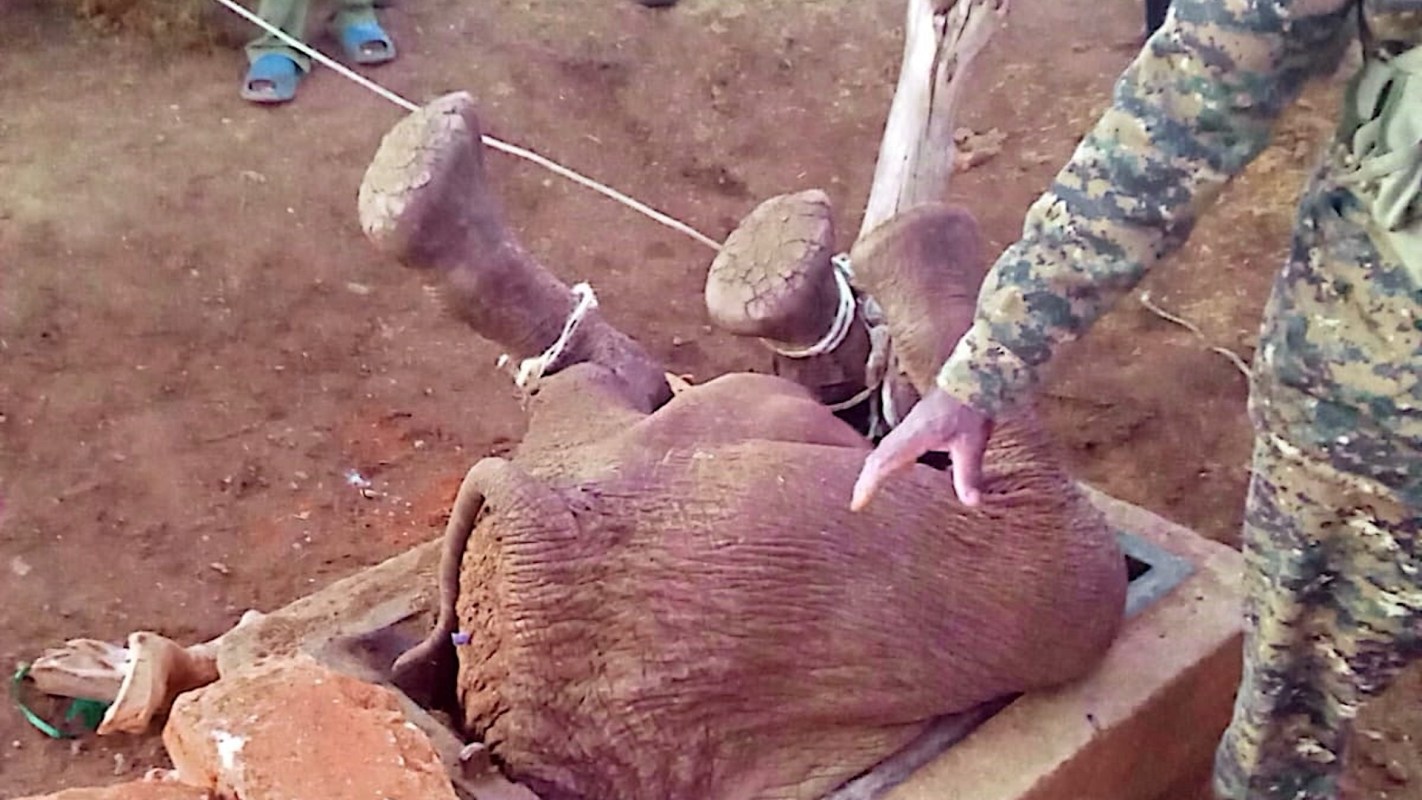
An elephant rescue in Kenya has gone viral after the animal was spotted stuck headfirst in a manhole.
Wildlife responders thankfully were able to pull the young elephant free before returning him to his family.
What happened?
The Sheldrick Wildlife Trust shared the story of this animal's rescue. After the group's "Ops Room" got reports that a calf was trapped, it got to work, coordinating with Kenya's Wildlife Service.
In a post on Instagram, SWT wrote, "We're no strangers to unusual sights in the field, but even for us, this was shocking … It was a wrenching sight … His herd was nearby, stressed but helpless."
Luckily, responders were able to extract the elephant and reunite him with the herd. The SWT wrote, "the team first shepherded the herd a short distance away, so they could safely get to work… [Then] after more than an hour of inch-by-inch progress, they finally pulled him free."
The group concluded that "this was a difficult operation with the best possible outcome — a wild life saved and a family kept together."
TCD Picks » Quince Spotlight
💡These best-sellers from Quince deliver affordable, sustainable luxury for all




Why does it matter?
For a young animal, being trapped upside down or unable to climb out can quickly become life-threatening, especially if the herd moves on before help arrives.
The mixture of human-built infrastructure and animal movement sometimes leads to dangerous outcomes. When they intersect with migration routes, watering areas, or feeding grounds, things like open manholes, drainage channels, roads, and fences can become dangerous obstacles.
Young elephants are especially vulnerable since they rely heavily on their herd for protection, navigation, and social care. Because of this, even a short separation can create serious risk. A fast rescue can mean the difference between a frightening close call and a fatal injury.
For communities living near wildlife, when incidents occur, rescue teams can quickly intervene to reduce the suffering of animals while also helping to prevent larger emergencies around roads, farms, and settlements. With safer infrastructure design, there can be greater protections for both wildlife and the people sharing the space.

Get TCD's free newsletters for easy tips, smart advice, and a chance to earn $5,000 toward home upgrades. To see more stories like this one, change your Google preferences here.







