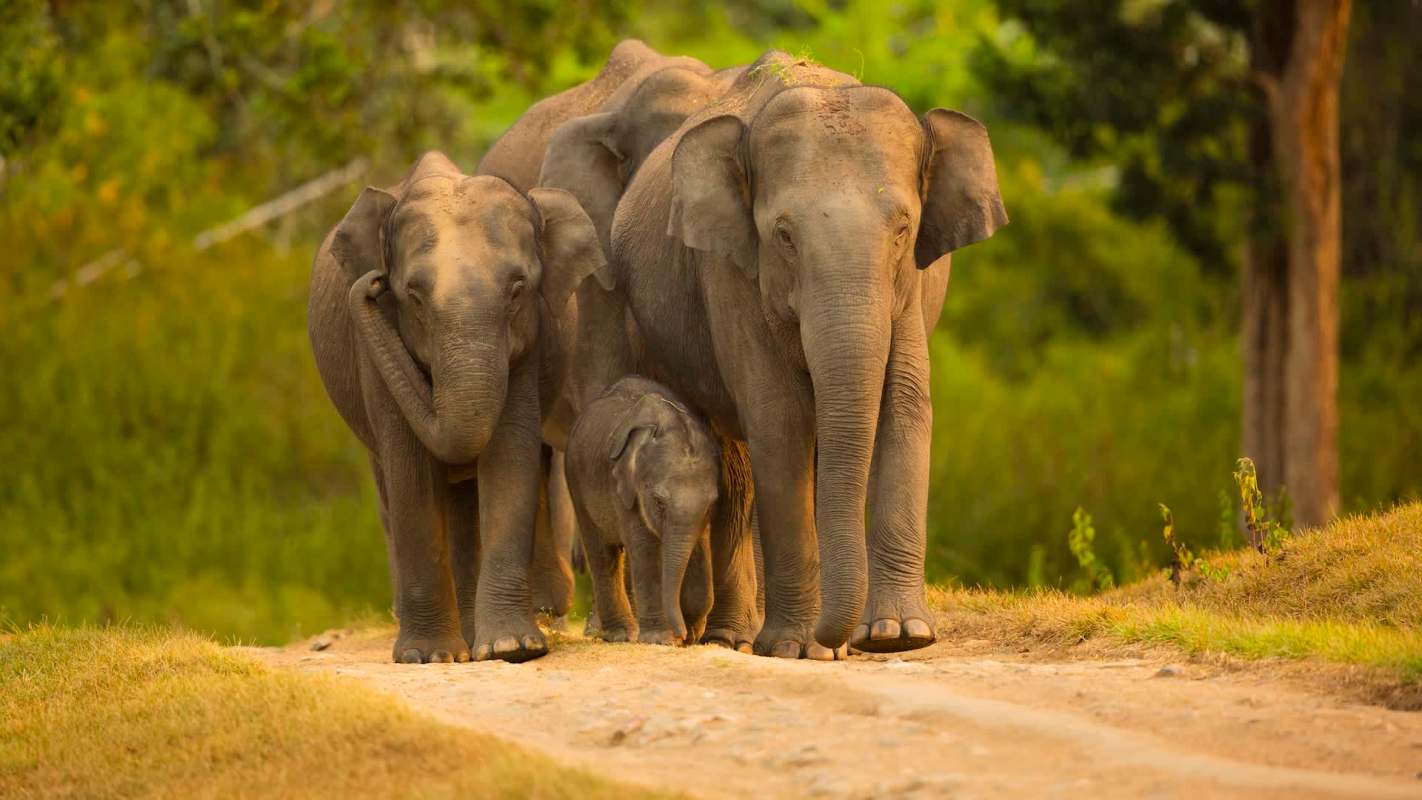
Every evening at a sanctuary in Haryana, an elderly elephant named Erika leads her herd down a forest path, marking a remarkable change for caretakers who remember when years of captivity had left her so worn down that even standing was painful.
What happened?
Before she was rescued, Erika had spent much of her roughly 65-year life being used for roadside begging in Haryana. Years of being made to cover long distances on asphalt and concrete left her malnourished, with damaged feet and serious joint problems.
After Wildlife SOS and the Haryana Forest Department rescued her in 2013, Erika was taken to the Elephant Rehabilitation Centre in Ban Santour, according to The Better India.
Earlier that same day, another elderly rescued elephant named Ella had already arrived at the center. The two quickly developed a close bond.
That connection later became the foundation of a herd. Erika went on to become the dominant female, with Ella as her closest companion, and later arrivals — Lilly, another rescued elephant who joined in 2014, and Jasmine, another rescued elephant who arrived in 2019 — helped turn the group into a small but meaningful social unit.
Why does it matter?
Elephant rescue involves more than simply removing an animal from abuse.
TCD Picks » Good Store Spotlight
Get 10% off your next purchase with code TCD10




The effects of captivity are social as well as physical. In the wild, elephants live in tightly connected family groups and stay in contact through touch, movement, and low vocalizations. Isolation, labor, begging, and tourist rides can break apart that social structure while also damaging their health.
Roughly 2,700 elephants are still kept in captivity in India. They are often put to work in street begging, labor, temple events, or ride operations, meaning thousands of animals may need long-term care that extends far beyond emergency rescue.
Animal entertainment and street exploitation can leave lasting harm long after the public stops paying attention.
What's being done?
At the Elephant Rehabilitation Centre, rehabilitation centers on restoring health while also allowing companionship to return.
Rescued elephants are treated for foot injuries and arthritis and also receive nutritional support, hydrotherapy, and mud baths to reduce strain on aging bodies. The sanctuary also gives them space to rebuild relationships.
That social recovery can be crucial for elephants that arrive fearful, unable to trust, or unsure how to interact with others after years in captivity.
Erika and Ella became a powerful example of that process. When Jasmine later lost her own companion, Daisy, in 2023, Erika helped guide her through the loss, showing how a stable herd can support newer or grieving elephants.
Ella died in April from age-related causes, but she was able to spend her final years within the herd she helped build. Twelve years after arriving barely able to walk, Erika still leads evening walks through the forest.

Get TCD's free newsletters for easy tips, smart advice, and a chance to earn $5,000 toward home upgrades. To see more stories like this one, change your Google preferences here.