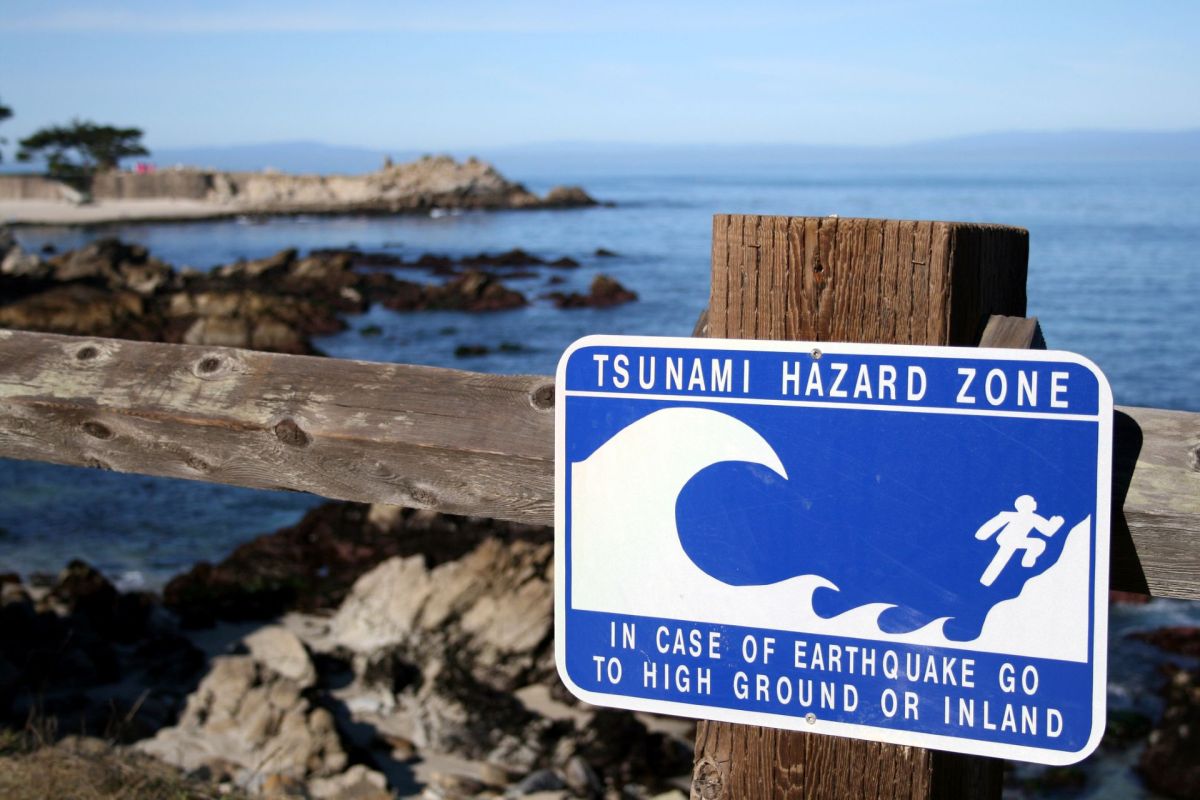
A 7.7-magnitude earthquake struck the northern coast of Japan on Monday, triggering tsunami alerts and warnings that over 120,000 residents should seek higher ground and stay away from the coasts, according to CBS News.
What's happening?
Japan's Meteorological Agency measured the powerful quake on Monday, which struck near the Sanriku coast, initially warning that there could be tsunami waves up to 10 feet tall. Waves of 2.5 feet were reported in the Iwate prefecture.
Luckily, there have not been any reported deaths or injuries as a result of the earthquake, and all tsunami alerts have been lifted, according to AP News. Additionally, the country's nuclear power plants have not reported any issues.
America's National Tsunami Warning Center stated that the West Coast of the United States is not expected to see a tsunami as a result of the earthquake.
What's next?
The JMA reported that in the following week, as a result of this seismic activity, there's a roughly 1% chance that a "mega-quake" could occur. These mega-quakes have magnitudes of 8.0 or more, potentially spurring disastrous tsunamis.
Normally, an earthquake's aftershocks are less intense than the initial quake, but it doesn't always happen this way. Now, the JMA has issued an advisory for residents to prepare in case a mega-quake does occur. The advisory urges residents to know their evacuation routes and to have "go bags" ready.
TCD Picks » Quince Spotlight
💡These best-sellers from Quince deliver affordable, sustainable luxury for all




And while a 1% chance seems slight, the normal chance of a mega-quake occurring is just one-tenth this rate at 0.1%.
Amilcar Carrera-Cevallos, an earthquake scientist, told Scientific American that "this 1% probability is still low in absolute terms, but it's 10 times higher than normal, which is significant from a risk management perspective."
Wendy Bohon, an earthquake geologist, echoed Carrera-Cevallos' sentiment to Scientific American, saying, "There are many, many other times when there have been big earthquakes in Japan that were not followed by larger events … but for the next few days, millions of people along the coast will be primed to flee, just in case the odds truly are against them."
|
Which of these savings plans for rooftop solar panels would be most appealing for you?
Click your choice to see results and earn rewards to spend on home upgrades. |
 Save $1,000 this year 💸
Get TCD's free newsletters for easy tips, smart advice, and a chance to earn $5,000 toward home upgrades. To see more stories like this one, change your Google preferences here.