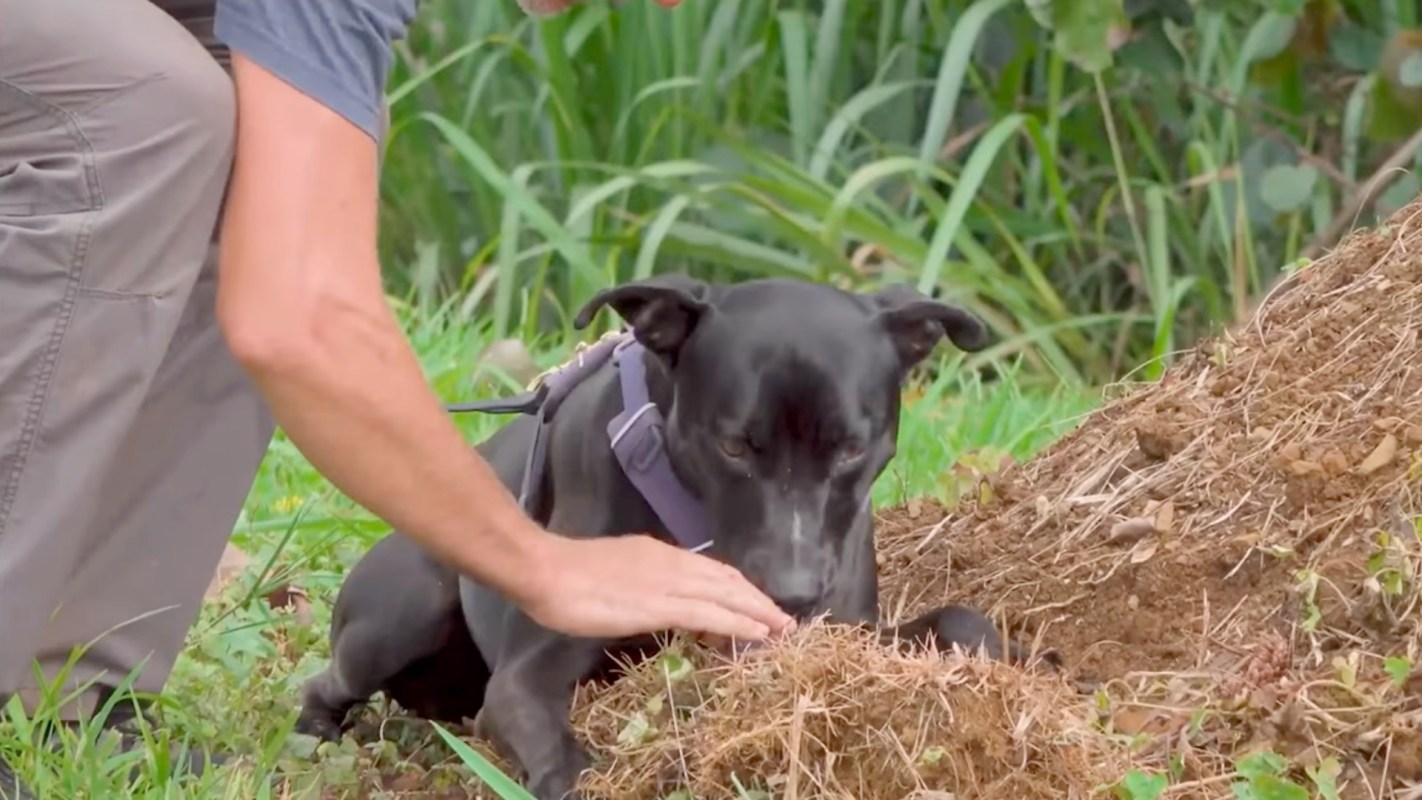
A small team of highly trained dogs on the Hawaiian island of Kauaʻi is taking on an unusual conservation mission: saving coconut palms from a destructive invasive insect.
Meet Sunny, Minnow, Raffi, and Brego — the canine detectives working with the nonprofit Conservation Dogs of Hawaiʻi. Their job is to sniff out breeding sites of the coconut rhinoceros beetle, an invasive pest threatening the island's iconic coconut palms and other important plants, as Kauaʻi Now reported.
The beetle, first detected on Kauaʻi in 2023, can cause serious damage to palm trees. Adult beetles bore into the crowns of coconut palms to feed, damaging fronds and potentially killing the trees. Their larvae develop in piles of decomposing organic material such as mulch, compost, and green waste.
That's where the dogs come in.
Each member of the canine team has been specially trained to detect the scent of beetle breeding material — even when it's buried deep within mulch piles or vegetation that would take humans hours to search manually.
The program is part of Kauaʻi's growing response to the invasive pest. Four detection dogs and their handlers were certified in late 2025 and are now ready to deploy across the island to inspect properties, farms, and landscapes for beetle breeding sites.
TCD Picks » EDF Spotlight
💡EDF's Vital Signs newsletter delivers stories about game-changing solutions close to home and around the world



Their work highlights how creative conservation solutions sometimes come with wagging tails. The teams have already been used for other environmental missions, including detecting invasive plants, locating seabirds nesting in underground burrows, and even identifying crop diseases in research trials.
On Kauaʻi, early detection is the goal. Female coconut rhinoceros beetles can lay more than 90 eggs during their lifetimes, meaning infestations can spread quickly if breeding sites aren't discovered and removed early.
By helping identify those hidden hotspots, the dogs allow conservation teams and property owners to act before the beetles spread further. Residents and businesses can even request surveys if they suspect breeding activity on their properties.
Beyond protecting palm-lined coastlines, the effort also safeguards agriculture, local ecosystems, and culturally important plants that are central to Hawaiian landscapes and traditions.
For the dogs, though, it's just another day at work — sniff, search, signal, and collect a well-earned treat. In the process, these four-legged conservationists are proving that sometimes the most effective environmental technology comes with a snout and a wagging tail.
"It all comes down to the nose," Kim S. Rogers of Conservation Dogs of Hawaiʻi told Kauaʻi Now. "They are like super Olympians when it comes to smelling. Approximately 30% of the dog's brain is dedicated to smelling."
Thomas Daubert, executive director of Friends of Kauaʻi Wildlife Refuges, added: "Response starts with awareness. This is one more example of how dogs and their handlers are helping to tackle conservation challenges faced by our island community."

Get TCD's free newsletters for easy tips, smart advice, and a chance to earn $5,000 toward home upgrades. To see more stories like this one, change your Google preferences here.
Cool Picks