


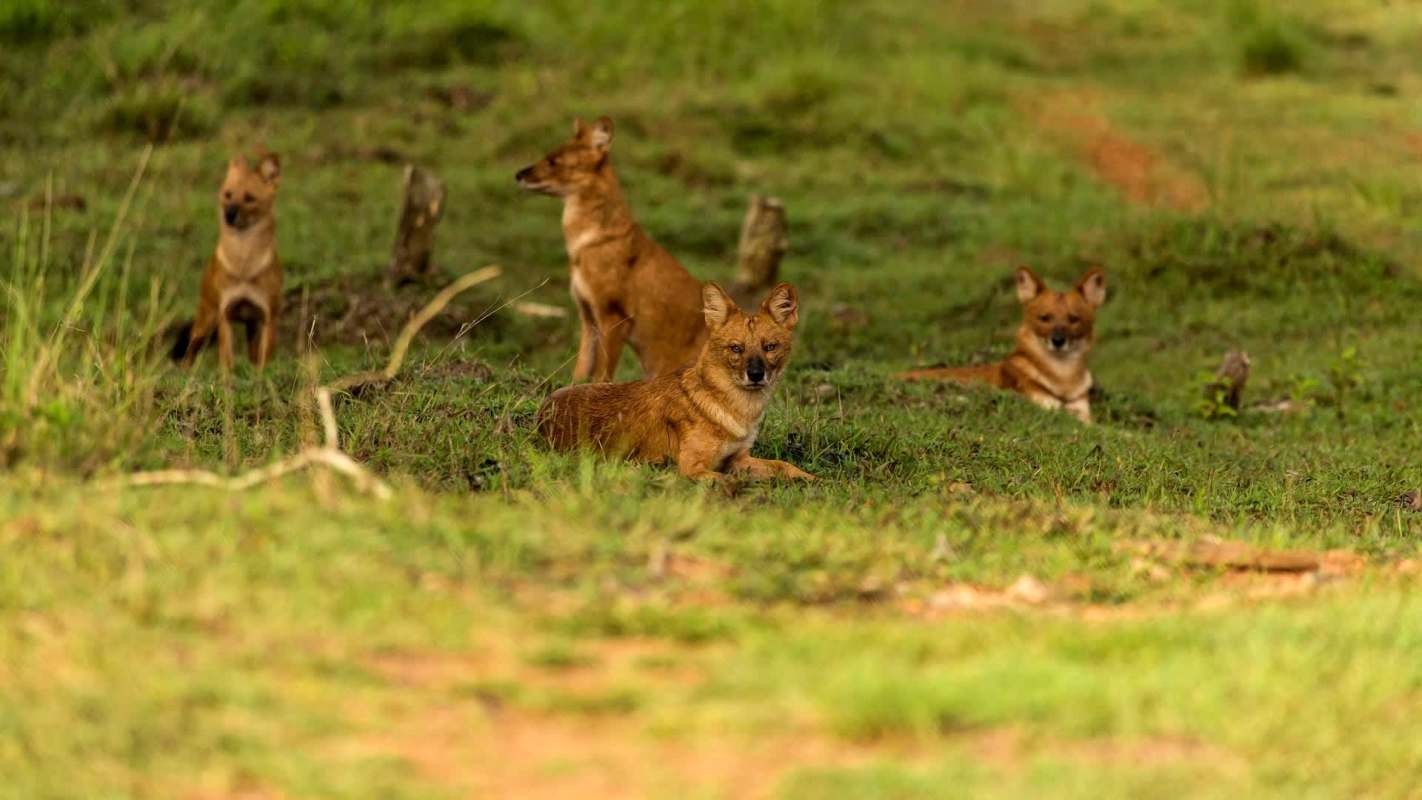
Camera traps in the Udanti-Sitanadi Tiger Reserve in Chhattisgarh, India, have recorded four dholes — Indian wild dogs noted for their close teamwork and high-pitched calls — moving together.
For those working to protect the reserve, the rare images suggest that years of habitat recovery and protection measures are starting to pay off.
What happened?
The photographs came from trap cameras deployed for the 2026 All-India Tiger Estimation exercise. ETV Bharat reported that the appearance of dholes is being treated as an encouraging sign that the reserve's ecosystem is becoming stronger.
Dholes are rare carnivores that live and hunt collectively. Native to South, Central, and Southeast Asia, they are often called "whistling hunters" because of the sounds they use to communicate, and they are protected under Schedule I of India's Wildlife (Protection) Act, 1972.
This sighting is encouraging for conservationists, as the species is listed as critically endangered on the IUCN Red List. A group of four appearing inside a protected forest could suggest that the wider food chain is functioning properly, ETV Bharat reported.
Why does it matter?
Predators such as dholes play an important role in keeping ecosystems in balance. By controlling the numbers of herbivores such as chital, sambhar, and wild boar, they can reduce pressure on vegetation and help forests regenerate naturally.
TCD Picks » Quince Spotlight
💡These best-sellers from Quince deliver affordable, sustainable luxury for all




Healthier forests can support richer biodiversity, better protect soil and water resources, and create more resilient landscapes for the people who live nearby.
The development comes after a long stretch of work by the Forest Department. According to officials, about 2,362 acres (956 hectares) of forest land that had been under encroachment were recovered and restored, helping reopen habitat and animal movement corridors.
In addition to habitat restoration, officials highlighted the importance of addressing the threat of poaching, which is a major risk for many endangered species. ETV Bharat also noted how anti-poaching operations resulted in more than 550 arrests involving wildlife criminals, poachers, and smugglers. Officials added that regular patrols, camera-trap monitoring, and participation from local communities have played an important role in improving conditions.
What are people saying?
Varun Jain, the reserve's deputy director, said the camera-trap images should be seen as evidence of broader ecological health, not just a notable sighting.
"The well-being of a forest is measured not just by the presence of tigers, but by the health of the entire food chain and biodiversity," Jain noted. "The camera traps capturing organized herds of endangered carnivores like the Indian wild dogs is significant, as it is a strong evidence that conservation efforts in the Udanti-Sitanadi Tiger Reserve are consistently yielding positive results."
Other forest officials linked the sighting to the same efforts — habitat restoration, anti-poaching campaigns, and community involvement — which they said have significantly improved biodiversity in the reserve over the years.
In their view, spotting this pack may be one of the clearest signs yet of success in ecosystem conservation.

Get TCD's free newsletters for easy tips, smart advice, and a chance to earn $5,000 toward home upgrades. To see more stories like this one, change your Google preferences here.







