


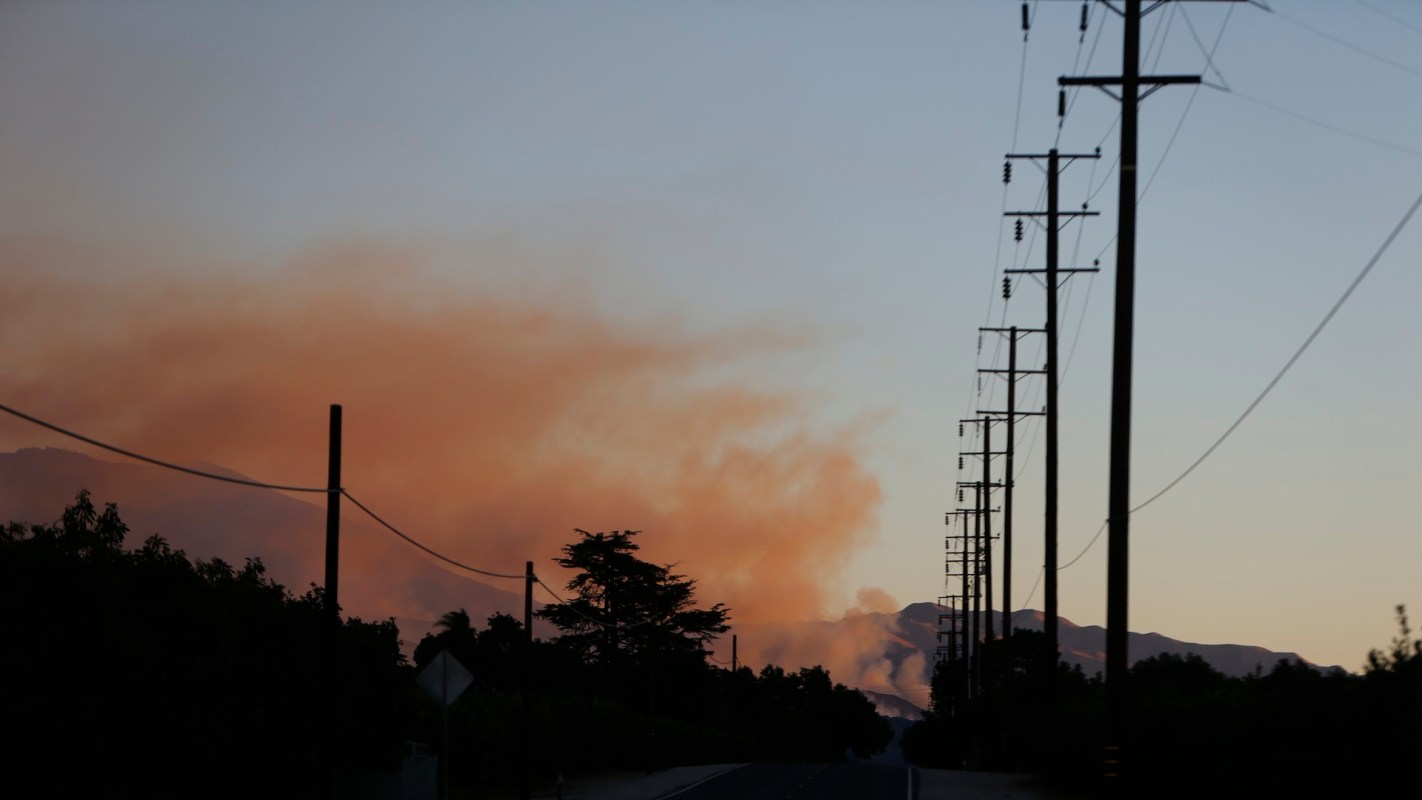
Summer seems to be lingering in southern California with only a little more than a month before the start of meteorological winter.
But sunny skies are the least of everyone's worries. The combination of unusual heat, dry conditions, and gusty winds is creating critical fire weather across the region.
More than 18 million people in areas away from the coast are under heat advisories. From Los Angeles to San Diego, temperatures climbed between 10 and 20 degrees above average on Oct. 28. Highs should hit the lower to middle 90s across a large swath of southern California.
"There is a high risk for heat illness for sensitive populations including the very young, the very old, those without air conditioning, and those active outdoors," cautioned the heat advisory that is in effect until 7 p.m. PT Wednesday for the Los Angeles area.
The heat in Southern California is exacerbating fire weather conditions as the relative humidity levels fall and the winds pick up. This is the first Santa Ana wind event of the season for the area.
"Residents in or near these areas are advised to check for multiple ways to receive weather and emergency alerts and make preparations to evacuate in an emergency wildfire situation," advised meteorologists with the Los Angeles National Weather Service Office.
TCD Picks » Quince Spotlight
💡These best-sellers from Quince deliver affordable, sustainable luxury for all




"Winds of 15-25 mph appear possible along with [relative humidity] in the 15-20% range. Local fuel information has suggested that fuels will support fire spread," noted the Storm Prediction Center's Fire Weather Outlook discussion for Tuesday into early Wednesday morning. "Elevated to possibly brief and localized critical fire weather can be expected."
A red flag warning is in effect until 6 p.m. Wednesday for the Western San Gabriel Mountains, Santa Susana Mountains, and southeastern Ventura County valleys.
"If fire ignition occurs, conditions are favorable for extreme fire behavior, rapid fire growth, and long-range spotting, which could threaten life and property," cautioned the Fire Weather Message issued by the National Weather Service.
A growing number of people will face dangerous levels of heat Wednesday. The worst heat targeted southern California and Arizona, southern Texas, Louisiana, and southern Florida on Tuesday. Central and southern California, southern Arizona, and southern Florida will endure the worst heat Wednesday.
|
How often does the temperature get over 100 degrees where you live? Click your choice to see results and speak your mind. |
 Never 😎
 Over 12 million people face moderate to severe HeatRisk on Tuesday, levels two and three out of four, respectively, according to the National Weather Service. An additional 4 million or more are expected to experience those HeatRisk levels on Wednesday.
This has been another rather warm year for California. It had its 12th warmest summer on record. The period of January through August was the 11th warmest first eight months of the year on record for the state.
Our overheating planet is supercharging extreme weather events like wildfires. According to researchers, carbon emissions from forest fires rose by 60% worldwide from 2001 through 2023.
The U.S. Environmental Protection Agency reported that multiple studies have concluded our warming world has extended wildfire seasons, increased wildfire frequency, and expanded the total area burned.

Join our free newsletter for good news and useful tips, and don't miss this cool list of easy ways to help yourself while helping the planet.







