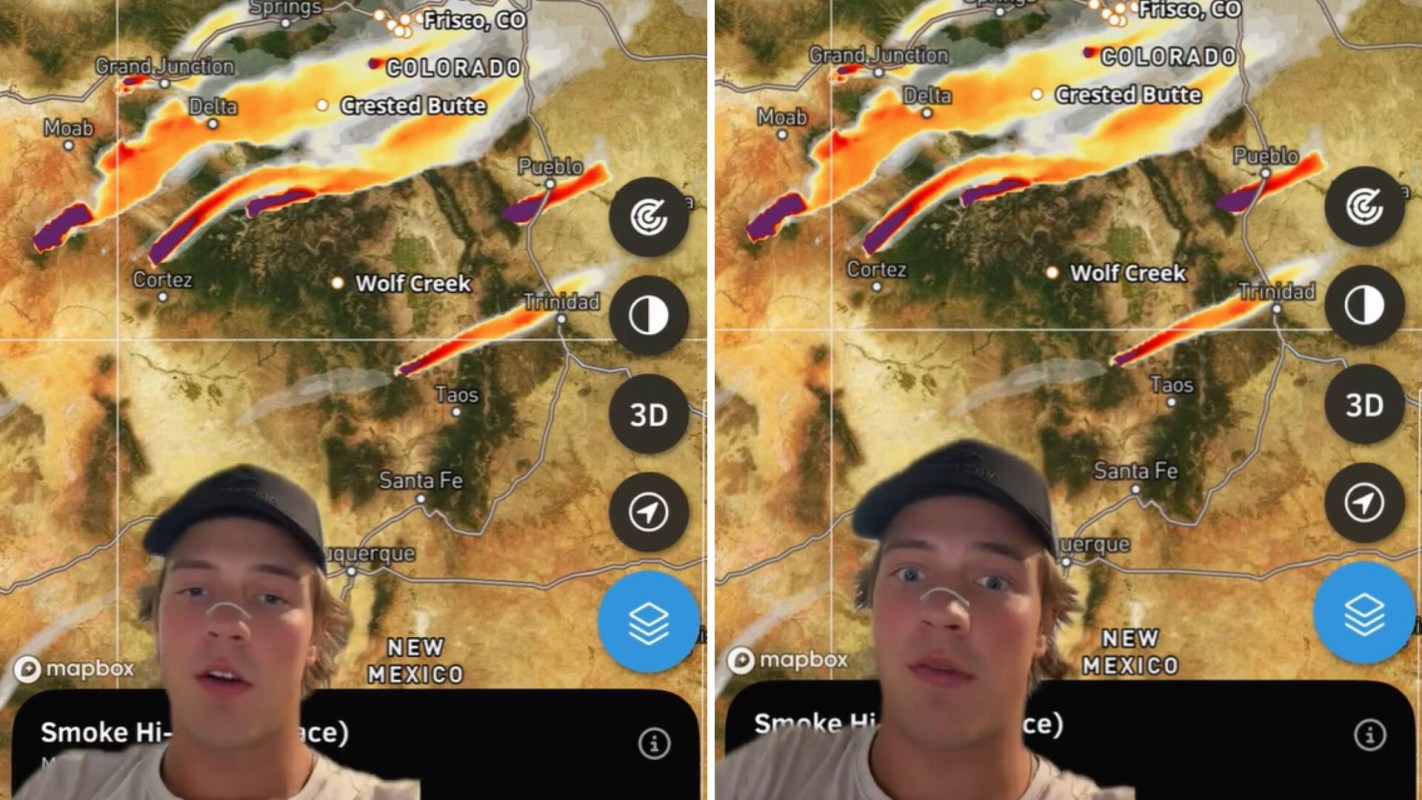
As Independence Day nears, many Colorado and Utah communities are entering what could be one of the summer's most dangerous weekends while battling some of the worst wildfires in U.S. history. And they aren't alone, some areas of New Mexico, Arizona, Nevada, and several other states also battling intense blazes.
According to Newsweek, more than 500,000 total U.S. acres have been hit with wildfires in recent weeks, most of it all still uncontained. With wildfires already burning, smoke hanging in the air, drought conditions worsening, and fire bans in place, the holiday's usual mix of travel, camping, and fireworks is raising concern about additional ignitions.
What's happening?
In a recent TikTok, Colorado creator Liam Zirkle (@liamzirkle) used the OpenSnow weather app's wildfire and smoke layers to deliver a public-safety message. In the caption, Zirkle urged viewers: "Please be safe and aware, especially this weekend."
In the video, he said, "The wildfires in Colorado are becoming extremely bad, and Utah as well." He also warned that "the drought is extremely bad, and a lot of the resources are already at max capacity. We don't have more resources to send to new fires."
@liamzirkle Please be safe and aware especially this weekend. #wildfires #colorado #fireban ♬ original sound - LiamZirkle
"It's a scary weekend coming up with the Fourth of July and all the fires, camping, and fireworks that people tend to do even though they're not supposed to with the fire bans," Zirkle added.
One commenter wrote, "My coworker said that Cortez is still doing fireworks?? Like the city," while another pointed people to a tracking tool, saying, "Watch Duty app is free and amazing."
TCD Picks » Quince Spotlight
💡These best-sellers from Quince deliver affordable, sustainable luxury for all




Why does it matter?
Wildfire danger does not stop at the fire line. Even people who are nowhere near the flames can run into smoke, closed roads, canceled trips, or abrupt evacuation notices, a risk that can grow over a busy holiday weekend with more travelers and outdoor activity.
Homes can be damaged, tourism and recreation can be interrupted, emergency responders can be stretched, and workers who rely on safe outdoor conditions can lose income when extreme weather disasters hit.
Smoke can worsen breathing problems and make it risky for children, older adults, and people with asthma or other health conditions to spend time outside.
In severely dried-out terrain, even one careless spark can lead to far bigger consequences. When firefighters and equipment are already near capacity, the next ignition may be harder to contain quickly. The immediate concern is the overlap: several fires are already burning in a very dry area just as a holiday associated with camping and fireworks begins.
What can I do?
Respect local fire bans and skip anything that could spark a fire, including personal fireworks and poorly managed campfires. Check fire and smoke updates before you go.
Because Zirkle highlighted OpenSnow's map layers and commenters mentioned other tracking tools, reviewing conditions before driving into the mountains or finalizing outdoor plans can help families steer clear of unhealthy air and sudden closures.
If you'll be outside over the weekend, keep phones charged, turn on local emergency alerts, and make sure you have an alternate plan in case conditions change quickly. If smoke worsens, moving activities indoors and limiting strenuous outdoor exercise can reduce health risks.
Zirkle stressed the importance of staying safe this weekend. "We don't have more resources to send to new fires," he said.

Get TCD's free newsletters for easy tips, smart advice, and a chance to earn $5,000 toward home upgrades. To see more stories like this one, change your Google preferences here.