


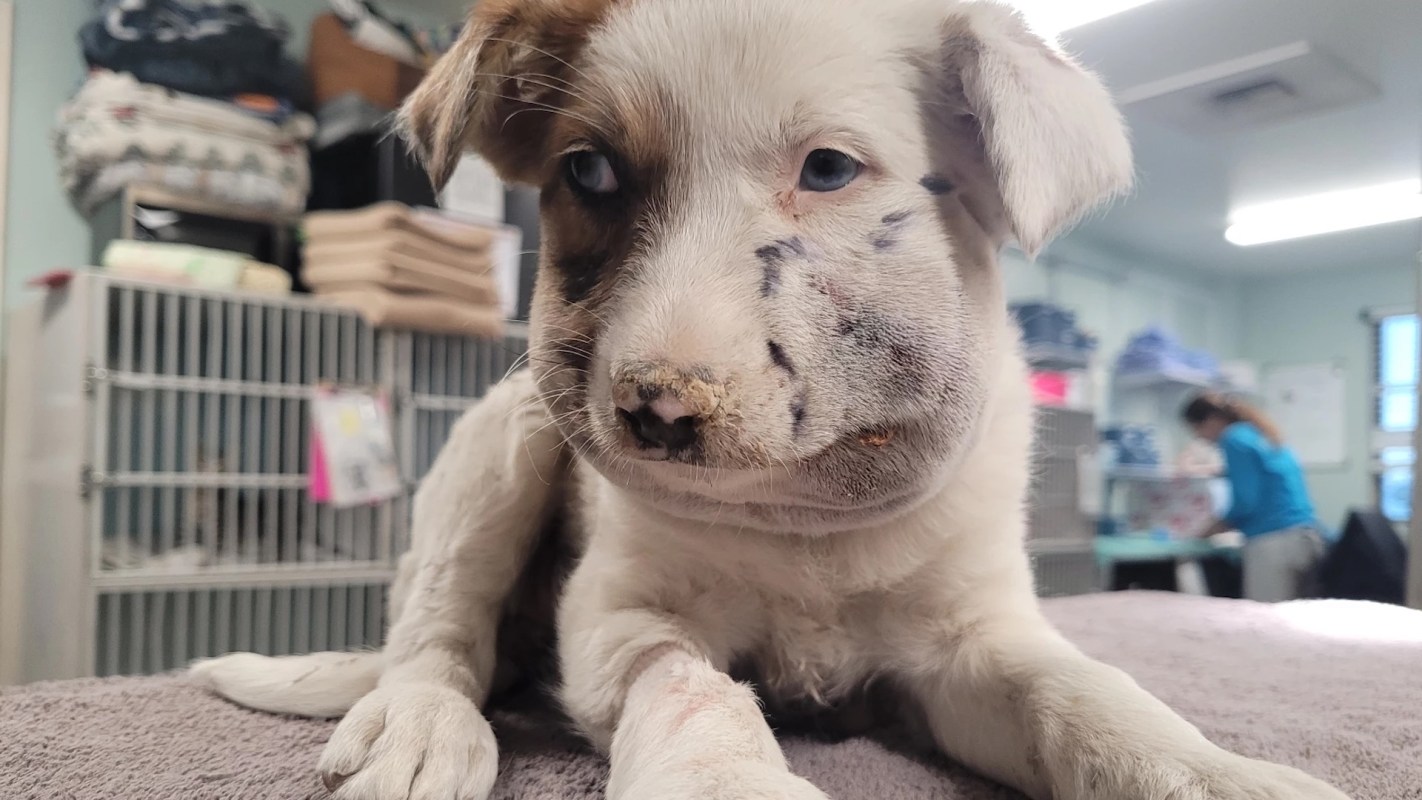
What began with a stray puppy in Colorado suffering a likely rattlesnake bite ended with the dog being placed in a loving home.
Before reaching that point, the young dog underwent emergency treatment, spent time in shelter care, and even recovered from a second illness.
What happened?
KUNC reported that NOCO Humane said a 4-week-old Labrador retriever puppy was taken for emergency care after she was found in Evans with severe swelling in her lower jaw, likely caused by a rattlesnake bite.
A good Samaritan got the puppy to the hospital for antivenom and pain medication. Weld County Animal Control later brought her to NOCO Humane's Weld Campus, where shelter staff continued her treatment.
The puppy was eventually named Keota. Staff fed her softened food because the swelling in her mouth made eating difficult. She also needed additional care, including the removal of some tissue around her mouth to allow the area to heal properly.
Keota's recovery was further complicated when she was diagnosed with giardia, a parasite commonly spread through contaminated water. Despite the setback, she recovered and was eventually adopted.
TCD Picks » Quince Spotlight
💡These best-sellers from Quince deliver affordable, sustainable luxury for all




Why does it matter?
For small animals especially, a rattlesnake bite can worsen fast. Without prompt veterinary treatment, swelling, pain, and tissue damage can escalate quickly.
Stray animals also face a range of general risks, including encounters with wildlife, untreated infections, and parasites.
Encounters involving pets and wildlife can become more common when neighborhoods, roads, trails, and other human activity overlap with native habitats.
In Colorado, that is particularly relevant because rattlesnakes are a natural part of the landscape. When people bring pets into those areas — or when stray and abandoned animals are left to navigate them alone — the risks can rise for everyone involved.
What can I do?
If someone thinks a pet may have been bitten by a rattlesnake, they should go to an emergency veterinarian immediately instead of waiting to see whether the swelling improves on its own.
KUNC noted that Colorado Parks and Wildlife advises hikers to keep dogs leashed, close by, or reliably under voice control.
For anyone who comes across an injured stray, contacting animal control, a shelter, or an emergency veterinarian can make a life-saving difference. In Keota's case, a passerby, medical staff, shelter workers, and an eventual adopter all played a role in giving her a second chance.

Get TCD's free newsletters for easy tips, smart advice, and a chance to earn $5,000 toward home upgrades. To see more stories like this one, change your Google preferences here.







