


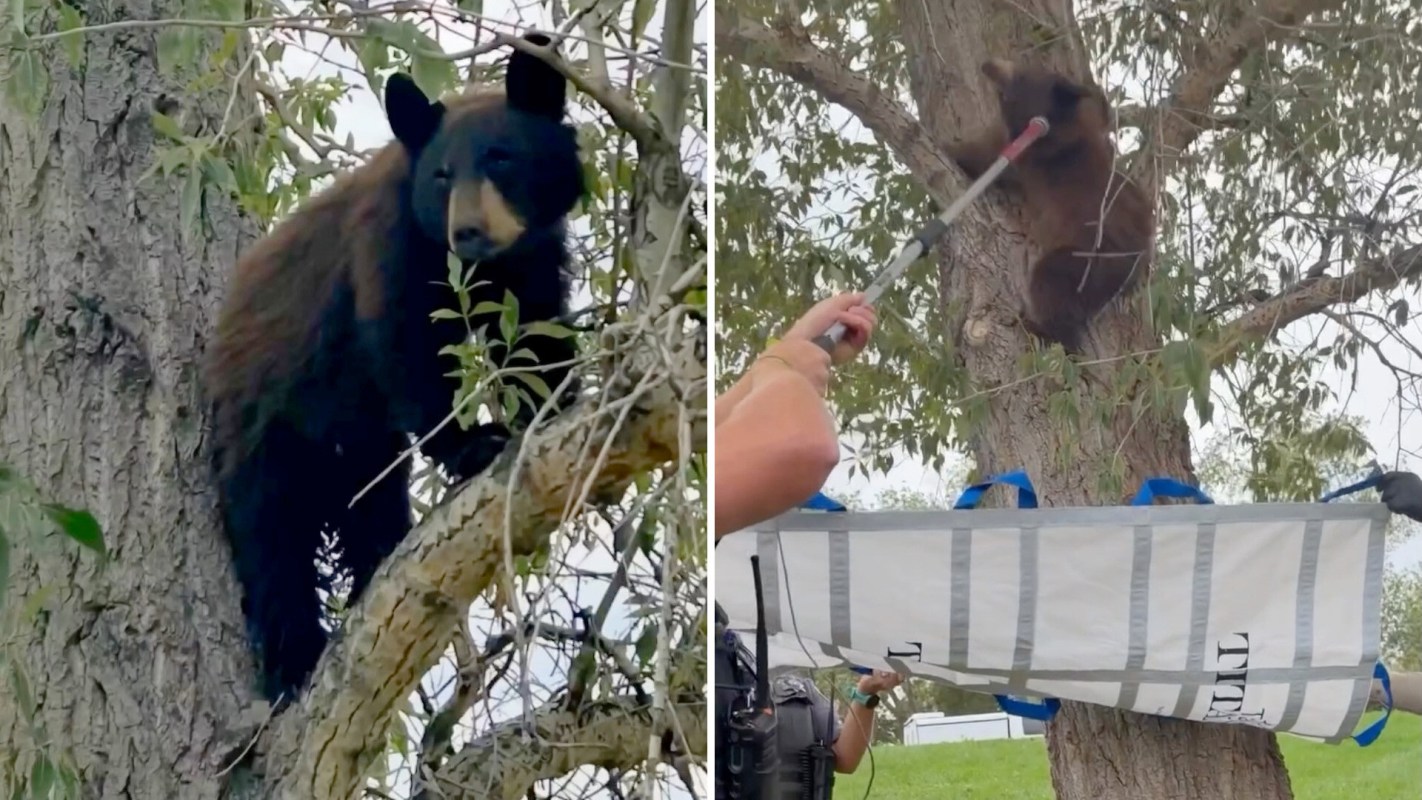
Colorado's late-summer spike in bear activity has also reached Boulder County: a cub ended up in a tree and was later rescued, tagged, and relocated by wildlife officials.
Here's what to know
The cub was tagged and moved to the mountains without injury after Colorado Parks and Wildlife tranquilized it and brought it down from the tree, KUNC reported. The Boulder County Sheriff's Office said deputies and Boulder County Animal Protection had responded to a report of a bear in a tree.
The rescue comes amid a sharp rise in bear activity across Colorado. KUNC reported that six people in the state have been injured in bear attacks, while sightings in some places have surged by 219%.
Wildlife officials believe drought and a shortage of natural food sources are contributing to the trend. At the same time, bears are entering a critical feeding period before hibernation, pushing them to search for large amounts of calories wherever they can find them.
More background
When drought reduces food in the wild, bears do what many animals do under pressure: They move. And when expanding neighborhoods, open trash, pet food, fruit trees, or even unlocked cars offer easy calories, those movements can bring wildlife directly into human spaces.
Human behavior can also shape these encounters, even when the initial driver is ecological. Broader reporting from BBC Future explains how habitat overlap and human food sources can raise the chances of dangerous wildlife interactions.
TCD Picks » Quince Spotlight
💡These best-sellers from Quince deliver affordable, sustainable luxury for all




Climate pressures may be pushing animals outward, but communities can either reduce conflict or unintentionally worsen it.
What can be done?
Quick coordination between sheriff's deputies, animal protection officers, and Colorado Parks and Wildlife helped prevent a bad outcome in this case. A timely response can be critical when frightened animals turn up in residential areas.
Securing trash, removing outdoor food sources, locking vehicles, and properly storing food can make neighborhoods less appealing to bears searching for quick calories.
Keeping a distance from wild animals and reporting concerning situations to local authorities can help professionals step in before a tense encounter escalates.
Officials say prevention remains the best tool. As the Boulder County Sheriff's Office wrote in a social media post, "Giving wildlife plenty of space, securing trash, locking vehicles, and properly storing food all help reduce encounters and keep both people and wildlife safe."
Where can I learn more?
Colorado's late-summer bear surge is part of a wider pattern as food shortages and habitat overlap bring bears closer to people. The stories below range from preventive patrols to sudden trail encounters, showing how quickly an ordinary outdoor moment can turn dangerous.
• In northern Spain, officials formed a protective bear task force after human encounters climbed.
• On a trail, a mother bear protecting its cubs lunged when a hiker approached.
• Across the Arctic, habitat disruption has fueled an uptick in dangerous sightings near people.
• On Washington's Mount Si trail, a black bear swiped at a teen during a frightening encounter.
• In Montana, hunters survived two terrifying grizzly bear encounters within days of each other.
They point to the same lesson playing out in Boulder County: Prevention and quick reporting matter before a curious or desperate bear gets too close. And they make clear that the pressures behind these encounters extend well beyond Colorado.

Get TCD's free newsletters for easy tips, smart advice, and a chance to earn $5,000 toward home upgrades. To see more stories like this one, change your Google preferences here.







