


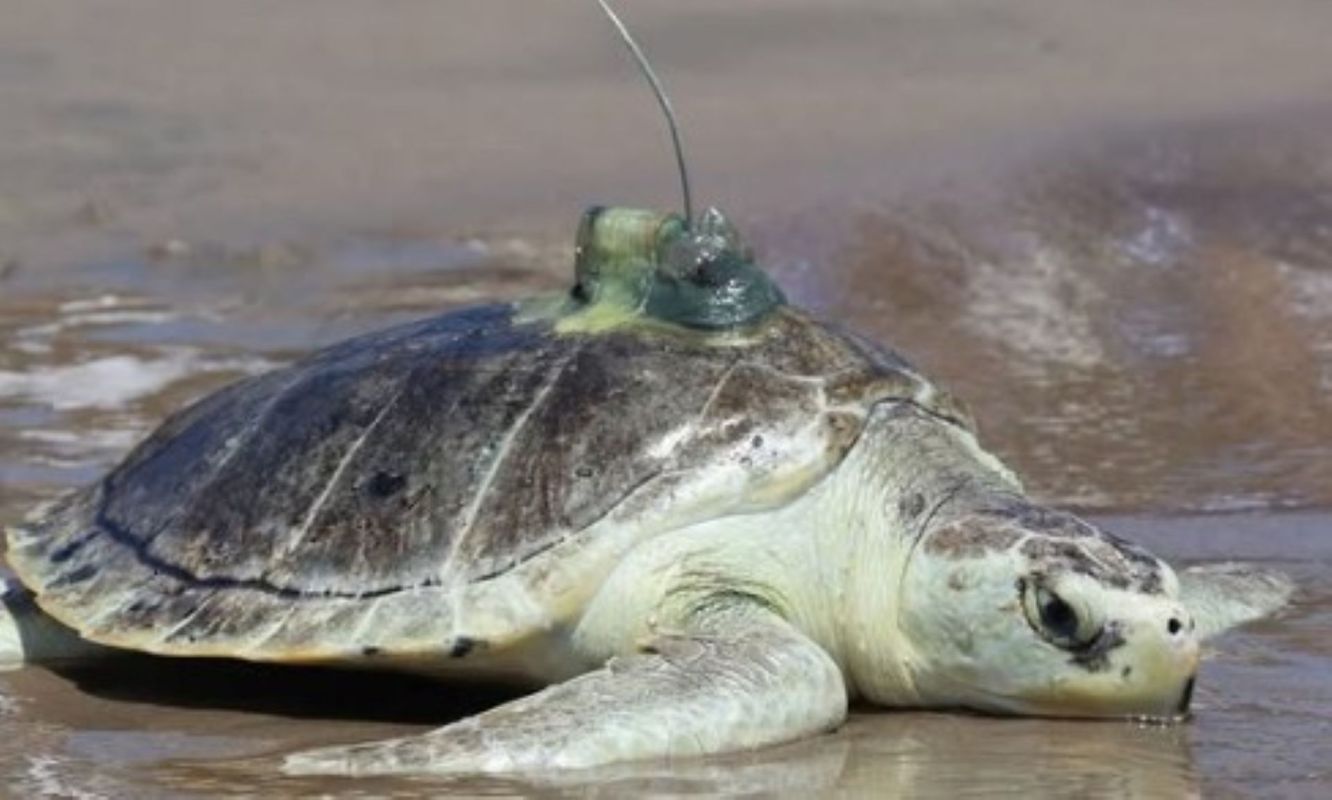
Pancake, an endangered young sea turtle, returned to its home on July 23 after months of rehabilitation.
The Wildlife Conservation Society staged Pancake's homecoming off the New York Aquarium in Coney Island, where a crowd gathered to celebrate.
What happened?
Last November, rescuers came across a sea turtle at Duck Harbor Beach in Wellfleet, Massachusetts. The juvenile Kemp's ridley, believed to be 2 to 5 years old, had been overcome by frigid water in a condition known as being "cold-stunned."
The turtle — affectionately nicknamed Pancake — initially received emergency treatment at the New England Aquarium and was later moved to the Sea Turtle Care Facility run by the Atlantic Marine Conservation Society in Westhampton Beach, according to Smithsonian Magazine.
Pancake regained strength by eating shrimp and clams, though the turtle's sex remains unknown because determining that would require a blood test. Now, Pancake weighs around 11 pounds, and the Wildlife Conservation Society said the turtle was showing "strong swimming behavior while actively pursuing food."
"We have to monitor their behavior and get them up to what we consider operating speed, where they're eating, feeding on their own," Rob DiGiovanni, a marine biologist with the Atlantic Marine Conservation Society, told WABC in late July. "Pancake was looking really well. And then time for us to go back out into the wild so they could do really well out there."
TCD Picks » Quince Spotlight
💡These best-sellers from Quince deliver affordable, sustainable luxury for all




Why does it matter?
Pancake's story highlights a recurring problem in New England each fall. Sea turtles that spend the warmer months foraging along the coasts of New England can become trapped in Cape Cod Bay during migration, where falling temperatures leave them lethargic and unable to swim.
Kemp's ridleys are the smallest sea turtles in the world and remain at risk, according to the NOAA. The population plunged from the late 1940s into the mid-1980s because of egg harvesting, the killing of turtles, and entanglement in fishing gear. By 1985, the number of nesting females had dropped below 250. The Kemp's ridley turtle is listed as endangered under the Endangered Species Act.
Estimates now place the Gulf of Mexico population at 7,000 to 9,000 nesting females, according to the National Parks Conservation Association. But the species is still endangered in the United States and critically endangered globally.
What's being done?
Before heading back into the ocean, Pancake was fitted with a satellite transmitter on the shell, enabling researchers to follow the turtle's movements in real time for up to 90 days, Smithsonian Magazine reported.
That information can help scientists better understand migration patterns and improve future rescue and release efforts.
Aaron Gouveia, who speaks for the Massachusetts Audubon Society, which rescued Pancake, told MassLive, "This is the great part about what we do when we find these turtles on the beaches of Cape Cod. It's what we do this for, and it's just fantastic."
Pancake is not the only turtle making a return.
Five other rehabilitated Kemp's ridleys — nicknamed Times New Roman, Papyrus, Gigi, Walter Turncoat, and Punk Kid — also returned to the ocean after seven months of rehabilitation at Quincy's Sea Turtle Hospital at the New England Aquarium, according to Smithsonian Magazine.

Get TCD's free newsletters for easy tips, smart advice, and a chance to earn $5,000 toward home upgrades. To see more stories like this one, change your Google preferences here.







