


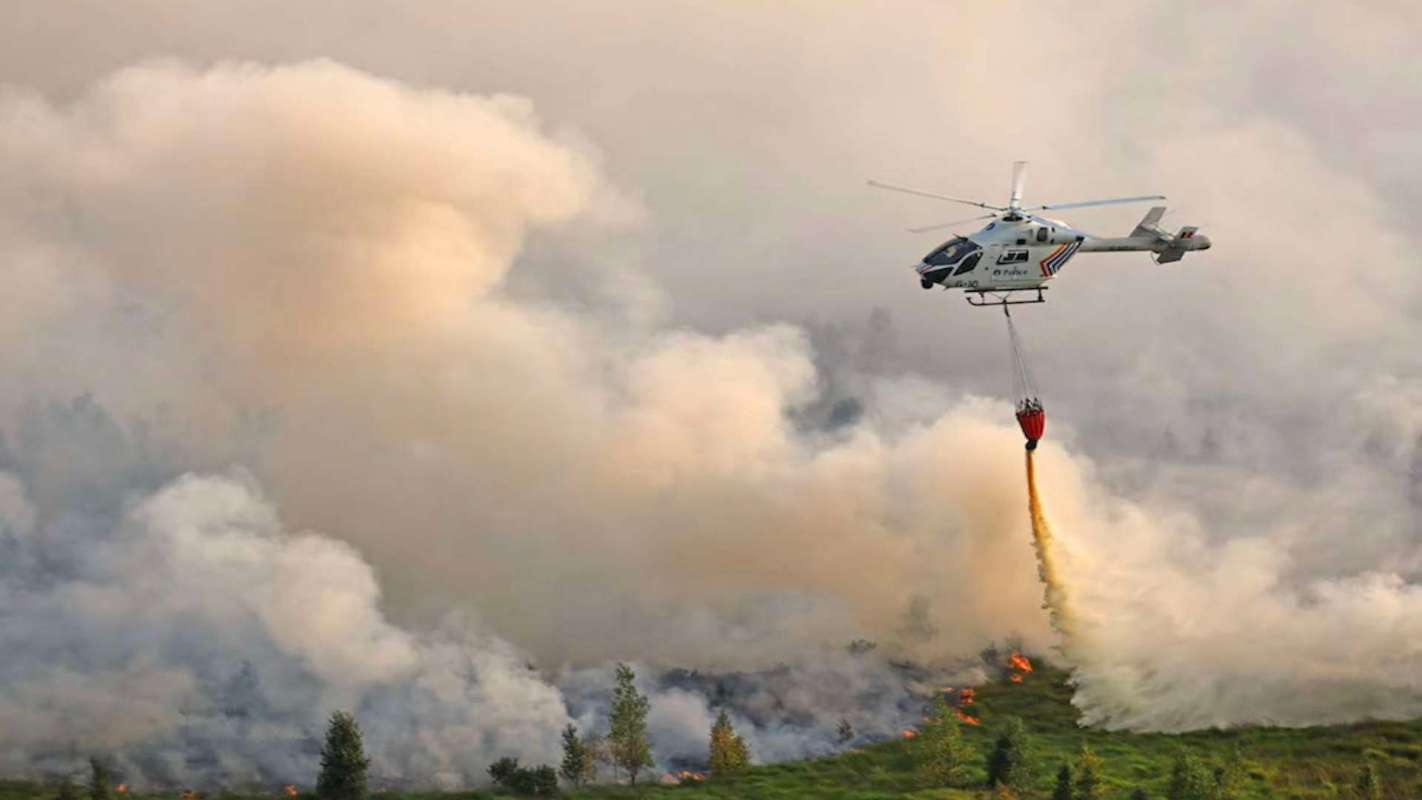
Cockpit footage from two helicopters offered a dramatic look at buckets of water being dumped onto a smoky, fast-moving wildfire in eastern Belgium, highlighting how air crews can step in when flames reach areas that ground teams cannot easily access.
Here's what to know
The video is dramatic on its own, but the bigger story is the scale of the firefighting effort behind it.
On Aug. 17, the Belgian Police's Air Support Unit (@air_support_unit_belgium) detailed "the largest wildfire ever recorded in the Hautes Fagnes region of eastern Belgium" on Instagram.
A pair of Federal Police helicopters joined the firefighting response, giving coordinators an overhead view of conditions while also making water drops with Bambi Buckets, the large suspended containers used to collect and release water over fires.
A lengthy caption described the scope of the effort.
"During the first three days alone, an incredible 423 water drops were carried out, helping to slow the spread of the fire in difficult-to-access areas," it read in part.
TCD Picks » Quince Spotlight
💡These best-sellers from Quince deliver affordable, sustainable luxury for all




More background
Wildfires in moorland and other open natural areas can be especially difficult to fight.
Firefighting crews often face limited access, shifting winds, and broad stretches of land that are hard to reach on foot.
In those situations, helicopters can become critical tools for both surveillance and suppression.
Large wildfires threaten ecosystems, disrupt local economies, strain emergency services, and create hazardous smoke conditions for nearby communities.
Even if the public mostly sees dramatic aerial images, the effects of a major blaze can be felt across an entire region.
The Unit also thanked "the many firefighters, local and federal Police units, Civil Protection, Defence, farmers, private companies, and everyone else who contributed on the ground and behind the scenes."
What's being done?
The response combined aerial support, ground operations, and assistance from partners in Belgium and abroad.
The air support unit noted that the helicopters provided incident coordinators with a bird's-eye view and helped check the fire's spread by making repeated bucket drops.
That kind of collaboration is becoming increasingly important as fire seasons grow more demanding in many parts of the world. The more complex the terrain and the emergency, the more essential shared resources and rapid communication become.
A commenter commended the effort and acknowledged the severity of the situation.
"Heartbreaking pictures. Thanks to everyone for helping and doing more than just a job," they wrote.
One practical step is donating money to climate causes that help build resilience and support solutions.
Ultimately, the Belgian Police's Air Support Unit characterized the effort as a shared success, calling it "an exceptional example of collaboration in the face of a major emergency."

Get TCD's free newsletters for easy tips, smart advice, and a chance to earn $5,000 toward home upgrades. To see more stories like this one, change your Google preferences here.







