


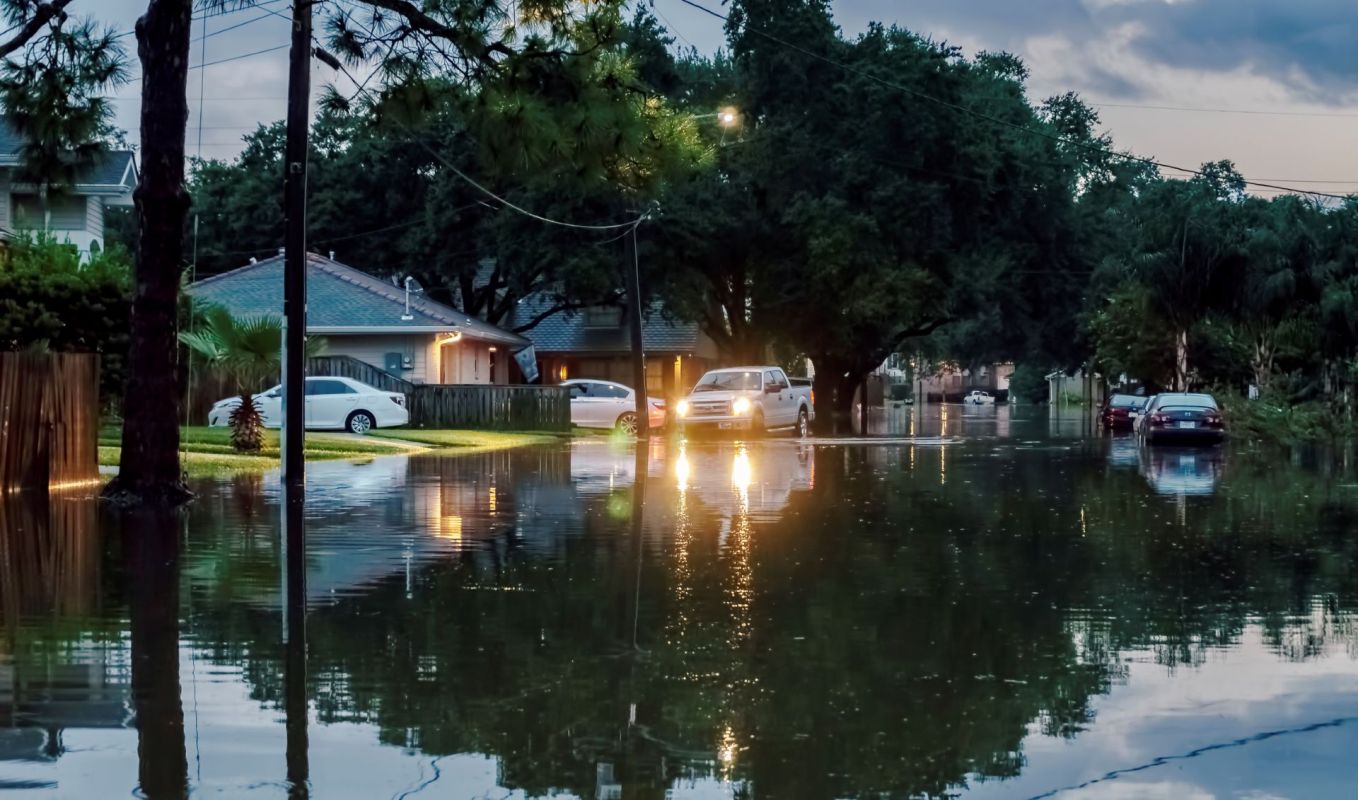
A new University of Alabama study offers a sobering look at coastal flood risk in the United States. Over 17.5 million people living along the Atlantic and Gulf coasts are in the "very high" risk category, the Associated Press reported.
The findings suggest cities such as New Orleans and New York City could face growing threats as sea levels rise and storms become more destructive.
What's happening?
The University of Alabama researchers analyzed flood danger from Texas to Maine with 16 risk factors and three artificial intelligence tools. Their analysis found that more than 34 million Americans living on the Atlantic and Gulf coasts fall into either the "very high" or "high" flood-risk categories.
New Orleans was listed as the most exposed major city, with 99% of its people and buildings deemed vulnerable. According to the AP report, New York City was next, with around half its population — about 4.4 million people — in the high-risk category. Jacksonville, Florida; Houston; Norfolk, Virginia; Charleston, South Carolina; and Miami were also listed as particularly vulnerable.
The projections are especially concerning because the cost of damage is expected to rise over time. The study, published in Science Advances, cited another study that projected up to $85 billion in property value will be at risk by 2050.
The report adds to a growing body of research showing that coastal communities are increasingly in harm's way, reinforcing warnings highlighted in earlier reporting on rising sea levels and flood threats across the U.S.
TCD Picks » Quince Spotlight
💡These best-sellers from Quince deliver affordable, sustainable luxury for all




Another study published earlier this month warned that New Orleans could be past the point of no return, and it's just a matter of when, not if, the city will be swallowed up by the rising tide.
Why is coastal flood risk important?
Flooding is more than a temporary disruption after a storm; it can become a life-changing disaster. Intensifying extreme weather can put people at risk of injury and death, damage homes and businesses, contaminate drinking water, spread sewage and mold with their accompanying health effects, and interrupt hospitals, schools, roads, and local economies.
For many families, a major flood can mean evacuation, lost income, expensive repairs, rising insurance costs, or permanent displacement.
In coastal cities, the danger is increasing as rising seas push water farther inland, and warmer oceans help drive stronger storms and heavier rainfall. That means places that already flood from time to time will flood more often, while neighborhoods once considered relatively safe may be more vulnerable than residents realized.
The economic toll can also be far-reaching. When homes, offices, ports, and transportation systems are damaged, the effects can raise prices, slow local business activity, and put pressure on public budgets.
What's being done about coastal flood risk?
Cities and researchers are tackling the problem from several angles. Better mapping is one of them: AI tools can help pinpoint at-risk neighborhoods in greater detail, giving local governments and emergency planners stronger data for resilience efforts.
Other strategies include restoring marshes and wetlands that can absorb storm surge, upgrading stormwater infrastructure, elevating homes and roads, improving seawalls and levees where appropriate, and limiting new development in the areas most vulnerable to flooding.
The study delivers a serious warning but also provides something useful: a clearer picture of where support is most needed. The sooner cities act on that information, the better positioned they may be to protect lives, livelihoods, and infrastructure from future floods.

Get TCD's free newsletters for easy tips, smart advice, and a chance to earn $5,000 toward home upgrades. To see more stories like this one, change your Google preferences here.







