


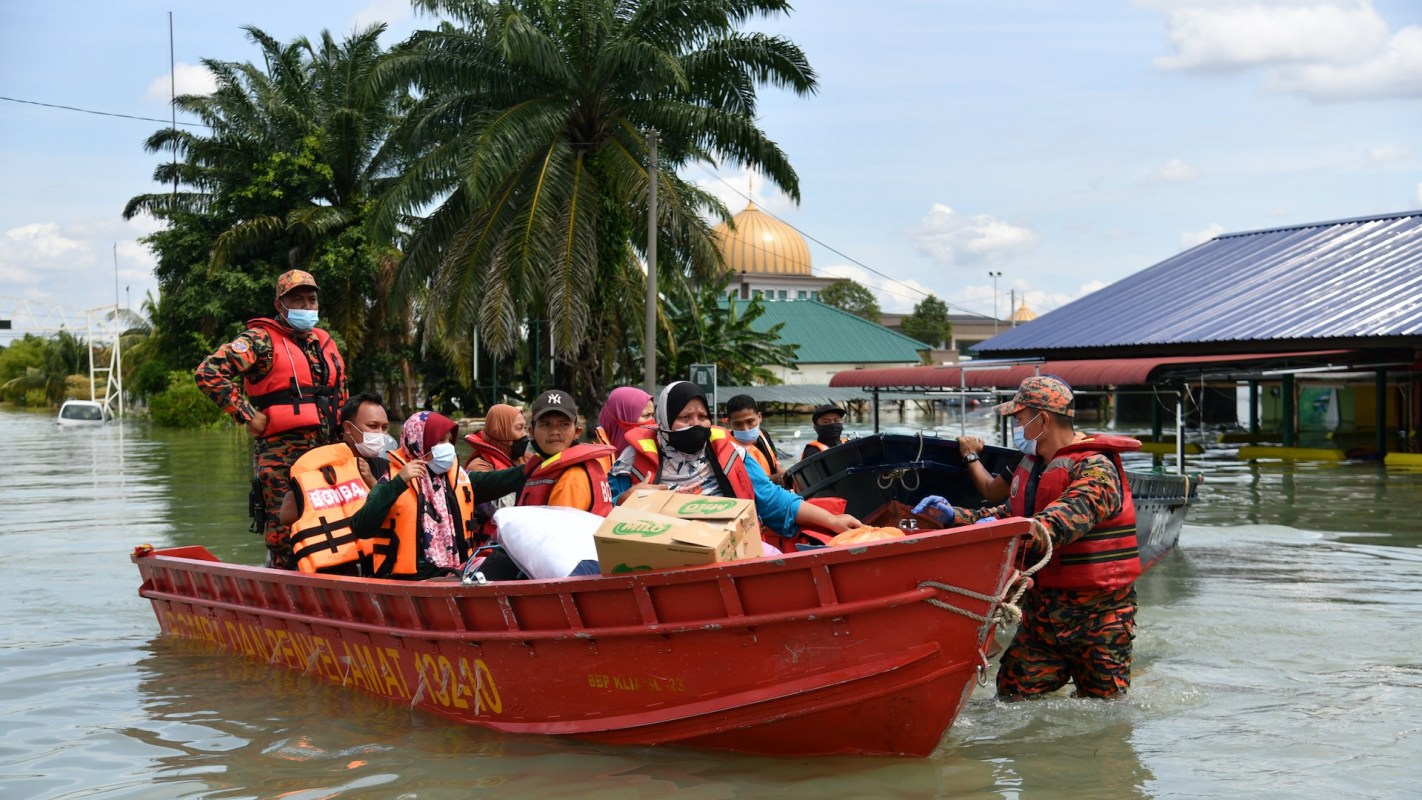
An analysis published in Communications Earth & Environment revealed that rising global temperatures are leading to increased migration from regions with warmer climates.
While complex factors — including socioeconomic, cultural, and political elements — influence population density and movement, the researchers emphasize that their work on climate-related migration patterns offers new insight into an area whose impacts "remain poorly understood."
What are climate-related human migration patterns?
"Climate-related human migration patterns" refers to how changes in climate are impacting the movement of people. This movement can be domestic or international. For instance, people who have the financial means to escape hurricane-prone areas may retreat inland, while those facing drought-induced famines may travel far in search of more sustainable living conditions.
The researchers' analysis suggested that low-GDP, low-latitude countries will experience disproportionately worsening conditions by the end of this century, increasing pressure on populations to migrate to escape the effects of rising global temperatures.
Why is this important?
Climate-related migration can occur slowly over time (e.g., due to desertification or land degradation) or rapidly in response to extreme weather events such as floods and heatwaves.
Extreme weather events — known as "rapid-onset events," as defined in the analysis — are becoming more intense and frequent as global temperatures warm. Without preparation, migration could overwhelm systems needed to support healthy and thriving populations.
TCD Picks » Quince Spotlight
💡These best-sellers from Quince deliver affordable, sustainable luxury for all




"These events cause immediate destruction of homes and infrastructure and have lasting impacts on essential services such as healthcare, food security, water availability, and general livability," the researchers wrote of the latter.
"The strain on urban areas — where displaced populations often seek refuge — exacerbates existing social inequalities, intensifies tensions, and fosters conflicts over resources."
How understanding critical climate issues can help
Previous estimates from the International Displacement Monitoring Centre suggest an uptick in extreme weather could displace around 1.2 billion people by 2050, per Zurich Insurance Group.
While the problem would be immense if those estimates did come to fruition, failure to prepare would be much more costly than investing in effective mitigation strategies now, as the researchers underscore in their analysis.
|
Do you think we still have a lot to learn from ancient cultures? Click your choice to see results and speak your mind. |
 Definitely 👍
 You can explore critical climate issues to learn more about the problem. This knowledge will empower you to make daily decisions that, while done collectively, move the needle in a positive direction.
Using less plastic, unplugging energy vampires, and signing up for solar — whether through a community program or with the assistance of EnergySage's free quote-comparison services — are all cost-effective actions that can help bring global temperatures back in check.

Join our free newsletter for good news and useful tips, and don't miss this cool list of easy ways to help yourself while helping the planet.







