


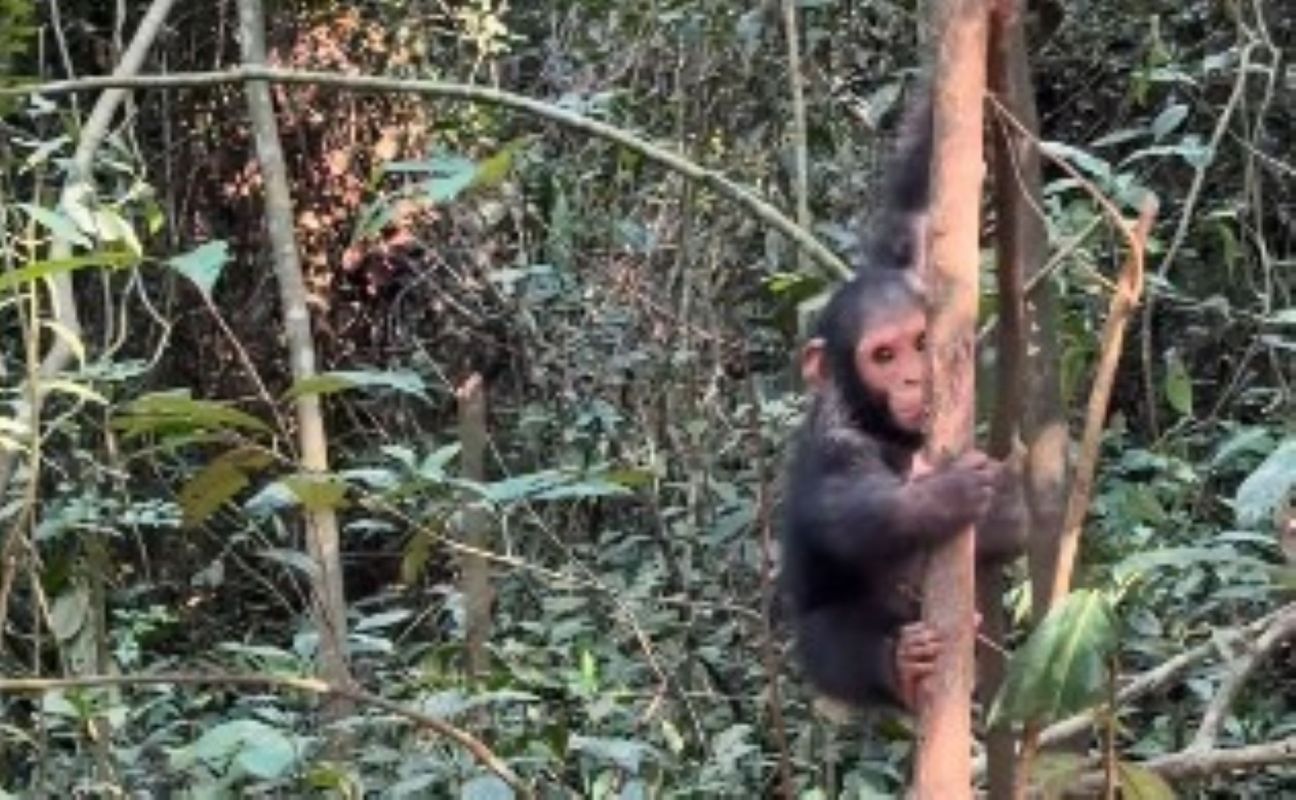
World Chimpanzee Day is meant to honor one of humans' closest animal relatives, but a new video from Ape Action Africa points to a much more painful reality: Some baby chimpanzees are still losing their families before they ever get the chance to grow up in the wild.
What's happening?
Ape Action Africa introduced viewers to Atlas, a baby chimp at the group's sanctuary. The nonprofit identified him as one of its youngest residents and used his story to illustrate what many young primates endure before rescue.
In Ape Action Africa's Instagram post, the organization said Atlas "came to us as a victim of the bushmeat and pet trade, his family killed and he himself taken from the wild."
To underscore the contrast between his safety now and the life he was supposed to be living, the group wrote, "He should be in the forest with his mother right now."
Instead of treating the occasion only as a celebration, Ape Action Africa used it to call attention to how rescues like Atlas' begin: with a young chimp torn from the wild and surviving only because people intervened.
Why does it matter?
The bushmeat and pet trade can wipe out entire chimp families, with infants often taken only after the adults protecting them are killed.
TCD Picks » Quince Spotlight
💡These best-sellers from Quince deliver affordable, sustainable luxury for all




For chimpanzees, the loss of a mother is especially traumatic. Young chimps depend on close social bonds, protection, and years of learning from their families. When that process is interrupted, sanctuaries are left to provide the intensive care that would never have been necessary had the animal remained in the wild.
There is also a broader ecological cost. Chimpanzees are part of complex forest ecosystems, which means threats to their survival can have wide-ranging impacts. Wildlife trafficking and exploitation reduce biodiversity and place additional strain on already vulnerable habitats.
Wildlife exploitation can take many forms, including tourism, the illegal pet trade, and markets that treat wild animals as products rather than as living beings with families and social lives.
Demand for wild animals can be fueled by exotic pet ownership, wildlife photo opportunities, and entertainment that exploits primates.
What's being done?
After being taken from the wild, Atlas is now at a sanctuary where caregivers can watch over his health, keep him safe, and provide the daily support he needs.
That kind of sanctuary care can be life-changing, but it also requires substantial resources. Young primates need food, medical treatment, a safe space, and social care over many years. Public awareness events such as World Chimpanzee Day, celebrated annually on July 14, can help draw attention to that ongoing effort.
As Ape Action Africa put it: "He should be in the forest with his mother right now. Instead, he is here with us, and we will spend every day making sure he has the life he deserves."

Get TCD's free newsletters for easy tips, smart advice, and a chance to earn $5,000 toward home upgrades. To see more stories like this one, change your Google preferences here.







