


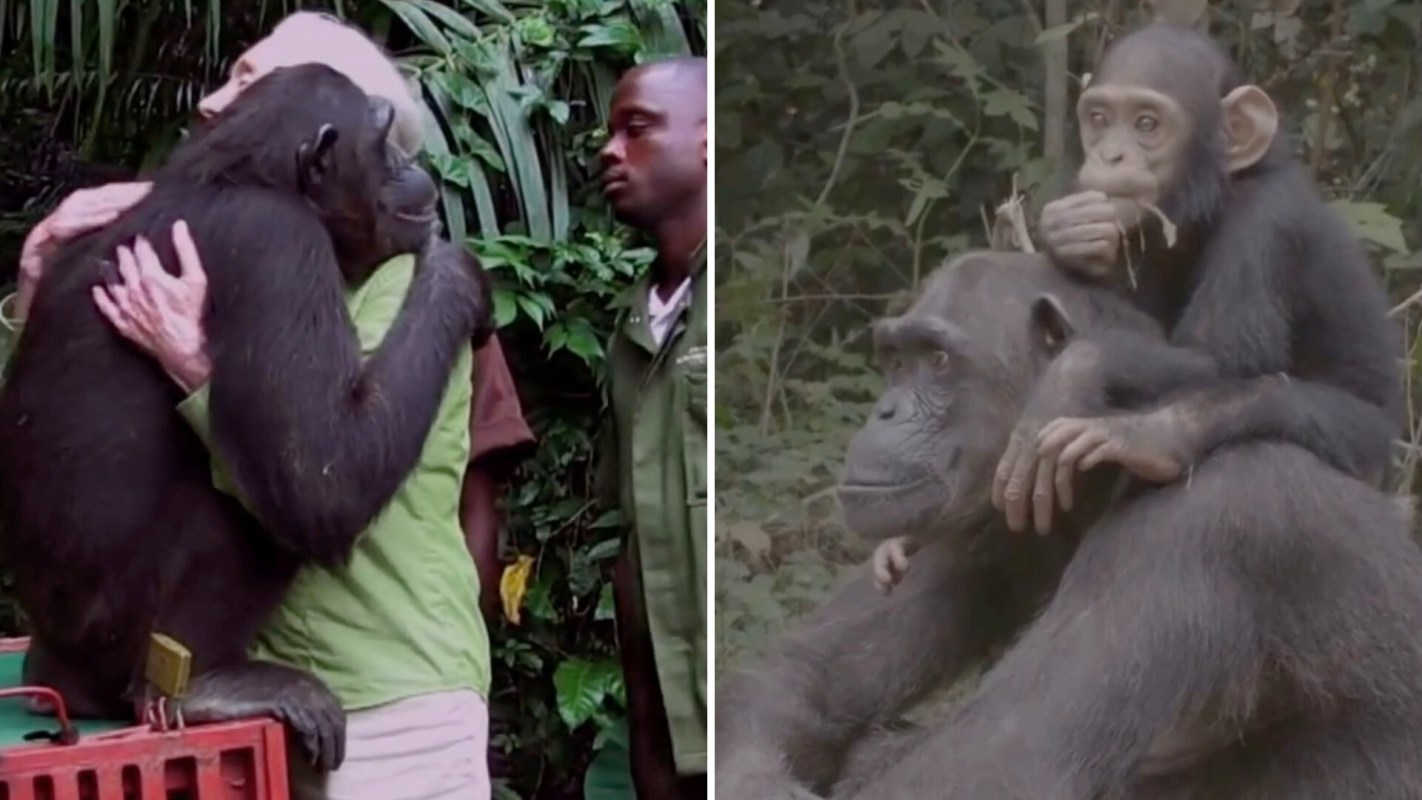
A video is gaining attention online that shows Wounda — the chimpanzee rescued from wildlife traffickers who became famous for her emotional embrace with Dr. Jane Goodall — raising her daughter in the Republic of the Congo.
What happened?
The Jane Goodall Institute recently explained the situation in a video on Instagram.
The clip said that the organization first encountered Wounda after she arrived at its Tchimpounga sanctuary in poor health, having been rescued from the illegal wildlife trade.
The Tchimpounga sanctuary cares for rescued chimpanzees and other wild animals with medical treatment and rehabilitation, and when possible, some are later transferred to protected islands that provide a near-wild environment.
"Thanks to the tireless care, expertise, and dedication of the JGI team, Wounda not only recovered but has gotten a second chance at life," the institute wrote in its Instagram post.
Now still at Tchimpounga, Wounda has become a mother to a young chimpanzee named Hope.
TCD Picks » Quince Spotlight
💡These best-sellers from Quince deliver affordable, sustainable luxury for all




"Wounda guides Hope through the forest with patience, curiosity, and joy," the organization said.
Why does it matter?
The illegal wildlife trade can leave young animals injured, traumatized, or separated from their families.
Rehabilitation can be lengthy and uncertain, especially for highly social animals like chimpanzees.
Wounda's path from survival to recovery — and now to helping her daughter learn life in a forest setting — highlights what long-term conservation support can achieve.
Ongoing habitat protection, veterinary care, and expert rehabilitation are all part of that process.
What can I do?
Supporting reputable wildlife rescue and conservation groups can help fund direct care and habitat protection.
The Jane Goodall Foundation offers a symbolic adoption program that allows contributors to support chimpanzees in need of rehabilitation. Through donations, participants can "adopt" a chimpanzee by helping fund its care, recovery, and protection.
Sharing stories like Wounda's can also raise awareness about the illegal wildlife trade and the importance of sanctuaries.
Greater public understanding can help build support for stronger wildlife protections and tougher crackdowns on trafficking.
On an everyday level, consumers can avoid attractions or products that exploit wild animals and choose tourism or charitable giving that prioritizes animal welfare.
Individual actions will not solve trafficking on their own, but they can help direct money and attention toward conservation efforts that do make a difference.
"Watching Wounda teach Hope how to navigate a wild environment is a living testament to her resilience and the transformative power of compassion and conservation," the institute wrote.
Commenters were in awe of Wounda's recovery story.
"A beautiful, beautiful moment I absolutely love seeing," one user wrote.
"This video will always bring me to tears," another said of the original clip.

Get TCD's free newsletters for easy tips, smart advice, and a chance to earn $5,000 toward home upgrades. To see more stories like this one, change your Google preferences here.







