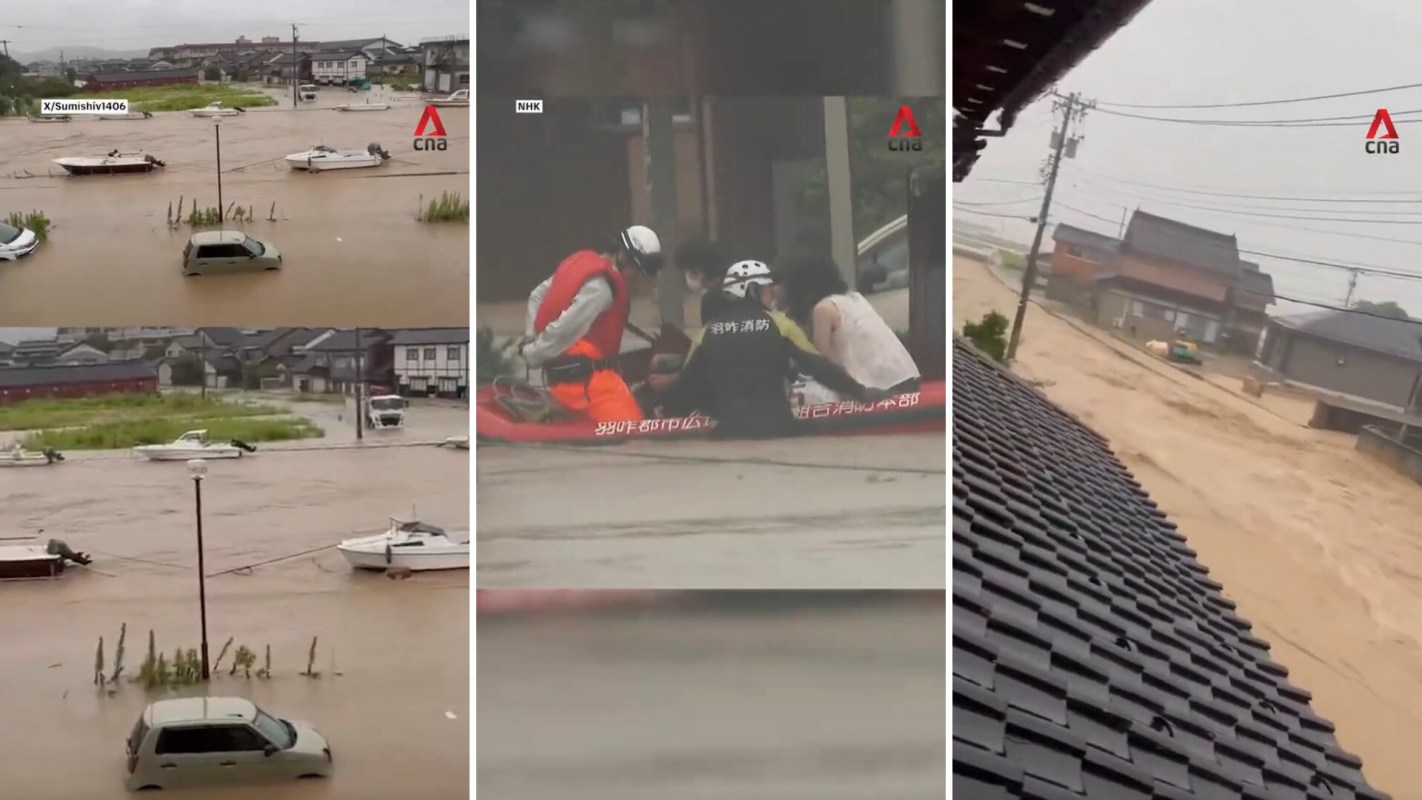
Mass evacuation orders affecting hundreds of thousands of residents were issued in central Japan last month after intense rainfall sent rivers spilling over their banks, flooding neighborhoods and leading to landslides.
Here's what to know
According to a short video from Channel News Asia posted on social media, parts of Japan have faced dangerous flooding and landslide risks in recent weeks.
"Hundreds of thousands of people were ordered to evacuate in central Japan on Thursday (Aug. 27) as torrential rain caused rivers to overflow, flooding communities and triggering landslides," the outlet described in the caption.
@channelnewsasia Hundreds of thousands of people were ordered to evacuate in central Japan on Thursday (Aug 27) as torrential rain caused rivers to overflow, flooding communities and triggering landslides. Japan's weather agency issued its highest-level emergency rain warning for parts of Ishikawa and Toyama prefectures, warning of "unprecedented" rainfall. #japan #japannews ♬ original sound - CNA
Japan's weather agency issued its highest-level emergency rain warning in Ishikawa and Toyama prefectures and described the sheer amount of precipitation as "unprecedented." Days later, a Level 5 warning was also issued in Fukui prefecture for heavy rain as around 400,000 people were reportedly urged to take precautions.
Warnings affecting huge numbers of people can place immediate pressure on transportation, shelters, and emergency response systems, especially when flooded roads and unstable slopes can make travel even more dangerous.
"Take care, people of Ishikawa and Toyama central Japan," one video viewer commented. "Stay strong."
TCD Picks » Quince Spotlight
💡These best-sellers from Quince deliver affordable, sustainable luxury for all




More background
Flooding and landslides are among the most dangerous consequences of extreme rainfall because they can come on quickly and pose immediate threats to human lives.
They can also devastate homes, roads, farmlands, and critical infrastructure. Once rivers overflow, communities can lose access to clean water, electricity, medical care, and safe transportation within hours.
Worsening extreme weather disasters threaten lives and livelihoods in many ways. Heavy rain can displace families, disrupt school and work, damage crops and businesses, and leave communities facing lengthy recoveries that strain local economies. These events can also pose serious public health and safety risks through injuries, contaminated water, mold exposure, and the emotional toll of evacuations and property loss.
What's being done?
Effective early-warning systems can play a pivotal role in public safety, signaling to officials and residents when ordinary precautions may no longer be enough and when urgent action is needed.
Included in that action is often the order to evacuate, with the intention to safely move populations away from rivers, low-lying flood-prone areas, and landslide-vulnerable slopes before conditions become even more dangerous.
Communities may also reduce the damage from these disasters by investing in stronger drainage systems, landslide prevention efforts, resilient infrastructure, and emergency planning designed to quickly reach vulnerable residents.
On the global scale, meanwhile, drawing down the use of the fossil fuels that can drive pollution and rising temperatures can also help to mitigate the impacts of extreme weather events.
Where can I learn more?
What's happening in Japan fits into a larger pattern of extreme weather forcing people from their homes and upending their daily lives. Similar pressures have played out in numerous coastal and island communities around the world:
• In Portugal and Spain, catastrophic weather threatened major cities as thousands fled Storm Leonardo.
• Across Latin America, an event that killed hundreds exposed El Niño's deadly disruptions.
• For coastal communities worldwide, increasingly severe risks are reshaping relocation and safety decisions.
• In Vanuatu, the erosion of valuable local resources is deepening pressures from climate-fueled disasters.
Across various regions, the events are familiar: urgent evacuations, infrastructure under strain, and recoveries dragging on long after rains have stopped. That's why early-warning systems, emergency planning, resilient infrastructure, and long-term adaptation matter everywhere and especially in the most vulnerable island and coastal communities.

Get TCD's free newsletters for easy tips, smart advice, and a chance to earn $5,000 toward home upgrades. To see more stories like this one, change your Google preferences here.