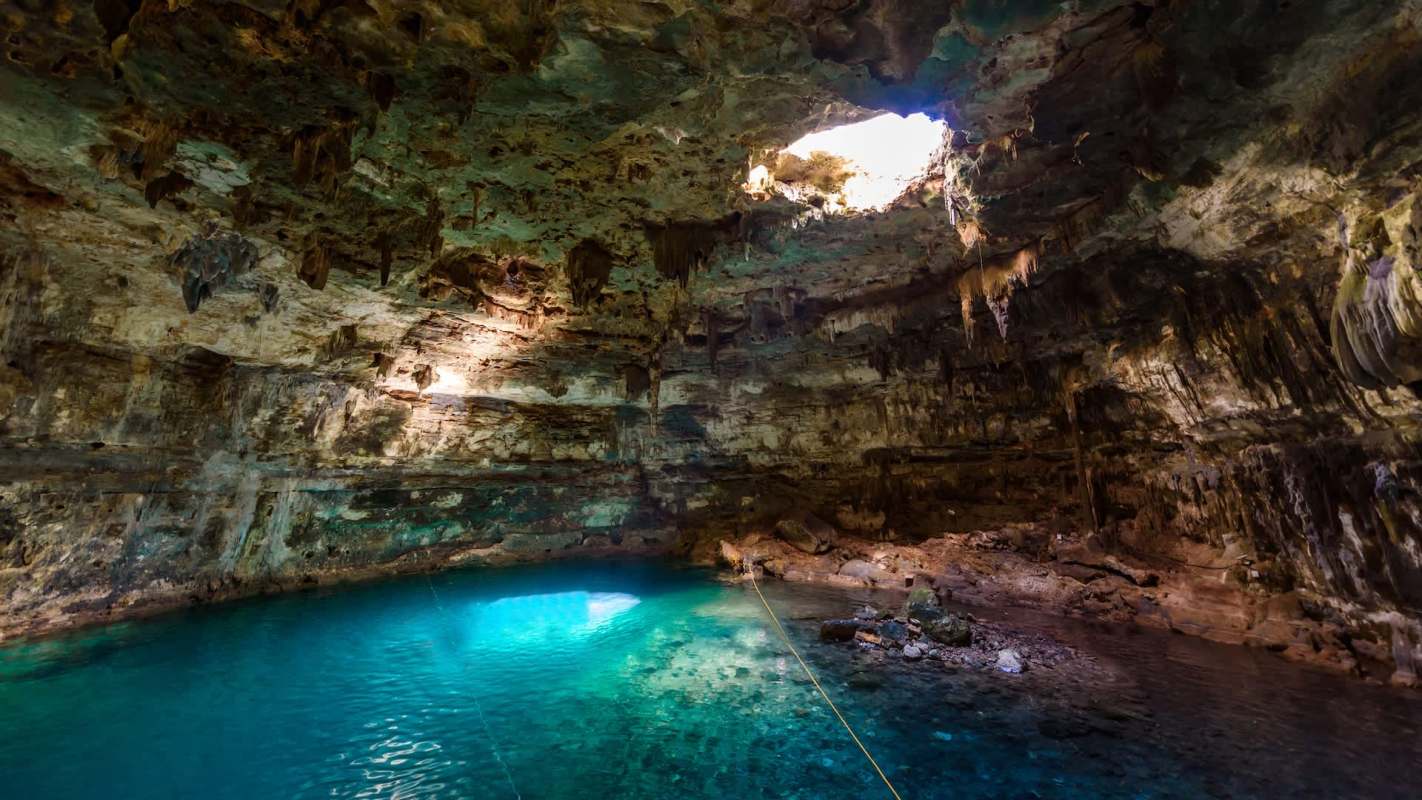
A cave ecosystem in Mexico is captivating scientists and the public alike, offering what feels like a real-life science fiction story of evolution.
In an underground lake, sighted and blind fish coexist thanks to a partial cave collapse that allows sunlight to reach part of the water while the rest remains in darkness, according to Discover Wildlife.
At the center of the discovery is the Mexican tetra, a species known for its remarkable adaptability. Some populations live in sunlit surface water with normal vision, while others have evolved in caves, losing their eyesight entirely.
The research focuses on the Caballo Moro cave in Tamaulipas, where a collapse in the overlying rock created a natural window, illuminating one section of the cave while leaving the rest in darkness.
Researchers believe surface fish were likely washed into the cave and later interbred with cave-dwelling fish, creating a hybrid population.
Interestingly, the two groups still behave differently.
TCD Picks » Quince Spotlight
💡These best-sellers from Quince deliver affordable, sustainable luxury for all




"The eyed cavefish in this cave are still aggressive and territorial," co-author Nicolas Rohner said, per Discover Wildlife. "Because they have eyes, they are better at defending their territory compared to the blind ones. That is one of the reasons that segregation remains."
This unusual setup gave scientists a rare opportunity to study how vision is lost over time. Because the genomes of surface and cave fish have mixed for generations, researchers pinpointed genetic regions tied to eye development.
"The fact that they are the result from a longtime hybridisation event allows us to map the regions in the genome that are responsible for them having eyes because recombination has been shuffling the genomes of surface and cavefish over many generations," Rohner explained, per Discover Wildlife.
The implications may extend beyond this cave. Mutations in the same gene have been linked to eye disease in humans, and similar genetic changes have been observed in other subterranean mammals.
In that sense, this hidden ecosystem could help scientists better understand both evolution in darkness and vision loss across species.

Get TCD's free newsletters for easy tips, smart advice, and a chance to earn $5,000 toward home upgrades. To see more stories like this one, change your Google preferences here.