


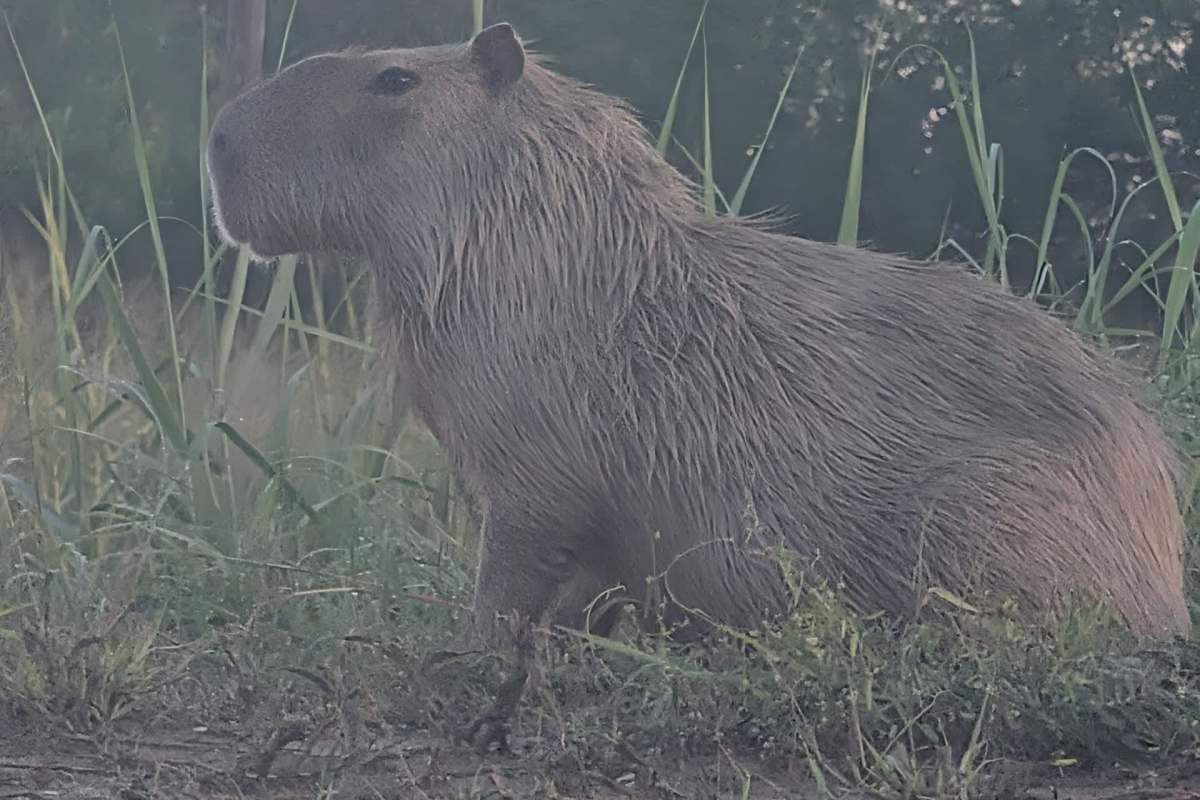
During an early-morning run in the Rio Grande Valley, Mission resident Javier Romero ended up filming an animal few people would expect to see in South Texas: a capybara near a trail.
Then came the less-amusing part: People started asking where to find it, according to MySA.
Here's what to know
Romero, 29, said the encounter happened on June 17, while he was running near a nature trail in Mission, south of Interstate 2.
He later uploaded the video to Facebook.
What made the sighting so striking is that capybaras, the world's largest rodents, are native to South America rather than South Texas.
The animals are also widely known online because memes often depict them as unusually calm and unfazed by whatever is happening around them.
TCD Picks » Quince Spotlight
💡These best-sellers from Quince deliver affordable, sustainable luxury for all




The footage showed the capybara moving through grass beside an irrigation canal, per MySA.
Romero decided not to share the exact location because replies to his post included people discussing capturing the animal or making "boots" from it.
He told the outlet those comments worried him enough that he reached out to a wildlife and exotic animal expert.
More background
A capybara sighting would be notable almost anywhere in the United States, but especially in the Rio Grande Valley, where the species does not naturally live.
That raises an obvious question: How did it get there?
Neither MySA nor Romero had an explanation.
Encounters with species outside their known habitats are often influenced, at least in part, by human activity — whether through habitat disruption, the spread of canals and development into natural spaces, or the movement of animals through the exotic pet trade.
As BBC Future explained, unusual wildlife encounters are often prompted by the ways humans alter landscapes and relocate animals beyond their native ranges.
Public attention can quickly become a threat if it leads to chasing, trapping, or inflicting distress upon an animal that is already out of place.
What's being done?
In this case, Romero contacted a wildlife and exotic animal expert.
For anyone who encounters unusual wildlife, the best response is usually to keep a safe distance, avoid feeding or approaching the animal, and contact local wildlife officials or qualified animal experts instead of trying to catch it.
An encounter with a species not native to the area also speaks to the consequences of exotic animal ownership — not just for owners, but for neighbors, local ecosystems, and the animal itself if it escapes or is abandoned.
Romero's reaction on camera was immediate.
"Hijole, su madre! Wow!" he exclaimed in the clip. "Your life is amazing! There he go!"
Where can I learn more?
Romero's video was unusual, but it was hardly the only case of an unexpected animal turning up on camera. The stories below carry that same mix of surprise, footage, and sudden public attention.
• In southern England, officials launched a hunt for a runaway capybara after dogs and drones failed.
• On a trail camera, a bobcat watching elk turned an ordinary scene into a standoff.
• In Israel, experts were stunned when a thermal camera captured a rare honey badger.
• In Brazil, trail cameras recorded a jaguar's 1,200-mile swim, evidence researchers rarely get to see.
• In Georgia, national park trail cameras captured a once locally extinct animal returning to its range.
Unexpected wildlife sightings can escalate quickly once video starts circulating and people want to track the animal down.
That's part of why keeping a location private can be just as important as capturing the moment.

Get TCD's free newsletters for easy tips, smart advice, and a chance to earn $5,000 toward home upgrades. To see more stories like this one, change your Google preferences here.







