


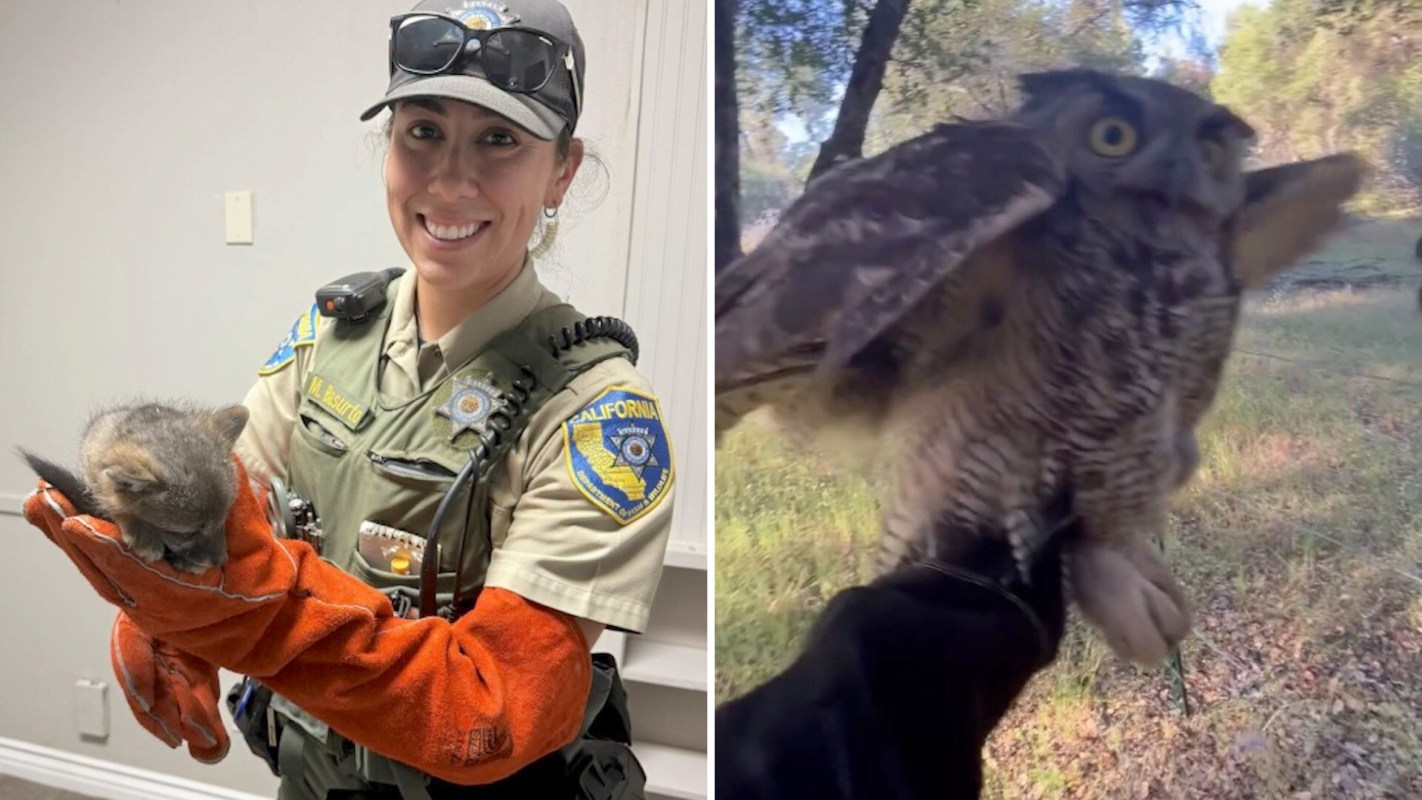
A California wildlife officer carried out two rescues in quick succession, helping a great horned owl caught in barbed wire and a baby fox found inside an attic.
The back-to-back saves, reported by FOX26, are a reminder that wild animals often face danger at the edges of human spaces, and that quick action can make a major difference.
What happened?
The first call took California Department of Fish and Wildlife officer Molly Basurto to Fresno County, where a great horned owl was stuck in barbed wire fencing.
For a large bird of prey, entanglement can quickly become life-threatening, leaving the animal unable to fly, hunt, or defend itself.
Once the owl was freed, Basurto transported it to a permitted wildlife rehabilitation facility for care and recovery.
She next headed to Madera County after a baby fox was found in a building's attic. The fox was taken to a nearby wildlife rehabilitation center for care by trained staff, with the aim of releasing it back into the wild.
TCD Picks » Quince Spotlight
💡These best-sellers from Quince deliver affordable, sustainable luxury for all




Why does it matter?
Wild animals are constantly navigating fences, roads, and structures built for people, not for them.
When they become trapped or stranded, the outcome often depends on whether someone notices and calls for help in time.
Great horned owls and foxes are both predators, which means they help keep local ecosystems in balance by controlling populations of smaller animals.
Healthier ecosystems can support agriculture, reduce nuisance pest pressures, and help people coexist more safely with native wildlife.
When residents, wildlife officers, and rehabilitation professionals each do their part, animals have a much better chance of surviving encounters with human-made hazards.
What's being done?
In both cases, the immediate response was to get the animals out of danger and into the care of rehabilitation professionals.
That is often the safest option for both wildlife and people, since untrained handling of injured or stressed wild animals can cause further harm.
Wildlife rehabilitation centers can stabilize injuries, care for young animals too vulnerable to survive on their own, and prepare them for a possible return to their habitat.

Get TCD's free newsletters for easy tips, smart advice, and a chance to earn $5,000 toward home upgrades. To see more stories like this one, change your Google preferences here.







