


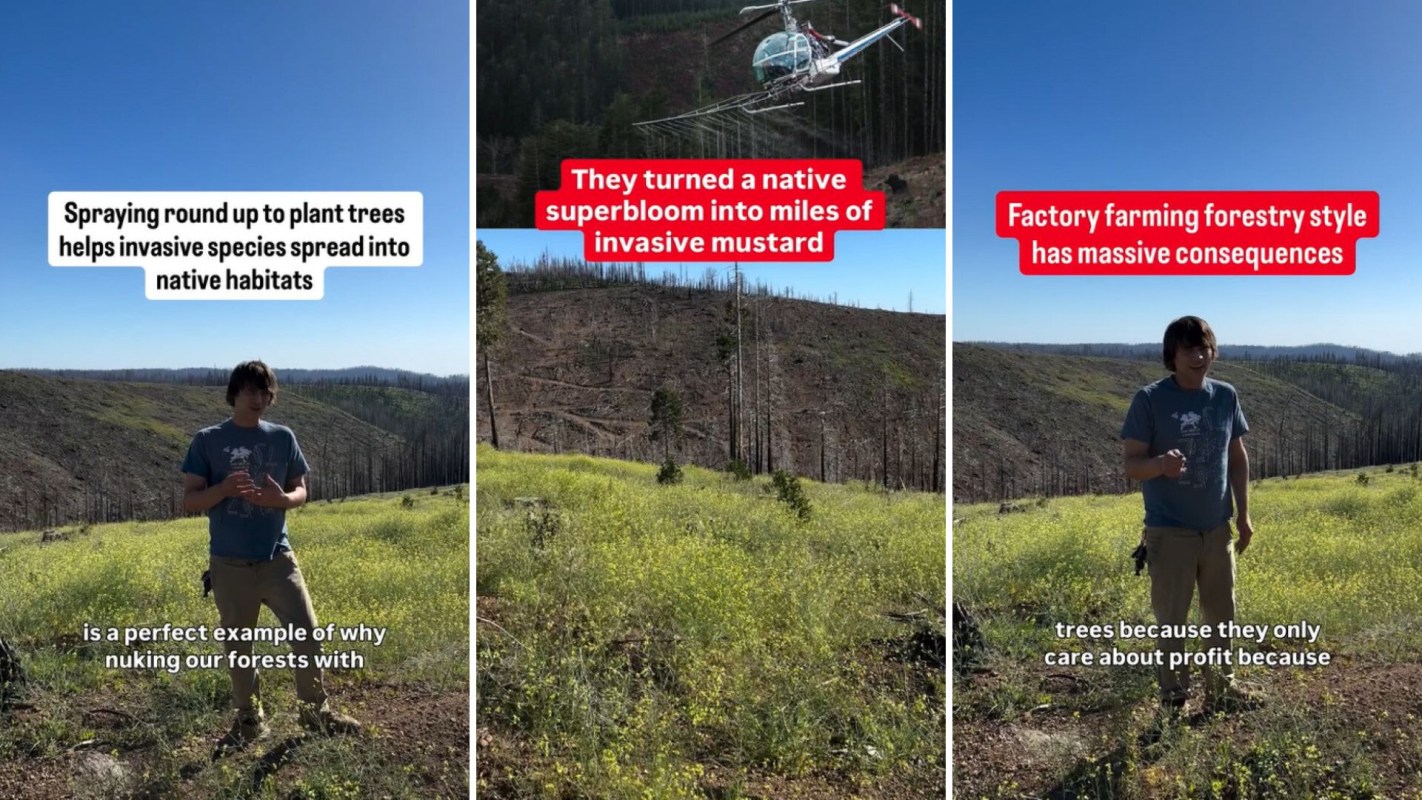
A video filmed in California's Caldor Fire burn scar reignited debate over how burned forests should recover.
In the Instagram Reel, Jessie Dickson (@sacramentofoodforest) argued that spraying glyphosate to clear competing plants for replanting had left a Sierra slope dominated by invasive mustard instead.
The concern was not just about plants; it was about wildfire danger, biodiversity, and drinking water flowing downhill to communities that rely on snowmelt.
In the Sierra Nevada, Dickson showed a burn area covered in the invasive mustard plant after herbicide spraying.
He explained that the Forest Service had applied glyphosate on public land after the Caldor Fire so planted lumber trees would face less competition from surrounding vegetation.
According to Dickson, the area had previously experienced a "super bloom" with 50-plus native plants, including endangered mariposa lilies. But after the spraying, he wrote, "a biodiversity hotspot is now miles of invasive mustard."
TCD Picks » Quince Spotlight
💡These best-sellers from Quince deliver affordable, sustainable luxury for all




"It's a perfect example of why we don't need to be using it," Dickson said in the video.
He argued that managers were "planting trees exactly where they burned" rather than allowing a more diverse recovery.
Commenters echoed that frustration, with one saying the spraying targeted native plants such as Arctostaphylos and Ceanothus, which compete with lumber trees, rather than invasive weeds.
Post-fire landscapes in the Sierra are tied to community safety, wildlife habitat, and the snowmelt-fed water supplies that Californians depend on.
Dickson warned that the tumble mustard would dry out, be picked up by wind, and ignite easily. It "burns like gasoline," he said.
A management decision to purportedly support reforestation could instead increase fuel loads near homes and communities already dealing with dangerous wildfire seasons.
Dickson also raised concerns about chemical exposure via runoff, arguing that spraying in high-elevation forests threatens clean drinking water downstream, as snow melts into reservoirs.

Get TCD's free newsletters for easy tips, smart advice, and a chance to earn $5,000 toward home upgrades. To see more stories like this one, change your Google preferences here.







