


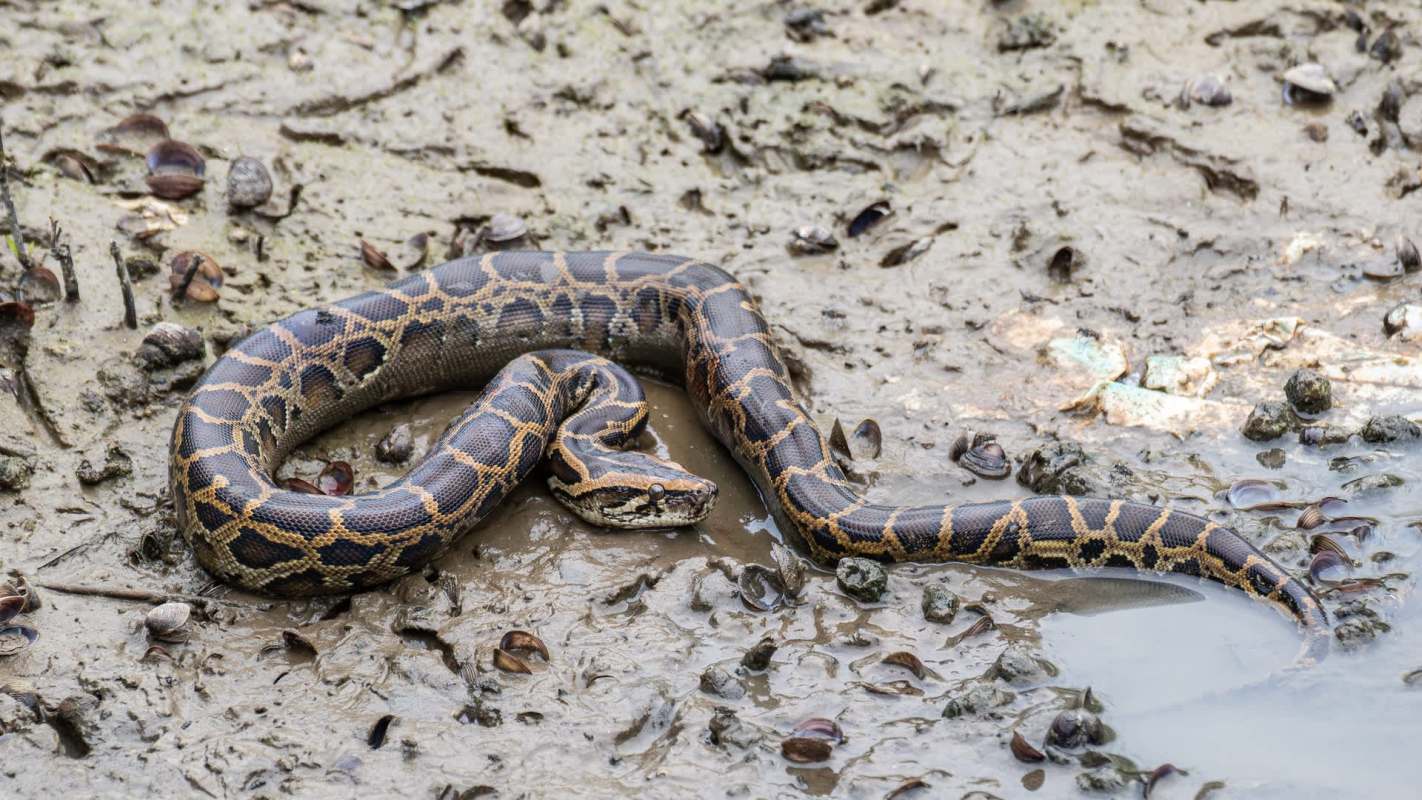
Official records make one part of Southwest Florida look oddly quiet for Burmese pythons. Even so, specialists say Lee County is unlikely to be a true break between neighboring counties where the invasive snakes are already entrenched.
Spotting these predators is notoriously hard, even when one is close by.
What's happening?
Lee County is wedged between Collier County and Charlotte County, both of which already show clear signs of established python populations. In contrast, Lee County's official numbers remain notably low.
According to The News-Press, which cited Florida Fish and Wildlife Conservation Commission spokesperson Lisa Thompson, Lee County recorded only two python sightings in 2026, while Cape Coral has gone without a credible report since 2024.
Instead, experts think the snakes are blending into Lee County environments such as agricultural land, private property with large green spaces, and the edges of urban development, according to The News-Press.
Ian Bartoszek, an environmental science project manager at the Conservancy of Southwest Florida, said sparse reporting should not be read as evidence that pythons are missing from the county.
TCD Picks » Quince Spotlight
💡These best-sellers from Quince deliver affordable, sustainable luxury for all




"Just because multiple reports haven't come in more recently doesn't mean there isn't an expanding population in parts of Lee County," he said.
Dr. Andrew Durso, a professor of wildlife biology at Florida Gulf Coast University, said the species is so well camouflaged that monitoring its numbers is extremely difficult.
"It's impossible to overstate how cryptic they are and how it easy it would be for even a person that's looking for them to walk right by one," Durso said.
Why does it matter?
The snake is native to Southeast Asia rather than Florida, and its presence in the state goes back decades to people introducing it outside its natural range. Once established, it found South Florida's warm, wet conditions highly favorable.
The ecological toll has been significant. As The News-Press reported, pythons have contributed over roughly 25 years to declines in medium-sized native mammals including raccoons, opossums, skunks, foxes, bobcats, and rabbits. Durso said the largest individuals can also eat deer and adult alligators.
When native food webs are disrupted, ecosystems become less stable, and invasive predators can move through both wild areas and human-shaped environments.
Cape Coral may offer one such route, with about 400 miles of canals that could make movement easier for the reptiles. The News-Press also reported, citing the FWC, that Burmese pythons introduced a parasitic lungworm to Florida, and it can spread to native snake species, adding another ecological threat.
What's being done?
Florida's removal efforts are continuing. They include the Florida Python Challenge, which ended July 19, and one approved competition site — Big Cypress Wildlife Management Area — is in nearby Collier County.
Researchers are also pursuing a more targeted method. Bartoszek's team uses 40 male "scout" snakes with surgically implanted radio transmitters, and during breeding season, from November to April, those tagged males lead researchers to reproductive females that are then removed from the wild.
Those females can produce large clutches. Bartoszek said that the program removed upward of 8,000 pounds of pythons during breeding season and that the average egg count is 46.
Removing breeding females can slow population growth before local infestations become even harder to control.
FWC guidance is for people to photograph the snake if possible, document where it was seen, and call the Exotic Species Hotline at 888-483-4681. Reports can also be made online or through the free IveGot1 app.

Get TCD's free newsletters for easy tips, smart advice, and a chance to earn $5,000 toward home upgrades. To see more stories like this one, change your Google preferences here.







