


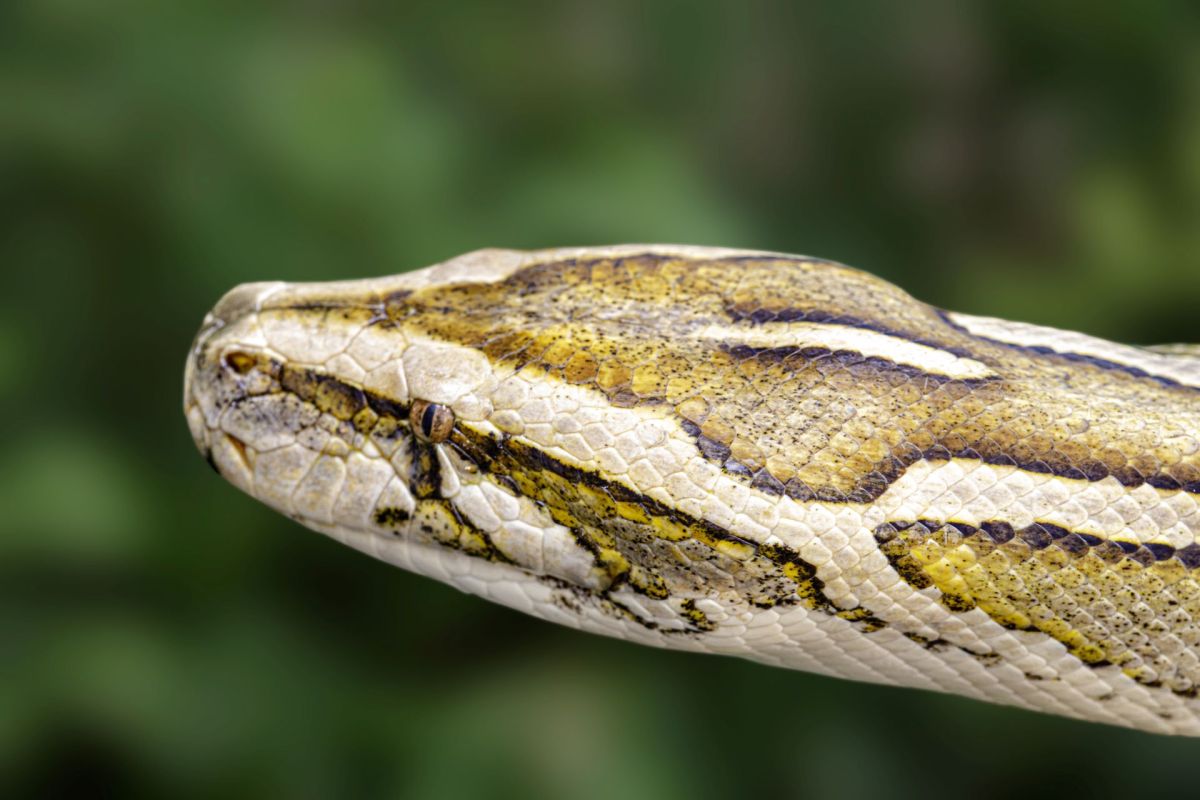
Wildlife officials say Burmese pythons may be spreading to new areas across Florida, with signs of growing populations outside the Everglades.
Their concern is focused on Charlotte County, where the species is now considered established, suggesting another ecologically sensitive region could be at risk.
What's happening?
As the Palm Beach Post reported, the Florida Fish and Wildlife Conservation Commission recently said Charlotte County is the state's only known established Burmese python population beyond the Greater Everglades.
Northwest of the Everglades, this new Charlotte County population is growing, alarming residents and wildlife officials alike.
Records from the Early Detection and Distribution Mapping System show that within Charlotte County, 78 pythons have been captured, found dead, or observed. But making matters more alarming, over three-fifths of these python sightings have been seen since 2024, per the Palm Beach Post.
The FWC does not believe the snakes migrated naturally from South Florida. Lisa Thompson, a spokesperson for the FWC, wrote in an email to the Palm Beach Post that "the FWC suspects that initially these [Charlotte County] animals were likely escaped or released captive animals."
TCD Picks » Quince Spotlight
💡These best-sellers from Quince deliver affordable, sustainable luxury for all




Why does it matter?
Burmese pythons are apex predators capable of eating birds, mammals, reptiles, and even deer and alligators, disrupting ecosystems that people rely on for recreation and tourism.
Researchers also worry that warming conditions could expand the parts of Florida where the species can survive.
That concern grew in 2023 when the U.S. Department of Agriculture updated its plant hardiness zones, shifting much of Florida, along with other parts of the country, into warmer categories due to climate change.
What's being done?
Officials have already responded by increasing surveillance in Charlotte County.
FWC's Nonnative Fish and Wildlife Program began that effort in June 2024, hiring two part-time python technicians to survey the areas with the highest concentrations of pythons, according to the Palm Beach Post.
Florida also launched its 2026 Python Challenge on July 10, with $25,000 in cash prizes available across eight South Florida hunting areas.

Get TCD's free newsletters for easy tips, smart advice, and a chance to earn $5,000 toward home upgrades. To see more stories like this one, change your Google preferences here.







