


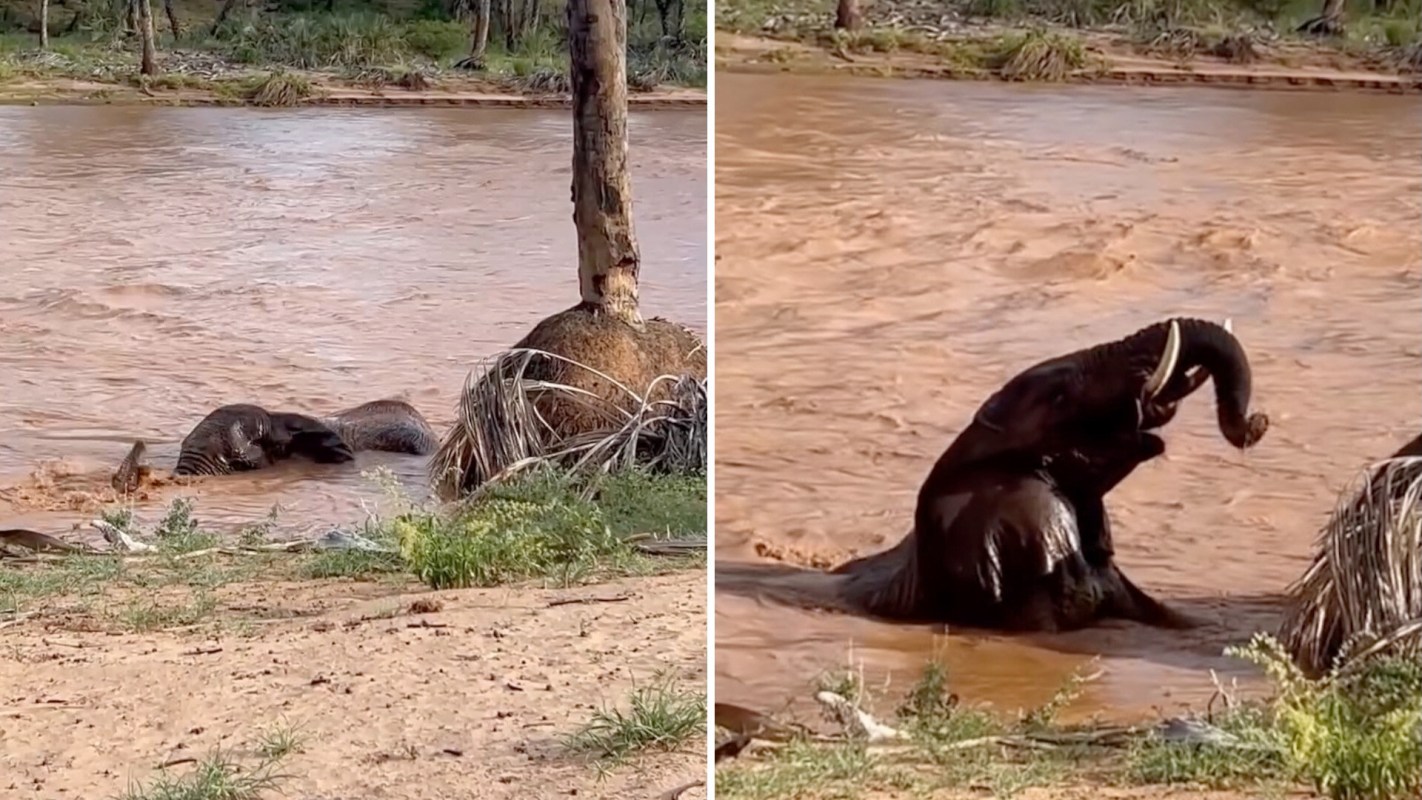
For a moment, the massive shape in the Ewaso Nyiro river looks less like an elephant and more like a hippo. Then the trunk gives it away.
A striking video of a bull elephant named Philip shows just how comfortable these enormous animals can be in deep water as he nearly disappears beneath the river's surface in Kenya.
What happened?
In a post from Save the Elephants (@savetheelephants) on Instagram, Philip is seen splashing around in the Ewaso Nyiro near the organization's Babala outpost, about 70 miles downstream from its Samburu research camp. Credited to Daud Abdi for Save the Elephants, the footage shows the bull so deep in the river that only parts of his back and trunk stay above the surface.
In the caption, the organization wrote: "With his body almost fully submerged, Philip could almost be mistaken for a hippo as he enjoys a swim in the Ewaso Nyiro river near our Babala outpost."
Save the Elephants also noted a lesser-known fact about elephant behavior: "Despite their size, elephants are excellent swimmers. They use all four legs to paddle, and their trunks double as snorkels when they dive deep."
One commenter wrote: "Beautiful Philip, I could watch them play in the water all day. Like if there was a live stream of them I would be entranced. How wonderful to have all that water."
TCD Picks » Quince Spotlight
💡These best-sellers from Quince deliver affordable, sustainable luxury for all




Another Instagram user added: "Philip living his best life."
Why does it matter?
Watching Philip almost vanish below the surface underscores how adaptable elephants are. Although they are the largest land animals on Earth, they can still move effectively through water, breathing through their trunks while the rest of their bodies stay submerged.
Rivers such as the Ewaso Nyiro are crucial resources for wildlife in hot, dry regions. Access to reliable water supports drinking, cooling off, and movement across the landscape, especially during periods of intense heat.
What's being done?
Groups such as Save the Elephants are documenting elephant behavior in the field and drawing attention to the landscapes the animals need to survive in. The footage underscores the importance of intact rivers and protected areas for wildlife.
Research and monitoring in places such as Samburu can also help conservationists track elephant movement and habitat use. Visual evidence of everyday behavior adds another layer to that work by making it accessible to a broader audience.

Get TCD's free newsletters for easy tips, smart advice, and a chance to earn $5,000 toward home upgrades. To see more stories like this one, change your Google preferences here.







