


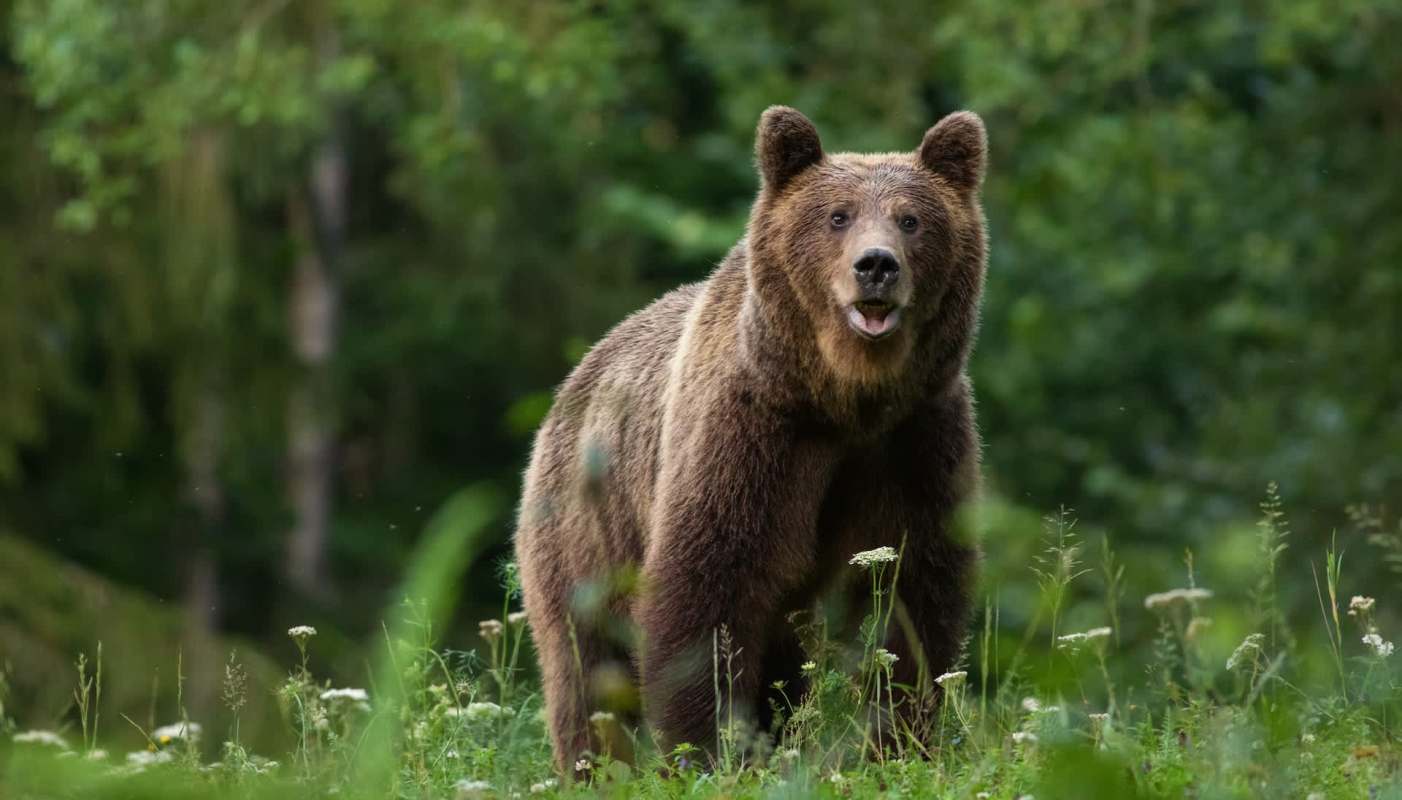
Paperwork and blocked routes delayed two brown bears' move to Ireland for five years. The animals, once confined to cramped cages, now have a forest to explore after a 13,500-kilometer (8,389-mile) journey.
Here's what to know
Wild Ireland founder and director Killian McLaughlin worked with an international team to bring the animals to safety.
Bu and Tyapa arrived in Ireland on Aug. 3 and were adjusting to life at Wild Ireland in Burnfoot, County Donegal, Raidió Teilifís Éireann reported.
After a vet examined them Sept. 7, the pair left quarantine and entered the sanctuary's forest habitat. Wild Ireland's four brown bears are the only living members of the species in the country.
Bears in Mind, a Dutch charity, alerted McLaughlin to the bears in 2021. They were then living at Right to Life Sanctuary in Dagestan, Russia, which cared for dogs and cats but lacked the resources to support the bears in the long term, RTÉ reported.
Bu had been part of a circus, while Tyapa came from a petting zoo and was reportedly destined for taxidermy.
TCD Picks » Quince Spotlight
💡These best-sellers from Quince deliver affordable, sustainable luxury for all




Both bears endured cramped cages and limited access to water. When rescuers found them, they were malnourished and suffering from psychological trauma and kidney problems linked to dehydration.
More background
Russia's invasion of Ukraine in 2022 ruled out a planned road journey through Ukraine, setting back the effort to bring the bears to Ireland.
According to RTÉ, McLaughlin put together a team of volunteers in Russia and hired a Moscow lawyer to help plan a rescue that complied with sanctions. In October 2025, Dima Kim and Yana Kim, owners of Tiger House sanctuary near St. Petersburg, drove 36 hours to Dagestan to collect the animals.
The bears had to be sedated and cut out of their cages.
Tiger House, which cares for former circus tigers, provided quarantine, treatment, health checks, and vaccinations while the team worked with Russian and Irish authorities to secure transport paperwork.
With no direct flights available between Russia and the European Union, rescuers arranged a route through Abu Dhabi. Airspace closures in the Middle East caused further disruption.
Specialist transporter Intradco Global donated its services, Etihad Cargo offered a reduced price, and staff at Abu Dhabi's Zayed International Airport assisted with the transfer.
What's being done?
McLaughlin met Bu and Tyapa in Abu Dhabi and accompanied them on their flight to Dublin. William Gill Livestock Transport then completed the journey to Donegal by cattle lorry.
Medical care and a dependable supply of fresh water helped restore both bears' kidney function to normal within their first two months at Wild Ireland, per RTÉ.
Their emotional recovery, however, will take longer.
Bu and Tyapa remain frightened of open spaces, so their habitat includes woodland, water, and small houses where they can retreat. Caregivers hide food and encourage exercise, allowing the bears to explore and forage at their own pace.
Visitors may catch a glimpse of the pair, but the animals can withdraw from public view whenever they choose.
Wild Ireland also invites visitors to learn about brown bears, which disappeared from Ireland over 2,000 years ago.
"There was kindness and compassion in the middle of so much strife and war," McLaughlin said, according to RTÉ. "Maybe Bu and Tyapa's story offers a bit of hope."

Get TCD's free newsletters for easy tips, smart advice, and a chance to earn $5,000 toward home upgrades. To see more stories like this one, change your Google preferences here.







